
NAVIGATION
Building a gooseneck tiny house, also known as a 5th wheel tiny house, is kind of like taking on two different projects at once. On one hand, you’re building a home. On the other hand, you’re building something that needs to be ready to withstand life on the road. From high speeds and sharp turns to low bridges and weight limits, you’ll need to factor comfort, maneuverability, safety, and durability into your plans.
It’s a lot to think about, but there’s no point building a tiny house on a gooseneck trailer that looks great but isn’t safe to tow.
Even if your gooseneck tiny house fits on your trailer, the physical dimensions are only half of the equation.
An unbalanced or overloaded setup can put excessive strain on your truck, and, in a worst-case scenario, become a serious road safety hazard for you and everyone else on the road.
The good news is that as you start to understand what gooseneck tiny homes are and how they work with (or against) a trailer, the building process will make a lot more sense. So, let’s take a closer look at what goes into planning and building a gooseneck tiny house on wheels.
Hi, I’m Ryan
I’ve had the pleasure of touring quite a few gooseneck tiny houses, and it’s easy to see the appeal. What interests me the most is how different people utilize the loft. While many use it as a bedroom, it also makes a fantastic office, studio, or storage room.

What Is A Gooseneck Tiny House?

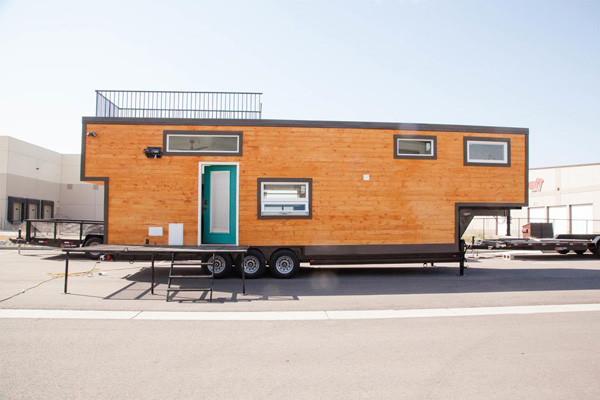
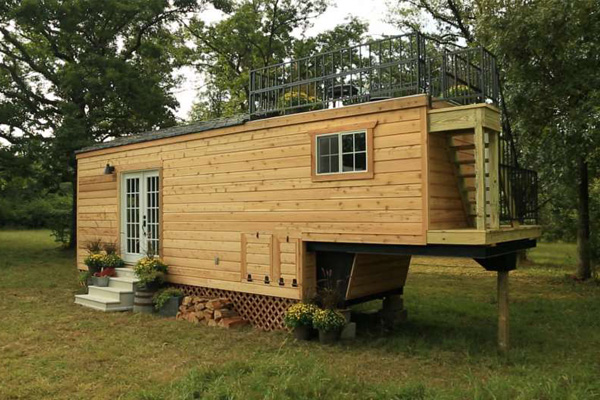
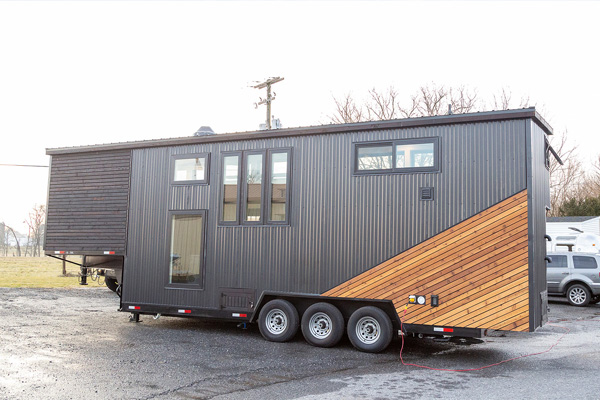
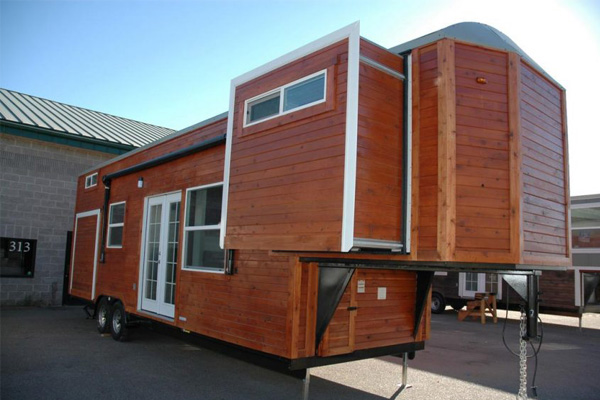
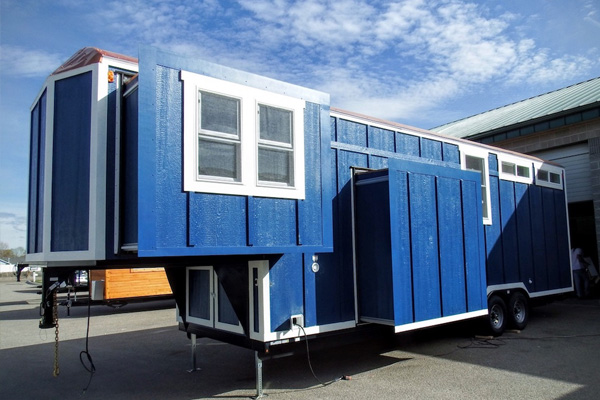
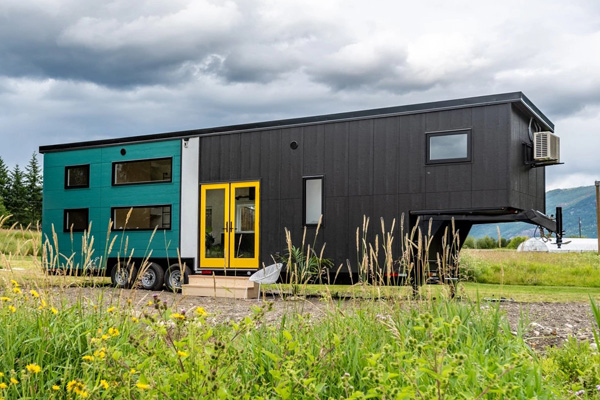
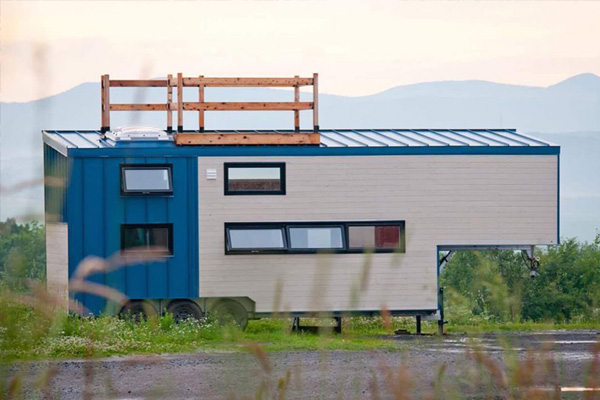
A gooseneck tiny house is simply a tiny house built on a special style of trailer, often referred to as a gooseneck, that attaches to your tow vehicle with a fifth wheel towing connector. Gooseneck tiny homes offer the major benefits of spacious interiors and easy towing.
What strikes me the most about gooseneck tiny homes is the loft area that extends over the bed of the tow vehicle. This one defining feature opens up a ton of layout options and contributes to the overall spacious feel of a gooseneck trailer tiny house. It also offers a level of privacy and physical separation that can be hard to find in other designs of tiny houses on wheels.
The other advantage that 5th wheel tiny homes have over traditional tiny homes is that you can fit a full height bedroom without needing a ladder.
What A Gooseneck Tiny House Costs
A tiny house on a gooseneck trailer usually costs between $30k to $50k depending on the size, materials, and amount of DIY work done. Keep in mind that this estimate includes both the house itself and the tiny house gooseneck trailer. Depending on whether you buy new or secondhand, you can expect to pay $8k to $20k for the trailer alone.
Beyond that, I recommend setting aside an additional $1.5k to $5k for things like registration, insurance, permits, and towing equipment.
Gooseneck Tiny House Floorplans

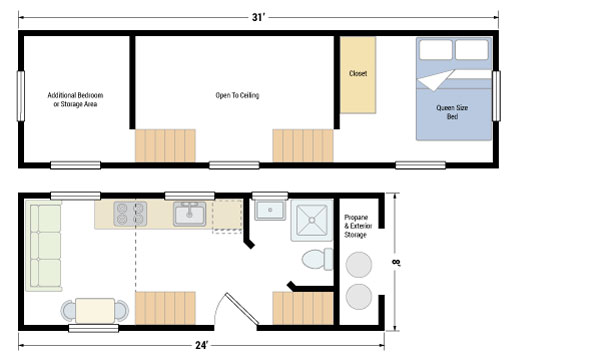
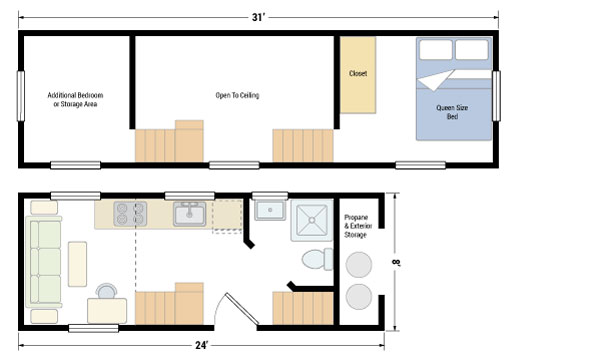
One of the key features of a gooseneck tiny home is that you can build over the neck of the trailer. Since you can build over the hitch, you can have a larger living space compared to a normal bumper-pulled trailer. Most people opt to put their bedroom over the hitch with a few steps leading up to it.
To help you get an idea of the different gooseneck tiny house designs, I’ll share some of my favorite floorplans.
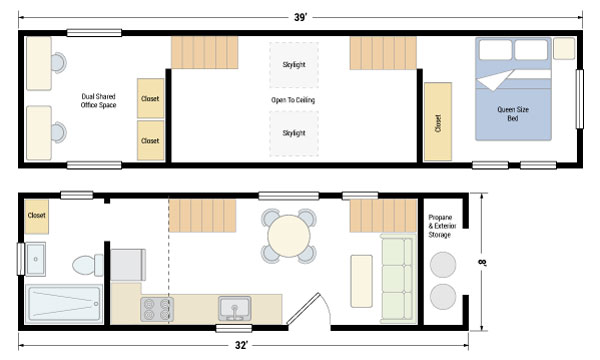
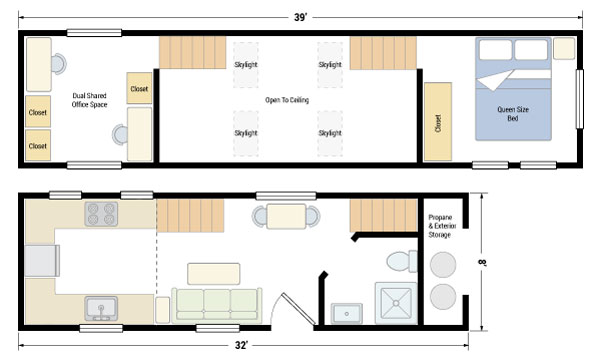
32-Foot Gooseneck Tiny House Floorplans

A tiny house built on a 32-foot gooseneck trailer will give you about 331 square feet of living space in your tiny house. Here are some 5th wheel tiny house floorplans that are built on a 32-foot gooseneck trailer.
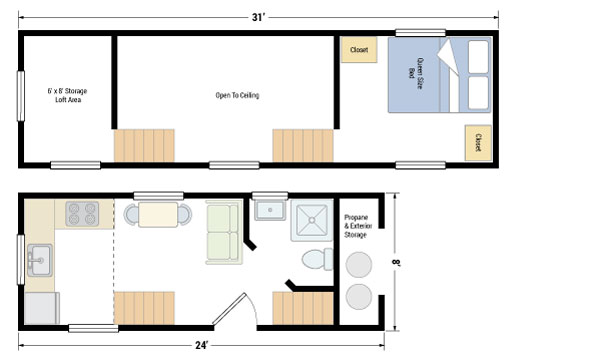
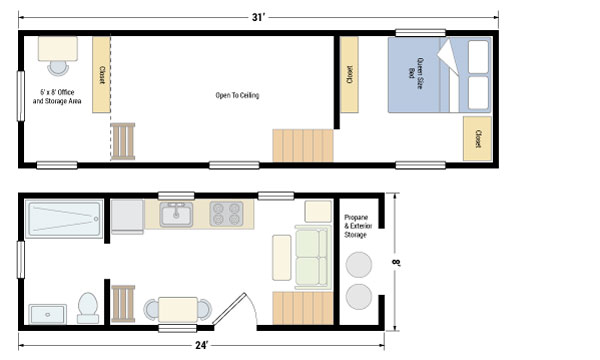
34-Foot Gooseneck Tiny House Floorplans

A tiny house built on a 34-foot fifth wheel tiny house trailer will give you approximately 350 square feet of living space. Here are a few floorplans for a 34-foot fifth wheel tiny house.
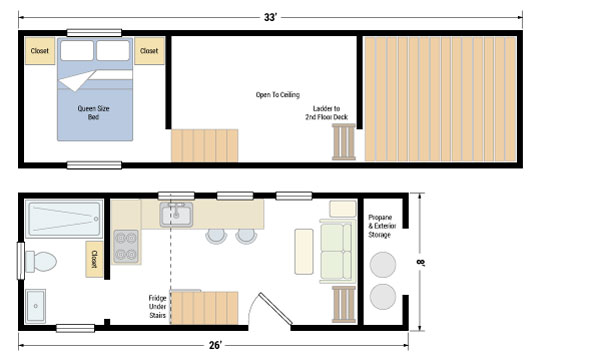
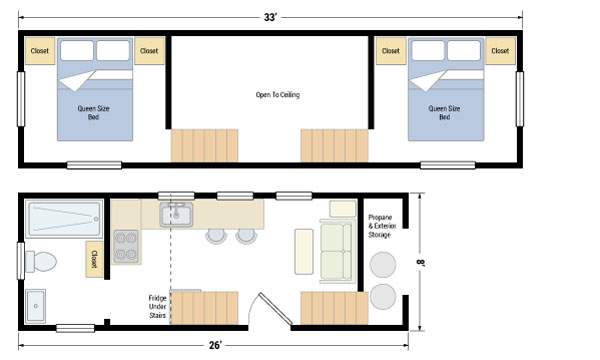
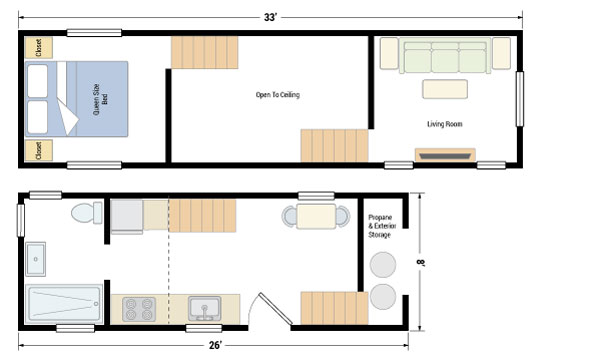
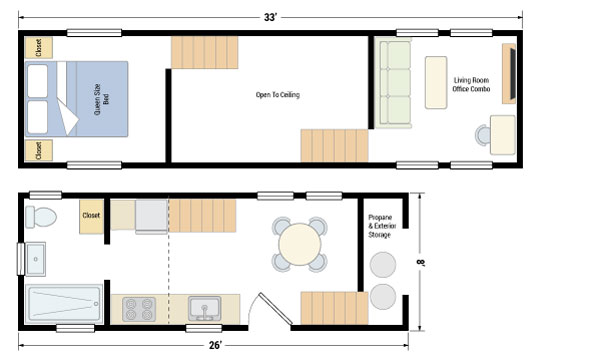
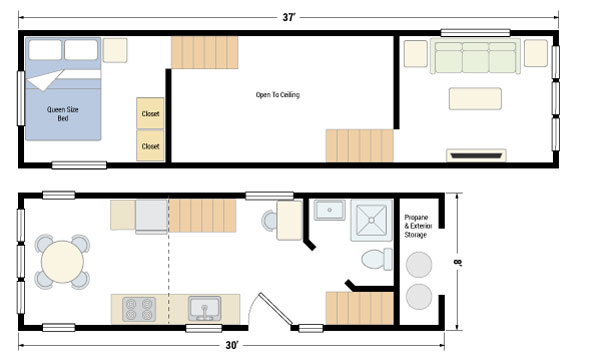
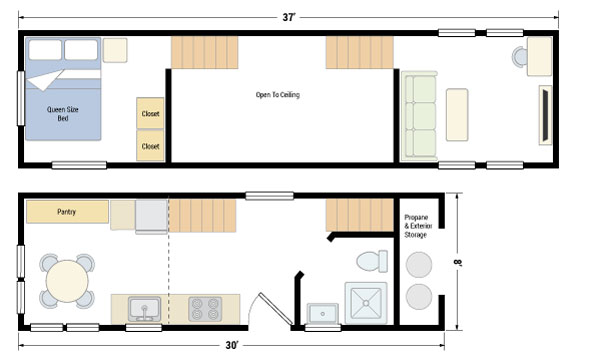
38 Foot-Gooseneck Tiny House Floorplan

A tiny house built on a 38-foot gooseneck trailer will have about 380 square feet of living space. At this size, you’re going to have to consider what type of tow vehicle you’re going to need, because these can be very heavy. Here are a few floorplans for a tiny house built on a 38-foot gooseneck trailer.
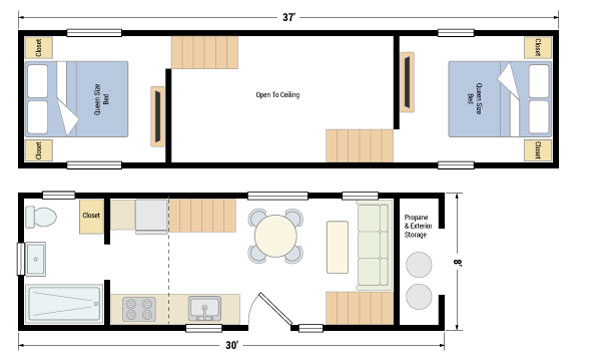
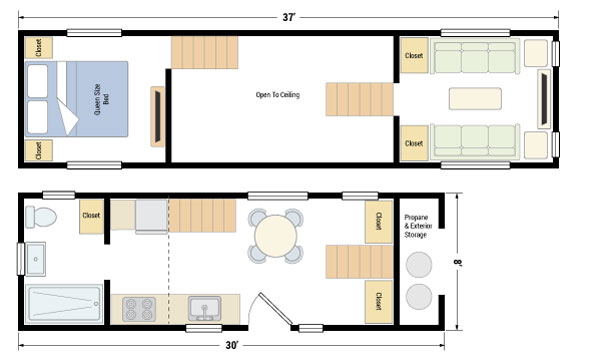
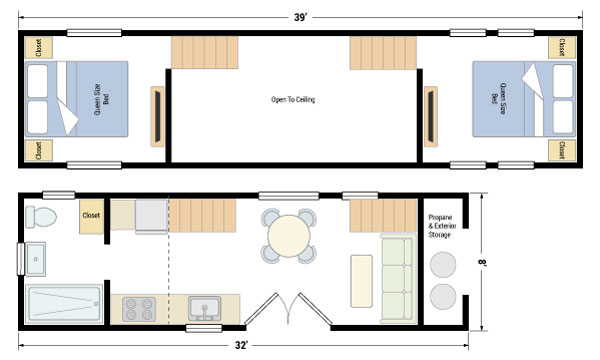
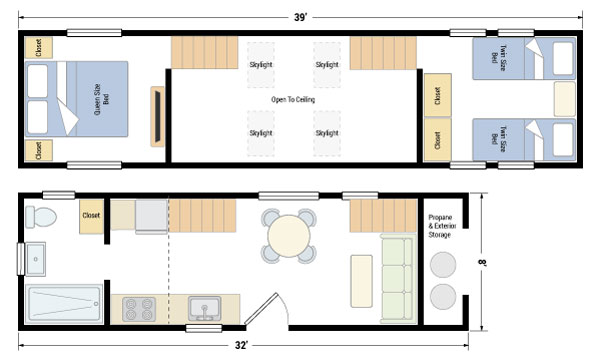
40 Foot Gooseneck Tiny House Floorplan

A tiny house built on a 40-foot gooseneck trailer will have about 400 square feet of living space, which is a decent sized tiny house. This is the point where you’ll have to start watching out for weight ratings and axle limits for a CDL license when you tow your tiny house.

Gooseneck Tiny House Plans

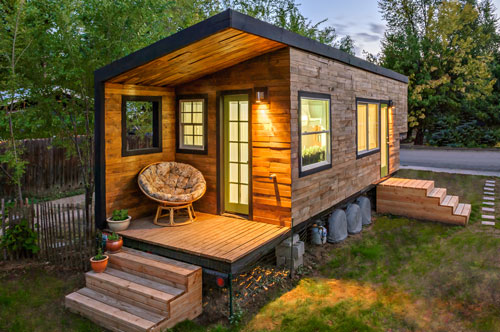
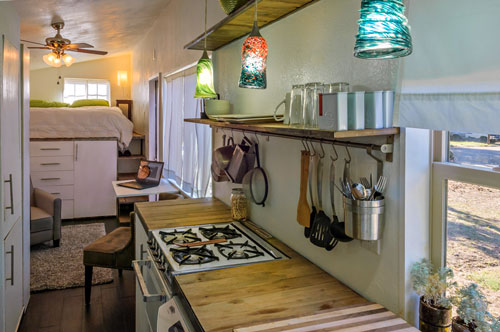
There are a few different plans for sale for a gooseneck tiny house on wheels, but Macy Miller’s MiniMotives are one of the sets I’d recommend the most. Macy is a friend of mine and built this house herself. I’ve spent time reviewing various 5th wheel tiny house plans, and these in particular are among the best out there.

MiniMotives’ 5th Wheel Tiny House Plans
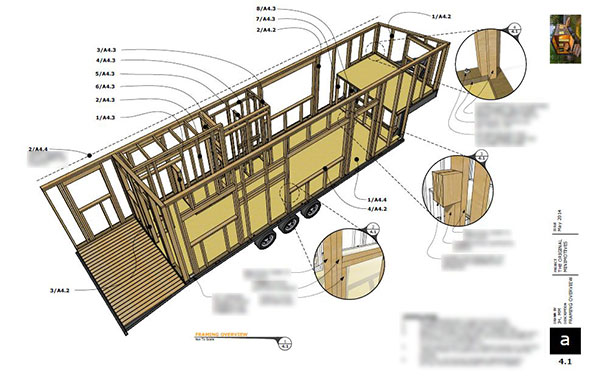
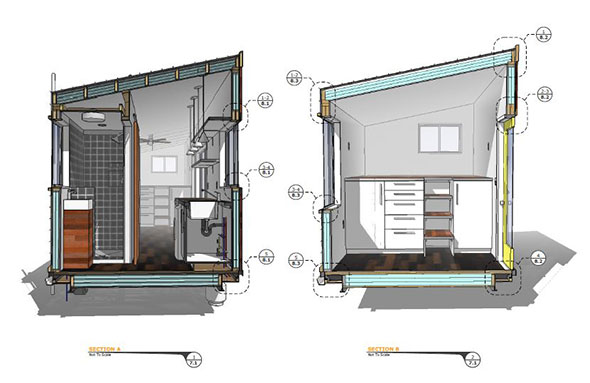
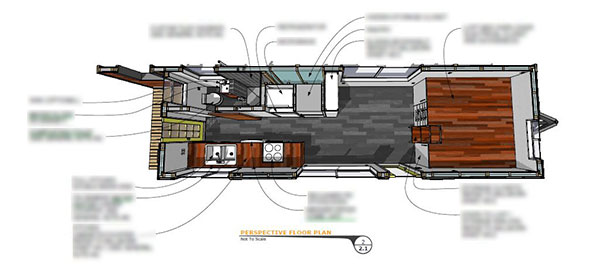
The first thing you notice about these 5th wheel tiny house plans is the gorgeous 3D graphics! They help make the building plans easier to read and are visually appealing. There are so many zoomed-in details, cutaways, and isometrics, and they’re all beautiful. The 3D diagrams are rendered in color and labeled clearly, so a builder can easily discern all the details.
The plans are also very thorough at 32 pages. Pages measure 17”x11” and could be printed or viewed digitally. There’s no tool list, but the materials list is very detailed. The plumbing illustrations are rendered in 3D from different angles and are very clearly labeled.
There’s also a whole page dedicated to the electrical diagrams separate from other floor plans and layouts for easy reading. Color coding helps the builder see the circuits more clearly. There are even some great, beginner-friendly side diagrams explaining basic wiring.
How To Build A Gooseneck Tiny House

If you want to build a tiny house on a gooseneck or fifth wheel trailer, the process is pretty similar to that of a standard tiny house, with the exception of building over the fifth wheel neck. I like to think of it as building two sections of the same house: one mounted on the main trailer and the other mounted on the neck.
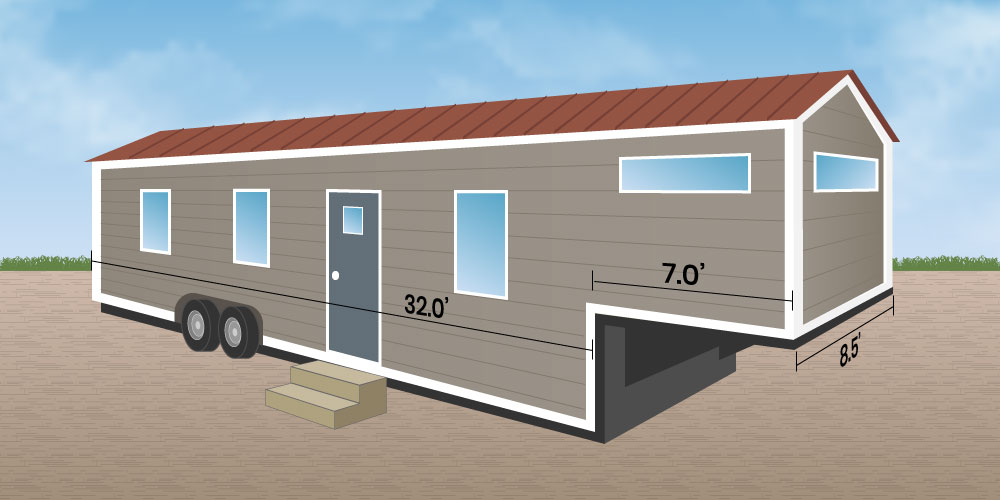
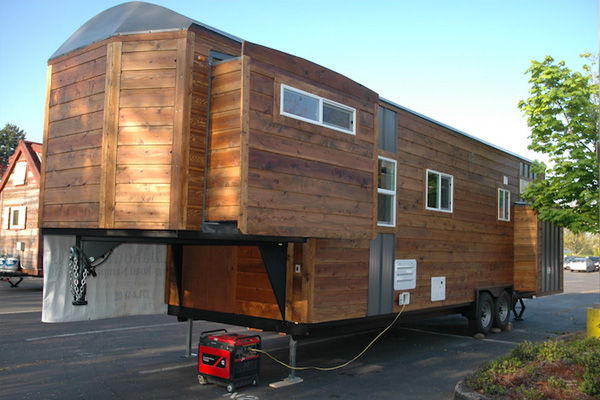
As you can see, this gooseneck trailer tiny home has two distinct sections: the main body and the upper loft of the gooseneck. Just make sure that your roof height doesn’t exceed the maximum height allowed by law.
Step 1: Design Your Tiny House

Start by having a rough idea of your layout to make sure the square footage will work for you, then get your trailer. I’d suggest getting your trailer before you commit to a final design. This will help you when it comes to actual dimensions and visualizing what your gooseneck tiny house will really be like.
Step 2: Anchor Your Tiny House To Your Gooseneck Trailer

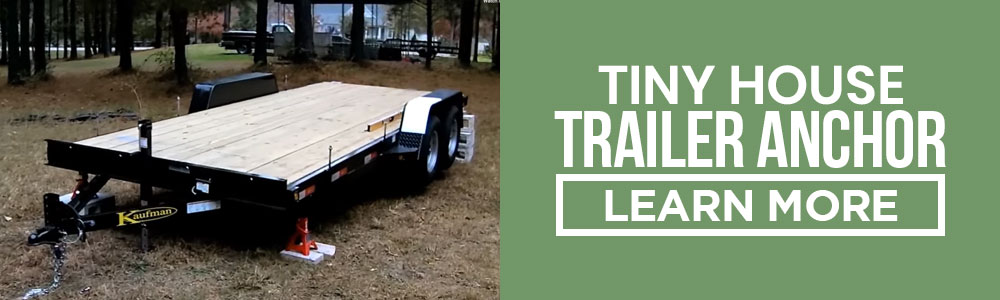
Anchoring your tiny house is a very important step, especially with a gooseneck tiny home. A tiny house gooseneck trailer is much heavier than a regular trailer. Although that allows you to put more weight on it, an improperly anchored gooseneck tiny house can be disastrous — even deadly.
Step 3: Build The Subfloor

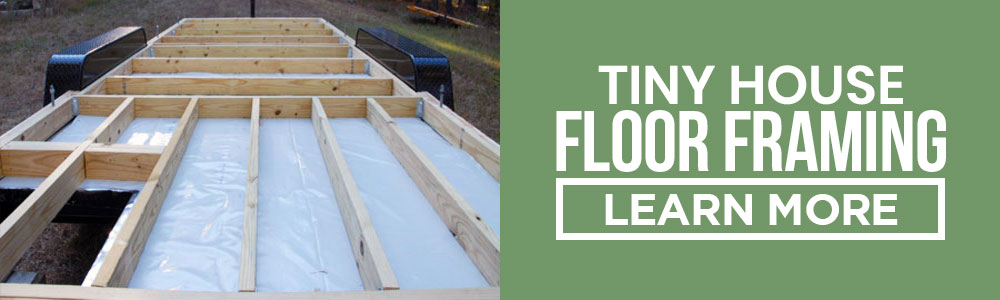
The first system you’re going to build is your subflooring. This is the base that will sit on top of your trailer deck and will later serve as the foundation of your flooring. A very important point here is to make sure the anchoring extends from the trailer through your subflooring and up into the wall studs to secure all three together.
Step 4: Framing The Walls Of Your Gooseneck Tiny Home

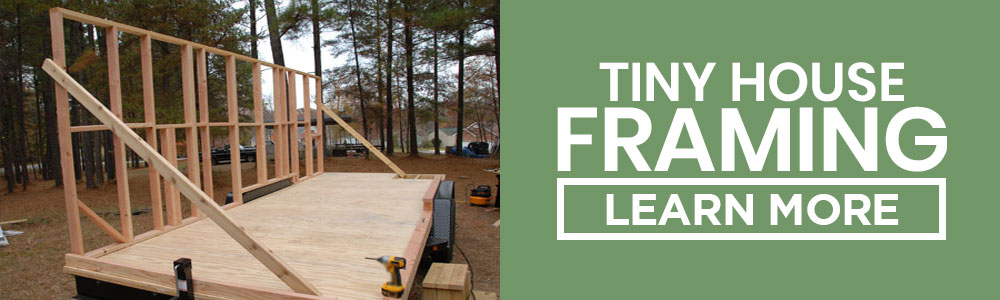
On top of your subflooring, you’re going to build your wall framing system. You want to make sure that your anchoring comes through your bottom plate and ties into your vertical studs with the proper metal brackets. I’d suggest 16 inches on center framing, but you might consider 24-inch framing if you need to reduce the weight.
Step 5: Framing Your Roof

Your roof tops off your walls and should be covered in roof decking and tied in with hurricane brackets at each stud. Your roof trusses should land exactly on top of your wall studs, which will allow the weight of the roof to be carried down from the rafters, through the studs and onto your trailer.
Step 6: Add Sheathing

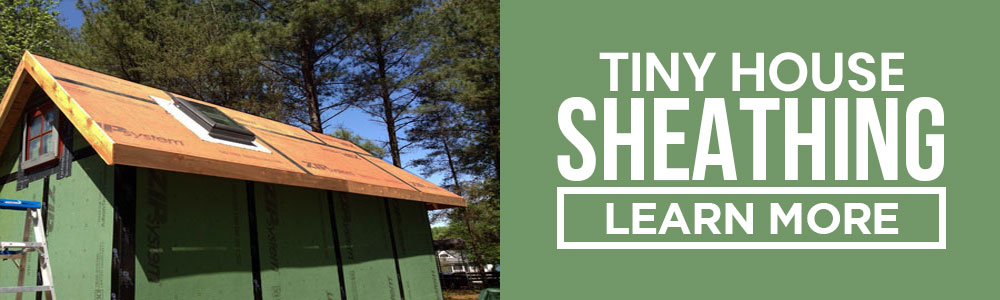
On the outside of your tiny house, you’re going to want to use sheathing to tie it all together. I suggest using a glue and screw approach for extra strength.
Step 7: Add Doors And Windows To Your Tiny House

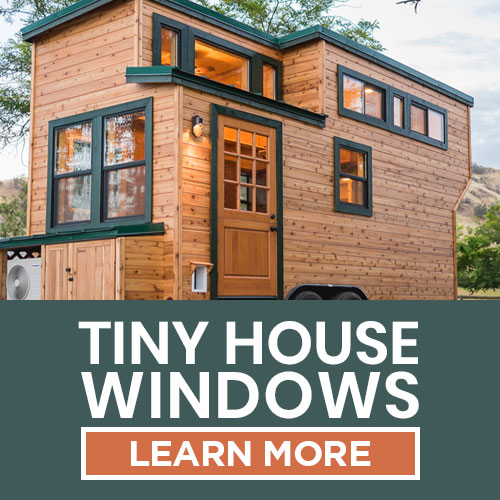
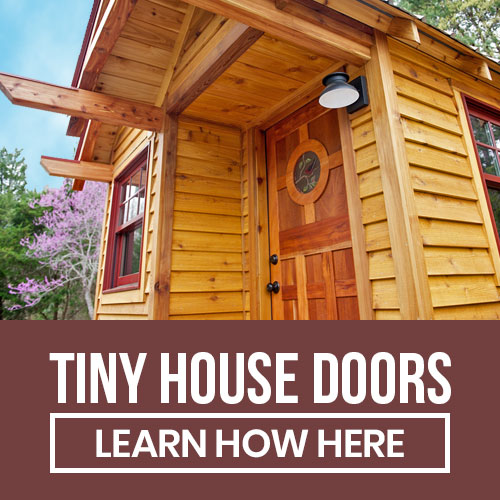
Dropping in your windows and doors won’t take long, but you want to make sure you get your flashing details right.
Step 8: Adding Siding And Trim To Your Tiny House

Adding siding to your tiny house is a pretty straightforward process once you get the trim done around your windows and doors. You have a few options for siding: board and batten, fiber cement, and wood siding. I wouldn’t suggest going with vinyl siding as it can blow off very easily while driving down the road.

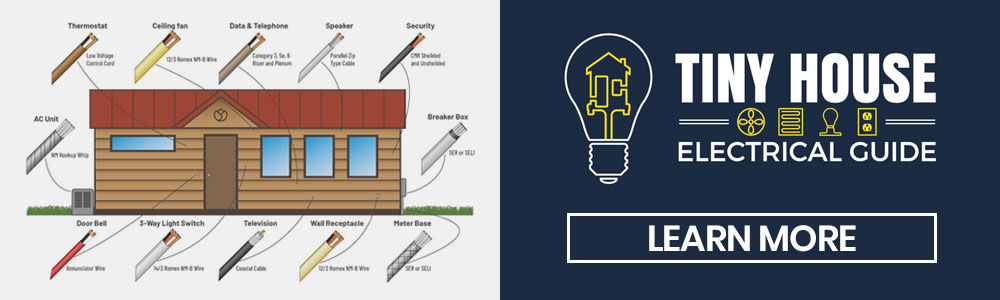
Step 9: Installing Utilities: Electrical And Plumbing

For this step, you might want to consider looping in an electrician and a plumber. But for those of you who want to do it on your own, it can be done. I’d recommend using PEX in your tiny house to plumb it and keeping your electrical system pretty simple.
Step 10: Finish Your Gooseneck Tiny House Interior

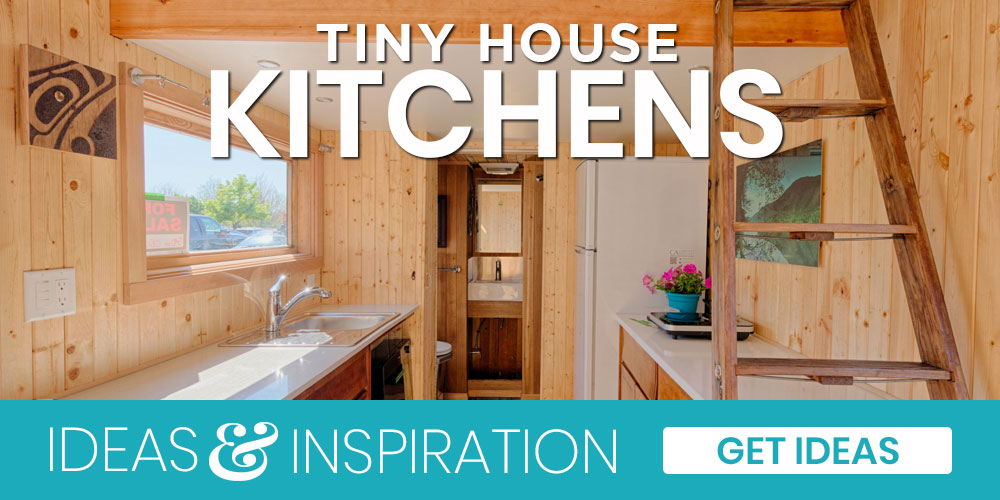
Obviously, this is a pretty involved step, but the final process of building your gooseneck tiny house is to finish the inside. You’re going to want to apply your interior wall finishes, build out your kitchen and bathroom, add your built-ins, and lay down your flooring.
There’s a lot to it, so here are some posts that can help:



Gooseneck Trailer Weight, Towing, And What Truck You Need
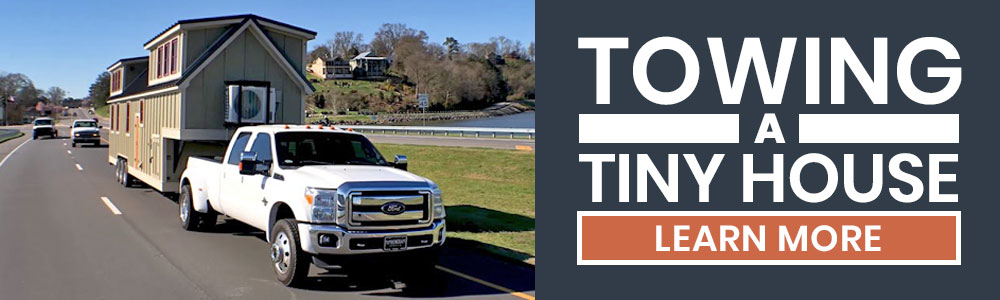
A great floor plan for a gooseneck tiny house on wheels won’t mean much if you don’t have a truck capable of hauling it. Gooseneck trailers can weigh upwards of 7k lbs, and that’s before you start adding windows, furniture, fixtures, appliances, and personal belongings. By the time you add everything up, your gooseneck trailer tiny house can easily exceed 15k lbs.
All things considered, you’ll probably need a ¾ to 1-ton pickup truck specifically built for hauling and towing. These medium to heavy-duty trucks sport high-powered engines, sturdier frames, and reinforced suspensions that can handle both the weight of your trailer and the fully furnished tiny home.
Gooseneck vs. Bumper Pull vs. Fifth Wheel
The biggest difference between goosenecks vs bumper pulls and gooseneck vs fifth wheels is how the trailer attaches to your truck. This connection serves as the foundation of stability, maneuverability, and overall road performance, so I can’t stress enough how important it is to pick the right system.
Goosenecks and 5th wheel tiny home trailers connect to a hitch located right above your truck bed. Because of this positioning, gooseneck and fifth wheel trailers handle high speeds better than bumper pulls. They also offer smoother tracking and better turning capability.
If I had to pick a winner between goosenecks vs fifth wheels and goosenecks vs bumper pulls, I think gooseneck trailers take the edge. They’re the best all-around option and have the added benefits of being minimally invasive and easier to install and maneuver. That said, there are some instances where you may prefer a fifth wheel or bumper pull. I’ll dive into those below.
Gooseneck Tiny House vs. Fifth Wheel
Although “gooseneck tiny house” and “fifth-wheel tiny house” are often used interchangeably, there is technically a difference between the two hitch systems.
Goosenecks use a simpler ball-and-coupler system, while fifth wheels require a larger (and more expensive) specialized hitch mounted in the truck bed.
For most tiny-home owners, either setup can work well. A gooseneck hitch is generally simpler and less invasive, while a fifth-wheel hitch can offer greater stability and control when towing particularly heavy tiny homes or traveling frequently.
Gooseneck Tiny House vs. Bumper Pull
Unlike gooseneck and fifth wheel tiny home trailers, bumper pulls are attached to a receiver near the truck’s rear axle. Bumper pulls are great if you don’t want to sacrifice cargo space, and the simpler setup means they’re much cheaper than both 5th wheels and goosenecks.
The only issue I have with bumper pulls is that, due to the positioning of the hitch, more strain is put on your truck. They’re also more susceptible to swaying, which can be a safety risk if you plan on traveling frequently.
For this reason, I’d only recommend going with a bumper pull if you have a small, lightweight, tiny home that you don’t plan on moving often.
Where To Buy A Gooseneck Trailer For A Tiny House
Once you have an idea of the dimensions and final weight of your tiny home, it’s time to find a trailer with the appropriate width, length, GVWR, and payload capacity. I like to think of the trailer as the foundation of your gooseneck tiny house, so you really don’t want to skimp on this step.
The good news is that there’s a fairly strong online market for both new and used tiny house gooseneck trailers. You can browse manufacturers and local dealers to get a good understanding of what’s available and then take those specs to online marketplaces to find a better deal.
I’ve also found that many flatbed and gooseneck trailer companies offer models that can work quite well for 5th wheel tiny homes, even if they aren’t explicitly made for them. Just make sure you pay close attention to the capacity and dimensions.
Gooseneck Tiny House Video Tours

Here are some video tours of gooseneck tiny house interiors to give you design inspiration for building your own tiny house on a gooseneck trailer. Seeing these fifth wheel tiny homes in action can help you visualize how different layouts and design choices come together.
Is A Gooseneck Tiny House Right For You?
If I build another tiny house on wheels, I’m pretty sure that it’ll be a 5th wheel tiny house. In terms of usable space, versatility, road stability, and ease of towing, gooseneck tiny houses just can’t be beat. Sure, the starting costs can be high. But in my opinion, they’re well worth the investment.
Your Turn!
- Why do you want to build your tiny house on a gooseneck trailer?
- If you were designing a gooseneck tiny house, would you use the extra loft space for a bedroom, office space, storage, or something else?
I have access to a 30 foot fifth wheel trailer. Your information will provide ideas and the plans to build the tiny house dream.
I would like to have a standup bedroom. I dont mined shorter ceilings im 5’3″ and a 6′ ceiling would be ideal. I can change lights without climbing. I would also want a stackable washer and dryer, full bathroom, full kitchen, and a small sitting area.
I like this model.
How much money do you need enable for you to make your fifth wheel trailer into a tiny house
I absolutely LOVE this TINY HOME on a gooseneck trailer, the awesome deck on the back side is perfect, & if I’m ever able to afford to build one, this one would definitely be the one I’d choose.
Thank you for this detailed guide! I’ve always been fascinated by gooseneck tiny homes, and your tips on design and layout are incredibly helpful. Can’t wait to start my own project!