
NAVIGATION
 Tiny House Trailer
 Foundation
 Wall Framing
 Windows & Doors
 Roof Framing
 Roofing Materials
 Plumbing
 Electrical
 Appliances
 Kitchen
 Bathroom
 Sleeping Loft
I’ve been asked time and time again for a definitive step-by-step guide to building a tiny house. As someone who’s personally been through and walked others through the tiny house building process many times, I’m happy to share this experience with you. I wanted to include a basic outline to show you the steps I took to build my tiny house. It can be an intimidating process at first, but this list should help eliminate some of your worry and confusion.
If you’re seeking tiny home building plans and other specifics, please visit my in-depth review of tiny house building plans before you buy. If you’re considering building but don’t know where to start, the tiny house building checklist below will give you a full overview of what planning, construction and set up entails. It’s always nice to have an overview before you jump into a project, especially one this in-depth and important.
Whether or not to build or buy a tiny home is often the first question folks ask themselves, and I’m always hearing people selling themselves short due to a lack of experience. Take it from me, building a tiny house is completely doable!
You simply need to make a plan, be open to understanding the process thoroughly, and prepare to learn from others’ mistakes. Chances are you’ll run into a few roadblocks along the way, especially if you’re new to home construction, but it’s a satisfying learning process with great end results!
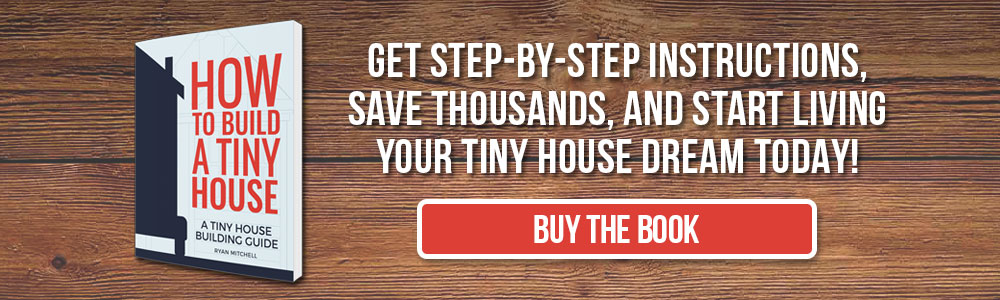
For a more comprehensive guide, check out my eBook: How to Build a Tiny House.
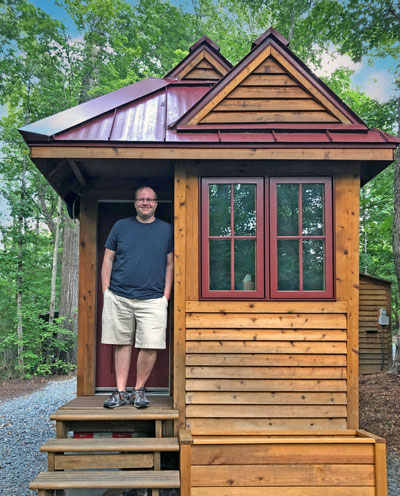
Hi, I’m Ryan
I learned pretty early on that building smaller doesn’t necessarily mean easier. While there’s less work overall, you’re essentially trading square footage for intention. Less space means less room for error, and as a result, every decision carries that much more weight.

TINY HOUSE BUILDING CHECKLIST
This tiny house building checklist is broken down into steps by project and stage. While some stages and phases of construction may overlap, I’ve tried to set them out in the optimal order. Where appropriate, I’ve included links to posts that expand on each step. I also offer more in-depth walkthroughs in The Tiny Life courses.
Phase 1: Before You Build Your Tiny House
The brainstorming and planning phases of building a tiny house are vitally important to the designing process. Of course, logistics, plumbing, solar and other tiny house construction steps are key too, but in the end, it all comes down to taking the time to plan. Set yourself up for success by creating a strong, research-based construction plan, before you even pick up a hammer. Here’s a free tiny house plan to help you get started.
Planning Your Tiny House
[custom_list style=”list-1″]
- Assess your needs and ability to live tiny: What You Need to Live in a Tiny House
- Get inspiration from pop culture: Tiny House TV Shows
- Look into possible building sites: Where Are Tiny Houses Legal
- Research suitable plots of land: Finding Land For A Tiny House
- Talk with tiny house builders and owners: Interview With Tiny House Builders
- Create a rough tiny house floor plan: 10 Tiny House Design Tips
- Determine the features you want in your tiny house: Pools, Decks, Garages
- Draft or purchase building plans: Tiny House Plans, Prefab Tiny Home Kits
- Create and determine your budget: How Much Does A Tiny House Cost
- Address the top barriers to building a tiny house: Barriers, Solutions I, Solutions II
- Think about future additions and upscaling: Family Compound Layouts
[/custom_list]
Understanding Tiny House Zones, Certifications, And Legal Requirements
I know how easy it is to get swept up in construction, but you’ll also need to figure out the legal side of building a tiny house. Although smaller than traditional houses, tiny homes come with a surprising number of legal considerations.
Navigating this legal landscape may feel overwhelming at first, but taking the time to understand zoning laws, building codes, and transportation weight limits will help you avoid expensive setbacks later down the road.
Otherwise, you might finish your tiny home, only to find out that you aren’t able to move it because the house is too large. Here are some of the legal requirements, codes, and certifications you may encounter during the building process.
- Zoning Regulations: Local zoning laws will determine a variety of things, including where you can legally place your tiny home, whether or not full-time occupancy is allowed, minimum square footage requirements, mandatory setback distances, and what you can do with the surrounding property.
- Electrical And Plumbing Permits: Tiny homes are expected to comply with local standards for wiring, water supply systems, drainage, and ventilation. These requirements are particularly important if you plan on connecting your tiny home to municipal water or sewer lines.
- Building Permits: Although they vary by state, city, and country ordinances, building codes and permits are typically required when you build a tiny house on a permanent foundation. These permits cover structural construction work like framing, roofing, insulation, and ceiling requirements.
- Mechanical Permits: Mechanical permits cover the heating, cooling, and ventilation systems in your tiny home. They may be necessary for the initial installation, as well as any repairs, replacements, and alterations later down the line.
- RVIA Certification: Getting a Recreational Vehicle Industry Association certification reclassifies your tiny house as a personal vehicle, rather than a permanent dwelling. An RVIA certification can make it easier to obtain insurance, financing, and helps ensure you’ll be able to park your tiny house in an RV or national park.
- NOAH Certification: A NOAH certification means your tiny home has passed rigorous, third-party testing to ensure the home adheres to national safety and structural integrity standards. Noah certifications aren’t always necessary, but they may come in handy if you need to insure, finance, or sell your tiny home.
- Certificate Of Occupancy: A Certificate of Occupancy simply means your tiny house meets local safety and building standards and has been legally approved for habitation.
- Transportation and Weight Regulations: Plan on taking your tiny home on the road? If so, you’ll have to comply with state road laws regarding tiny house weight limitations.
Understanding The Different Ways To Live Tiny
There isn’t really a one-size-fits-all solution to living tiny, and what works for some will fall short for others. Whether you don’t have enough time to build a tiny home, are looking for something you can attach to the back of your truck or simply prefer to live off-grid – exploring the different tiny home options will help you understand which approach best fits your lifestyle.
Ways To Live Tiny










Tiny Homes
The gold standard in tiny living, tiny homes are simply small-scale houses. They’re compact, affordable, and easy to customize through various design plans. You can either build your tiny house from scratch, or purchase a prefab tiny house shell. There are also a number of different ways modify your tiny home to better fit your needs, including:
Skoolies
Built from retired school buses, skoolies are well-suited for both travel and stationary living.
Earth Berm
Earth berms, or earth-sheltered homes, are partially built underground. The surrounding soil helps provide
insulation, making them energy efficient and well-protected from the elements.
Sheds
Converting or upgrading a shed into a livable space is an affordable and beginner-friendly entry point for living tiny.
Container
Made from converted shipping containers, container homes are durable and can be quite beautiful and economically friendly.
A-Frame
Featuring a classic triangular shape, A-frame homes are efficient and work well in challenging weather conditions.
Barndominium
Barndominiums are affordable, barn-like structures that combine rustic exteriors with spacious interiors. Their simple designs make them both highly customizable and accessible for those with limited mobility.
Yurt
Yurts are portable, round, tent-like homes traditionally used by nomads. They’re less expensive than traditional homes and are perfect for anyone who prioritizes flexibility, travel, or a more minimalistic lifestyle.
Van
Converted vans are built for mobility and independence, making them an excellent option for anyone that values freedom. What they lack in space, they make up for with efficiency, mobility, and affordability.
Geodesic Dome
Often used as greenhouses, geodesic domes are lightweight spherical structures that can be repurposed into energy-efficient homes.
Teardrop Trailer
Small, lightweight, and easy to tow, teardrop trailers offer a low-maintenance way to explore mobile living.
Cargo Trailer
Cargo trailers serve as a middle ground between van life and tiny homes. They’re compact enough to be mobile, but spacious enough to support long-term living. Some types, like gooseneck trailers, even offer additional benefits like loft space, extra storage, and easier maneuverability.
Tiny House Design
If there’s one thing that unites all of the different ways of living tiny, it’s that you have to design your tiny home with intention. You’ll be doing a lot in your tiny home, and the layout needs to support that. One room may serve as a kitchen, office, dining area, and living room – all in the span of one day. For a deeper dive into how layout and planning can ensure your house is both functional and comfortable, you can use this step-by-step guide to designing a tiny house.
Sourcing Tiny House Components
Now that you have a rough idea of your goals, design preferences, and floor plans, you’ll need to source the following items. Many of you may already have these items on hand or be able to trade and barter with friends and family.
- Trailer: My Trailer
- Windows: Ordering Windows
- Lumber: How To Build A Tiny House
- Tools: Basic Tools I Used
- Appliances: My Tiny House Kitchen
- Knowledgeable friends: Tiny Life Community Support
- Professionals: Builder And Contractor Contracts, Tiny House Builder Directory, Tiny House Roofs
Access & Logistics
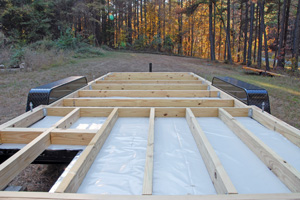 This is the time to think through how to build a tiny house from start to finish. Consider the whole process starting with how to get your trailer onto the build site and how you’ll get it out if you ever need to move it. In your mind, play out each step of the building process to see where problems come up or challenges may arise.
- Will you be living alone, or does your tiny home need to accommodate your entire family?
- Consider your larger items. When will you bring in your mattress, appliances, shower stall, toilet, furniture, and so on, if they won’t fit through your front door?
- How are you going to get power during the construction phase?
- How many bedrooms will your tiny house have? Are you building a simple, one-story tiny home or one with multiple floors?
- Try to time ordering your building materials, so they arrive right when you need them and make sure you have the proper supplies and tools to do the job.
- Think about where your construction waste will go. Will you need a dumpster, trailer, or scheduled pickups?
Phase 2: How to Build a Tiny House – Construction
Once the planning and logistics phase is complete, you’ll be ready to start construction. If you’ve gone through each of the planning steps carefully, you should feel comfortable that you’ve procured all the tools you’ll need for constructing your tiny house (though no matter what you do, you’ll be making trips to the hardware store for this or that). Work out any gaps in the planning phase before you move forward with building your tiny home.
When I built my tiny house I used the weeknights to plan and research what I was going to do each weekend when I was building. Thursday night I wrote down a shopping list to take with me to the hardware store. Friday night I’d buy the materials and stage them for building the next day. This way, when the weekend came, I could get right to work without feeling rushed to figure out plans or make a lot of trips to the store.
Tiny House Trailer
[custom_list style=”list-1″]
- Site selection: Setting Up Land for a Tiny House
- Leveling: Setting Up a Tiny House on Jack Stands
- Remove decking – I decided to get a higher weight rated trailer, so I left these on
- Cut off extras: The Trailer for My Tiny House
- Weld on anchors: Anchoring a Tiny House to the Trailer
[/custom_list]
Tiny House Foundation
[custom_list style=”list-1″]
- Learn the basics: What You Need To Know Before Building A Foundation
- Build foundation frame: Framing The Floor
- Anchor foundation to the trailer: Anchoring the Tiny House
- Attach metal flashing: Adding the Deck Flashing
- Add insulation: Tiny House Building Update
- Add vapor barrier: Protecting Against Water
- Install subfloor: Framing the Floor
[/custom_list]
Tiny House Wall Framing
[custom_list style=”list-1″]
- Frame walls: Framing My Tiny House
- Ensure squareness by using a good level. Here’s the level I use
- Test fit windows: How To Choose Tiny House Windows
- Sheathe your tiny house walls: Tiny House Sheathing
- Consider big items that might not fit through the door (e.g. shower stall, mattress, fridge)
- Raise walls, square and brace: Framing My Tiny House
- Frame the loft(s): Tiny House With Two Sleeping Lofts
- Secure framing to the trailer via anchors: Anchoring a Tiny House to the Trailer
[/custom_list]
Tiny House Sheathing
[custom_list style=”list-1″]
- Measure & plan layout: here’s my favorite tape measure
- Cut all pieces
- Allow for 1/8″ expansion gap between sheets of plywood
- Test fit the sheets
- Apply glue to all studs: Tiny House Sheathing
- Tack the sheets in place with a few nails (note: use screws and nails for treated wood)
- Screw every 3″ on edges of panels: My favorite impact driver here
- Screw every 6″ into studs covered: Framing With Metal Studs
- Anchor the plywood to the foundation after the walls are raised
[/custom_list]
Windows and Door Rough Openings
[custom_list style=”list-1″]
- Double check the window dimensions (note: give a little extra allowance)
- Cut out the window holes, using a Sawzall or plunge router
- Apply house wrap (WRB), Tyvek or Typar
- Cut the house wrap, using inverted “Y” – My favorite box cutter
- Test fit windows
- Flash window sills at a 5-degree angle
- Install the windows and shim
- Tack with a few screws
- Test window functionality
- Secure the windows per manufacture recommendations
- Flash windows, starting at the bottom and working up
- Leave the bottom edge unsealed for water drainage
[/custom_list]
Tiny House Roof Framing
[custom_list style=”list-1″]
- Construct trusses per plans
- Make sure you tie into your wall framing with Hurricane Ties
- Ensure height stays under 13.5 feet
- Build headers for rough opening for skylight
[/custom_list]
Roof Sheathing
[custom_list style=”list-1″]
- Plan layout and dimensions
- Cut boards
- Glue truss edges
- Use “H” clips between sheets: Get them here
- Secure with ring shank nails and screws
[/custom_list]
Install Skylights
[custom_list style=”list-1″]
- Build frame if using curb mounted (there’s no need to frame with deck mounted)
- Test fit skylight
- Install skylight per directions
- Flash according to directions
[/custom_list]
Door(s)
[custom_list style=”list-1″]
- Frame in the doorframe
- Build the door or purchase
- Test fit the door to the frame
- Shim and secure the door to the frame
- Consider a temporary plywood door during construction
- Install the door hardware
[/custom_list]
Siding
[custom_list style=”list-1″]
- Tape the house wrap seams
- Install the furring strips
- Paint BOTH sides of siding before putting up
- Hang the siding
[/custom_list]
Outside Trim Work
[custom_list style=”list-1″]
- Install fascia boards (and SIPS, if needed)
- Install drip edge
[/custom_list]
Roofing
[custom_list style=”list-1″]
- Apply ice & water shield
- Install solar panel brackets (if applicable)
- Install reflection barrier (need 0.5″ gap)
- Install furring strips
- Install roof per manufacture’s recommendations
[/custom_list]
Rough Plumbing
Note: This may be an area to consider hiring a professional.
[custom_list style=”list-1″]
- Map out your plumbing layout
- Make a rough plan for utility hookups
- Plan drains, inlets, holes in floor, etc.
- Check for trailer cross beams under trailer
- Account for moisture controlling vents
- Account for “P” traps
- Account for proper slope so water drains well
[/custom_list]
Rough Electrical
Note: Hiring a professional is highly recommended.
[custom_list style=”list-1″]
- Plan out locations of outlets, lights, fans, sockets, etc.
- Plan locations for smoke and carbon monoxide alarms
- Consider your power usage
[/custom_list]
Rough Gas Lines
Note: Hiring a professional is highly recommended.
[custom_list style=”list-1″]
- Plan out locations for gas lines and apppliances
[/custom_list]
Rough HVAC
Note: Hiring a professional is highly recommended.
[custom_list style=”list-1″]
- Plan out locations needed
- Choose HVAC system type (mini-split, propane, etc)
[/custom_list]
Insulate
Note: ensure your materials and fasteners that come in contact with foam don’t react
[custom_list style=”list-1″]
- Install insulation
- Foam in edges
- Install vapor barrier to 6-millimeter thickness
- Ensure your materials and fasteners that come in contact with foam are okay (some react)
[/custom_list]
Install Major Appliances
[custom_list style=”list-1″]
- Water heater
- Fridge (you may wish to wait till later)
- Shower
- Heater and air conditioner
- Washer and dryer
[/custom_list]
Flooring
[custom_list style=”list-1″]
- Determine which flooring option is right for you
- Follow directions
- Cover with durable protection layer
[/custom_list]
Walls
[custom_list style=”list-1″]
- Install drywall
- Hang wall panels
- Trim around lights and edges
[/custom_list]
Kitchen
[custom_list style=”list-1″]
- Plan out locations needed for kitchen layout and storage
- Construct a rough frame for cabinets and countertops
- Install countertops
- Drop in the stove and connect
- Drop in the sink and connect
- Build and install cabinet doors
- Build in storage and shelving
- Equip your tiny house kitchen with additional essentials
[/custom_list]
Bathroom
[custom_list style=”list-1″]
- Plan out locations needed for your bathroom layout
- Finish the shower stall or bathtub connections
- Finish bathroom walls
- Finish bathroom storage
- Connect toilet (You can use a Luggable Loo or build a composting unit for an off-grid bathroom option)
- Install vent (consider having on timer for whole house air exchange)
[/custom_list]
Sleeping Loft
[custom_list style=”list-1″]
- Install any additional storage
- Build or install stairs or ladder for loft access (I like these spiral staircases)
- Wire in lights and outlets
- Finish setting up your sleeping loft
- Take a nap, you deserve it!
[/custom_list]
Main Room
[custom_list style=”list-1″]
- Finish HVAC
- Wire lights and outlets
- Build any built-in units (home office, closets, etc)
- Finish storage
[/custom_list]
Finishing Touches
[custom_list style=”list-1″]
- Seal gaps and joints
- Seal, stain, or paint the ceiling
- Final inspections
- Paint or finish walls
- Install lighting fixtures
[/custom_list]
Phase 3: Celebrate!
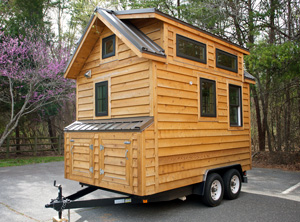 Once your tiny house buildout is finished (and it’s a BIG job to build a tiny house), it’s time to move and settle in. Fortunately, once you’ve mastered the basics of how to build a tiny house and finished the building process, moving into your tiny home should be a piece of cake.
[custom_list style=”list-1″]
- Clean up debris and surfaces
- Move your furniture into your new tiny home
- Decorate the interior
- Invite awesome friends who helped
- Sit back, enjoy, and start thinking about building your own tiny house community!
[/custom_list]
The only major project left to do is to work on your landscaping and begin transforming the rest of property into a more complete living space. As time passes, you’ll inevitably find yourself making small tweaks here and there, since living in tight quarters makes you much more aware of how just how valuable space is.
It won’t be long before you start reevaluating every item in your home. Fortunately, there’s no shortage of clever storage solutions, like these couches that double as storage space, that are designed to maximize every square foot. But for now, the hard part is over, and the most important thing for you to do is pat yourself on the back for a job well done.
In Conclusion: Plan Before You Build
As you can see, building a tiny house is an involved, but manageable process. There are many great resources available, including these recommended books and the content right here on The Tiny Life. And if you ever find yourself needing a little extra help, consider joining The Tiny Life Membership Community. I cover everything from construction to daily living through a series of exclusive webinars, workshops, courses, and expert-led forums.
As you explore how to build a tiny house, really take time upfront to do phase 1 thoroughly. Planning is the most vital step. Of course, you can’t plan for every contingency that comes along, but if you’ve prepared as much as possible, the building process will be much smoother.
Your Turn!:
- What step of the tiny house building seems the most challenging for you?
- What skills do you need to build before you start building your tiny house?
Related Posts




learn how to build tiny house in just 2 steps
If you are planning to build a tiny house, or even just fit a large shed out as a bit of a guest suite then this excellent tutorial I found HERE ( tiny-house.best-tips.info ) will show you that’s possible! So fascinating to see how much you can fit into a really compact space.
If you are planning to build a tiny house, or even just fit a large shed out as a bit of a guest suite then this excellent tutorial I found HERE ( tiny-house.best-tips.info ) will show you that’s possible! So fascinating to see how much you can fit into a really compact space.
If anyone is preparing for building a tiny house then they should visit this blog to get more knowledge.
What vehicle do you tow your tiny house with and what is the final weight of the house?
My name is Anthony,I’m just getting ready to go start the process,my frame used to be a camper I purchased it from the pawnshop 28’1” will it work for a tiny home 2 x 6 construction metal box frame
I found your article on building a tiny house and it sounds fascinating! I’m really excited to read more.
Subcribe to Boogie..Please
Hello? I want to have a tiny house in one location (RV park), then want to move it to another property in another state after a couple years. Where the house would be moved to is in a my lower back yard. The house can be towed there, but can it be taken apart and reconstructed in the new location? Thanks!
Thank you for posting this list!!
I already have a good idea to what I want in my tiny house because I have a lot of little people that I’m trying to come with me I need a tiny house for two children and three adults I need two bathrooms I need a washer and dry and laundry room I need a full kitchen big living room dining room and a den I cannot walk up to no steps I need a straight floor straight through my bathroom I want a full bathroom shower tub sink and vanity I’m my second bathroom just want to showers, sink the toilet that flush. And I only going to spend for the whole house is $95,500.
If you are planning to build a tiny house, or even just fit a large shed out as a bit of a guest suite then this excellent tutorial I found HERE ( tiny-house.best-tips.info ) will show you that’s possible! So fascinating to see how much you can fit into a really compact space.
Mine will be a 40ft pulled behind a dual axle truck. I’d like to get an electric hybrid.
Can you build a tiny house or do you know a builder in WV.
Summit 3.2 ft kitchenette sells for $2600 includes sink mini fridge, freezer in a cabinet pluse a small 4 burner stove with 2 shelf oven. I found it on Wayfair.com
I wish I can find a similar style article for converting a tuff shed, like the Richmond 16×28 for instance, into a tiny house.
Thanks for sharing the information!! Local law 11 contractor ny plays a crucial role in maintaining the safety and structural integrity of our buildings. It’s essential to hire a contractor who is well-versed in the local regulations and can ensure that your property complies with the requirements. Safety should always be a top priority!
I would like to speak to someone about a tiny house project.
Do they require sprinklers?
Dear Sir.
We are interested in your Tiny Houhse and would like you to contact us at josephwilburs at yahoo. ca for our discussion.
Thanks.
Wilburs
I am a retired United States Army veteran, I am also 65 years old, I can’t afford to live where I live because my retirement doesn’t give me that much money. I need to find an affordable place to live because I can no longer work. Can someone help me?
I found your tiny house building checklist incredibly thorough and well-organized! It’s clear that you’ve put a lot of thought into each stage of the process, which is so helpful for anyone embarking on this journey. I particularly appreciated the sections on budgeting and legal considerations; these aspects are often overlooked but crucial for a successful build.
One aspect I’m curious about is how you prioritize the different elements of the checklist. For example, how do you decide which tasks should be completed first to avoid potential setbacks or overlaps in the construction process? Additionally, are there any common pitfalls you’ve observed that might not be immediately apparent from the checklist?
Do you build these? If so would like to purchase 3303076367
Great checklist! It’s so detailed and covers all the essential steps for building a tiny house. I appreciate the tips on maximizing space and sustainability. Can’t wait to get started on my own tiny home journey!
This checklist is an absolute lifesaver! I love how detailed it is—definitely helps to break down the overwhelming process of building a tiny house. Excited to start my journey with these steps! Thanks for sharing such valuable information!
How to title on a tiny home on a stationery trailer located in NC in MN. It’s considered an RV in NC and DMV. The MN DMV says it needs to be registered as a Commercial Trailer and can’t be titled. I don’t think that’s right so want expert advice please. Thank you.