

NAVIGATION
Tiny houses are often celebrated for their simplicity and charm, but they also present an opportunity to rethink how we view accessibility.
The limited space in an accessible tiny house may even end up working in your favor by allowing you to customize every square inch of the building to accommodate your specific disability.
But you don’t have to take my word for it. This guide will explore the ways in which a thoughtful design and inclusive features can turn a tiny home into a space that provides comfort and independence for all.
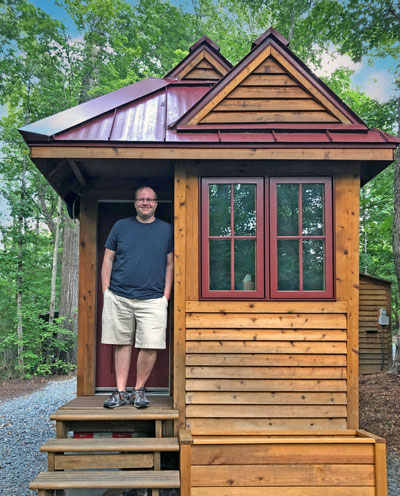
Hi, I’m Ryan
My first accessible build was for a retired couple looking to downsize. Standard layouts didn’t work, and at first I wasn’t sure how to adapt. But we eventually figured it out — together. In the end, that obstacle transformed accessibility from an afterthought into the foundation of my design process.

How Do You Make A Tiny House Accessible?
Making a tiny home accessible isn’t a one-size-fits-all process, as disabilities come in many forms. For example, a wheelchair accessible tiny house might look completely different from an ADA tiny home geared toward seniors.
But whether you’re building a tiny home from scratch or retrofitting an existing model, your approach should be the same: to maximize space and functionality without sacrificing style or comfort. I’ll walk you through some of the different ways you can do that below.
Opt For An Accessible Tiny House Layout
The first step to building a handicap accessible tiny house is to pick a floor plan that helps rather than hinders. Ideally, you’ll want to use a wheelchair accessible tiny house plan.
If you want to create your own accessible floor plans, just keep in mind that inclusive designs are generally single level and open, and incorporate ramps or gentle inclines instead of stairs.
A tiny house for disabled people should also feature wider hallways and doorframes to help accommodate wheelchairs and other walking aids.
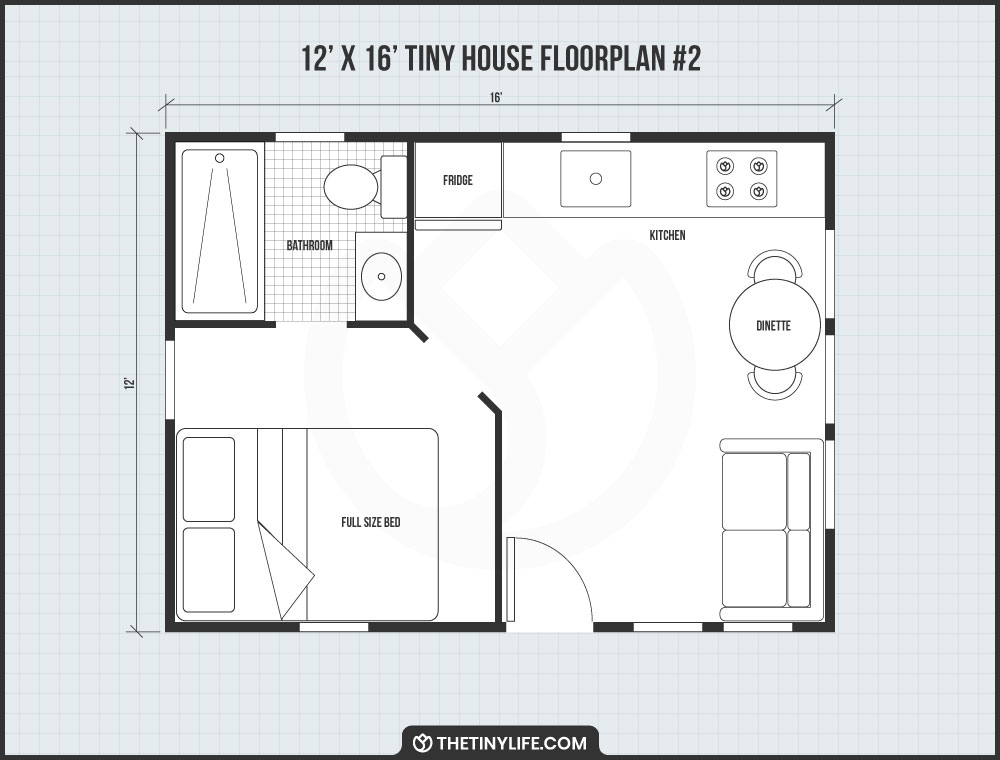
My general rule is to keep pathways at least 36 inches wide, but you can adjust the width as needed.
Customize Your Kitchen And Bath To Be Disability-Friendly
Kitchens and bathrooms are two of the hardest rooms for people with limited mobility to navigate, so it’s important to keep that in mind during the design process. Fortunately, there are a ton of ways to improve the navigability of a kitchen.
 These can be as simple as raising or lowering the cabinets, and installing a stove top, fridge, and sink that leave space for a wheelchair. In terms of appliances, you’ll want to opt for models with front-facing controls, easy-to-open doors, and pull-out shelves.
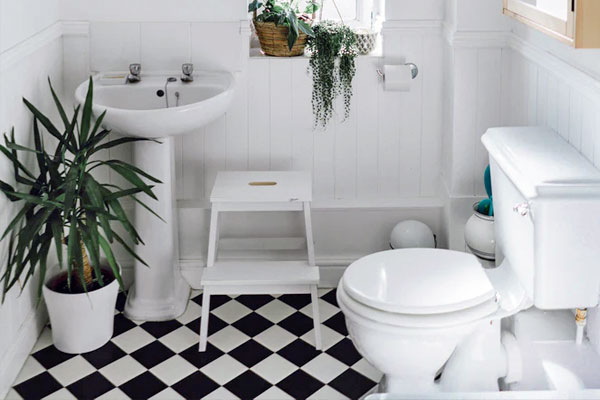
The steps for creating an inclusive bathroom are similar, and involve positioning your toilet, sink, and cabinets in a way that gives you easy access. Install a barrier-free shower with grab bars for extra support, and don’t forget to ensure that the shower head and controls are at an accessible height.
Install ADA-Recommended Mobility Features
Space is at a premium in tiny houses, so maneuverability needs to be at the center of an accessible design. Pathways should be clear from clutter and spacious, handrails should be placed strategically around the house, and to make your tiny house wheelchair accessible, you should install wheelchair ramps where needed.
Another thing that people tend to overlook is accessible flooring options. According to the ADA, flooring needs to be firm, stable, and slip-resistant to qualify as accessible. Even small fluctuations in height can be trip hazards, so it’s important to prioritize functionality.
Incorporate Smart Tech Into Your Tiny House
One of my favorite but lesser-known benefits of choosing a tiny house for disabled persons is that it can make smart tech much more approachable. Because there’s less square footage to cover, upgrading your space will likely be cheaper, faster, and easier than it’d be in a full-sized home.
Smart locks, motion-activated lighting, and voice-controlled systems reduce the need for physical interaction with potentially difficult switches and handles, and many can even be operated from the convenience of your smartphone.
Outfit Your Tiny Home With Inclusive Furniture
Once your tiny home is built, the next step is to furnish the home with disability-friendly furniture. Opt for storage solutions that are wheelchair or walker-friendly and easy to access without having to bend or stretch.
It’s important to place them around the home in a way that leaves your pathways open and free from clutter. When it comes to picking furniture, there are a number of tables and seating options with adjustable heights that allow you to move the furniture up or down as needed.
Being able to adjust your existing furniture will be extremely helpful if your accessibility needs end up changing. And, if you’re having a hard time finding furniture that works, you can always purchase custom-built pieces that are tailored to your specific needs.

Where Can You Buy An Accessible Tiny House?
There’s no shortage of options when it comes to buying a tiny home. A lot of people purchase their tiny homes through specialized tiny home builders, some of which offer a level of customization for accessibility needs. I even know of a handful of tiny home builders that focus exclusively on accessible ADA tiny houses.
 Another option is to look for pre-built tiny homes through online marketplaces like Tiny House Listings and the Tiny House Society. Just keep in mind that the majority of the homes listed will need some level of modification to turn them into a handicap accessible tiny house.
If you’d rather skip the hassle and purchase a wheelchair accessible tiny house that’s move-in ready, I recommend companies like WheelPad.
They sell pre-fabricated accessible housing units that can streamline the purchasing and installation process from start to finish.
The units are thoughtfully designed and come fully equipped with insulated electric and plumbing, similar to what you’d find in an RV.
What Is The Cost To Build A Handicap Accessible Tiny House?
The overall price of a handicap accessible tiny house varies depending on the size and complexity of the design, but in my experience, they usually range from $30,000 to $100,000. While this may seem like a lot, especially on the higher end of the spectrum, traditional handicap accessible homes start at around $200,000. That means going tiny can save you as much as 80% on construction costs.
Are Tiny Homes Good For Seniors?
Tiny homes are an increasingly popular way for seniors to downsize, especially those who value freedom and independence. For one thing, tiny homes tend to come with smaller price tags. They are also more manageable, making maintenance and cleaning more approachable for an elderly tenant.
I can clean my tiny home from top to bottom in just under 30 minutes, much less than it took in a full-sized home. And, in addition to being exceptionally practical, tiny homes are empowering. Building a tiny home in a friend or family member’s backyard as an ADU allows the senior to maintain a sense of closeness and get the support they need without having to give up the freedom of having their own space.

Should You Buy Or Build An Accessible House?
Whether or not you should build or buy an accessible tiny home depends on your budget, level of ability, and preferred timeline. Building your tiny house gives you full control over every detail — from the budget to the layout and accessibility features. However, it can be a slow process that hinges on how familiar you are with construction.
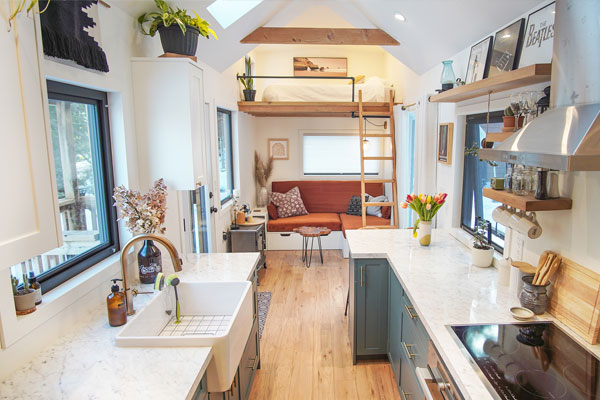 Another downside to building a handicap accessible tiny house is that it’s easy to go over budget once you start installing utilities like plumbing, electricity, and a waste disposal system. In comparison, buying an accessible tiny home is a much faster process that requires little to no construction experience. At most, you may have to assemble the house on-site or modify it to be more accessible.
The main downside to buying a pre-fab tiny house for disabled people is that you’ll have less input into the design and materials used to make the house. I think building takes the edge, mostly due to the level of customization, but overall, both buying and building are excellent options. Just make sure you do your research and buy from a trusted builder.
The Bottom Line On Handicap Tiny Houses
In the end, building or buying a handicap accessible tiny house is about more than making a few modifications to an existing floor plan. It’s about reframing inclusivity as the foundation of a build and ensuring elements like mobility, safety, and convenience are prioritized at the same level as design and aesthetics. In doing so, tiny living can become a viable option for everyone.
Your turn!
- Which accessibility feature do you consider a must-have for your tiny house?
- Have you ever been in an accessible tiny home? Share your experience!
This article on accessible tiny houses is truly informative. It comprehensively covers various aspects, from design tips like accessible layouts and smart tech integration to purchasing options and cost comparisons. The focus on inclusivity in tiny home design is both timely and crucial. It offers valuable insights for those seeking inclusive housing solutions, making tiny living accessible to all.
I’m looking for a senior tiny home community – main lodge with bar and kitchen, pool, all tiny homes matching with handicapped equipped. Is there such a community in the US? If not how do I build design and build?