
NAVIGATION
A lot of herb gardens fail before the first seed is even sown, and it often comes down to layout choices you aren’t even aware you’re making. Things like poor placement, mismatched water needs, and cramped roots will set your herbs up for failure — no matter how much time and effort you pour into caring for them.
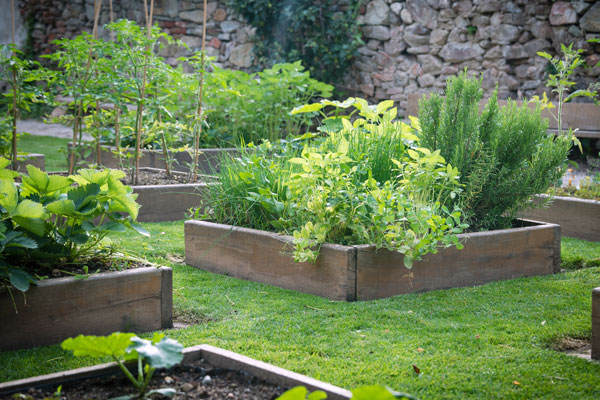 Take me for example. I didn’t put a lot of thought into my first herb garden layout. I had experience growing herbs in containers before and figured that throwing a few herbs together in a sunny spot couldn’t be that much different, right?
Wrong.
Within the first few weeks, my basil rotted, the mint took over, and my herb garden turned into something more akin to an herb jungle. That’s when I realized that designing an herb garden layout isn’t just a matter of aesthetics. You have to be mindful about placement so everything grows together in harmony rather than competition. So, if you want to skip the guesswork and see herb garden designs that actually work, simply read on.

Hi, I’m Ryan
I’ve grown more crops than I can count, but a well-thought-out herb garden is a must on my homestead. That isn’t to say that I don’t love my cabbages, tomatoes, and cukes (I do), but herbs are what I find myself reaching for most often.

What To Grow In Your Herb Garden
Before you start designing an herb garden layout, it helps to figure out what your priorities are. For the most part, herbs are broken down into three categories: those you cook with, those you brew into tea, and those that serve as home remedies. I’ll explain in more detail below.
Culinary Herbs
Culinary herbs are probably the first thing you think of when planning an herb garden. They’re easy to grow, highly versatile, and are a great way to infuse your food with a flavor that you aren’t going to find in a jar. Let’s look at some of the herbs that shine in the kitchen.
- Basil, bay laurel, chervil, chives, cilantro, dill, lemongrass, marjoram, mint, oregano, parsley, rosemary, sage, tarragon, thyme.
Tea Herbs
I don’t think it’s controversial to say that nothing beats an ice-cold glass of tea on a hot summer day. And while true tea comes from Camellia sinensis, you can make herbal teas from any number of herbs. Some of my favorites include:
- Bee balm, chamomile, holy basil, lavender, lemongrass, lemon verbena, mint, pineapple sage.
Medicinal Herbs
At its core, homesteading is rooted in self-reliance. The pride I felt when I first outfitted my tiny home with electricity was no different from what I felt the first time I treated a headache with homegrown herbs. In both cases, I’d proven to myself that I could handle whatever came my way. Some of the herbs you can include your medicinal herb garden layout are:
- Ashwagandha, calendula, comfrey, common rue, common yarrow, echinacea, feverfew, goldenseal, marshmallow, mugwort, senna, skullcap, St. John’s Wort, valerian.

Herb Garden Layout Templates
Not sure which herbs to grow or how to organize them? Designing an herb garden layout can be tricky, so here are some tried and true layout ideas to help you get started.
Kitchen Herb Garden Layouts
Kitchen herb is just another name for culinary herb, so you’re probably already familiar with the herbs featured in these garden layouts. Whether you’re growing staples like basil, rosemary, thyme, and oregano, or branching out into the lesser-used herbs like chervil, marjoram, and tarragon, the basics are the same. You’ll want to ensure your kitchen herb garden has well-draining soil, consistent airflow, and high-quality soil.
2’X2’ Basic Culinary Herb Garden

There’s something classic about this basic garden layout. For one thing, it includes all the most commonly used herbs. It also features an even mix of annuals and perennials, giving you plenty of room to experiment with different combinations of herbs. It’s a great option for growers that like to switch things up regularly.
2’X4’ Classic Kitchen Staples
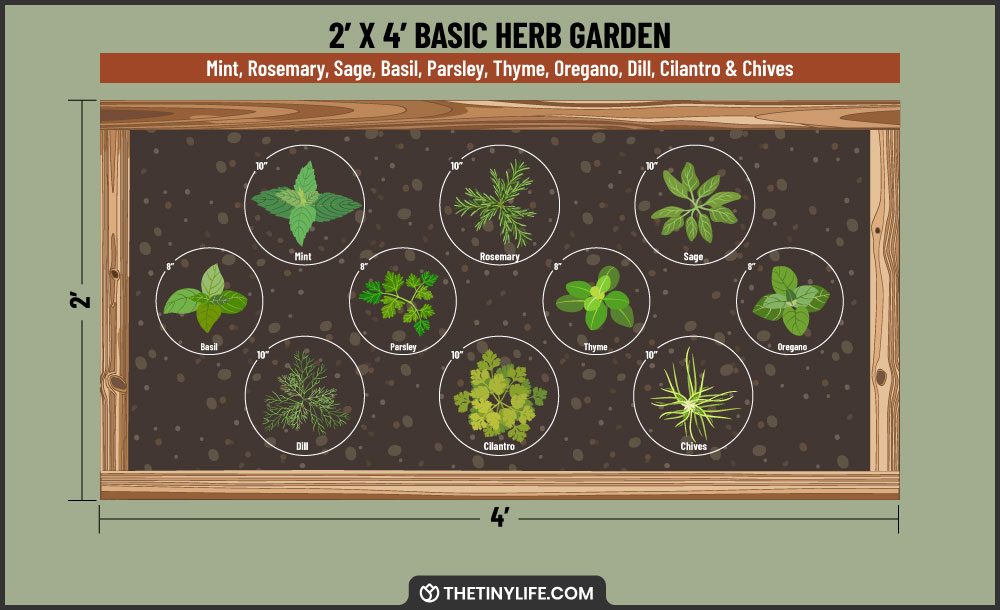
Rectangular herb garden layouts, like this one, are ideal for gardeners that want to grow a mix of annuals and perennials. They also work extremely well for small patios and crowded backyard spaces. The simple shape and straight rows help prevent overcrowding, while allowing for efficient watering, weeding, and harvesting.
4’X4’ Everyday Cooking Herb Garden
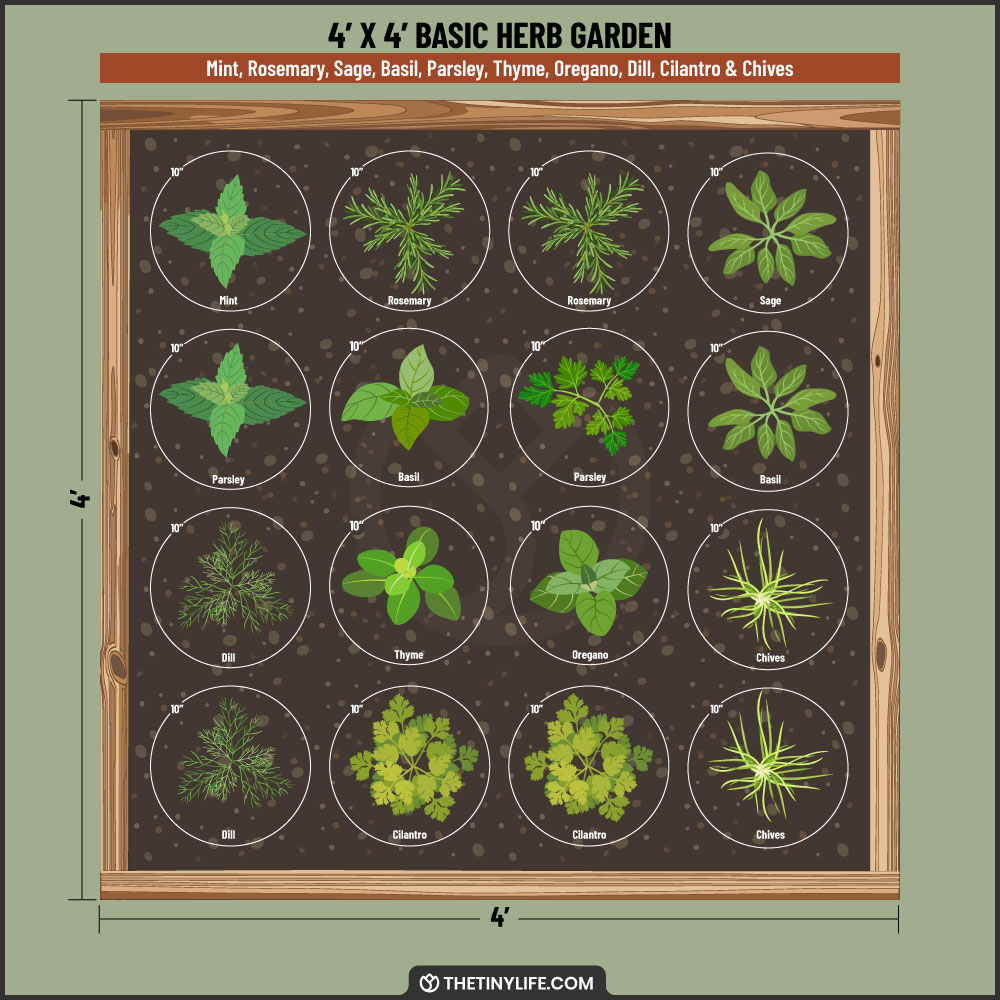
If you’re having a hard time narrowing down the list of herbs you want to grow, you’ll love the diversity this layout offers. Sporting an impressive 16 herbs, this design allows you to double up on your favorites while also leaving space for garden staples.
4’X8’ Home Chef Herb Essentials
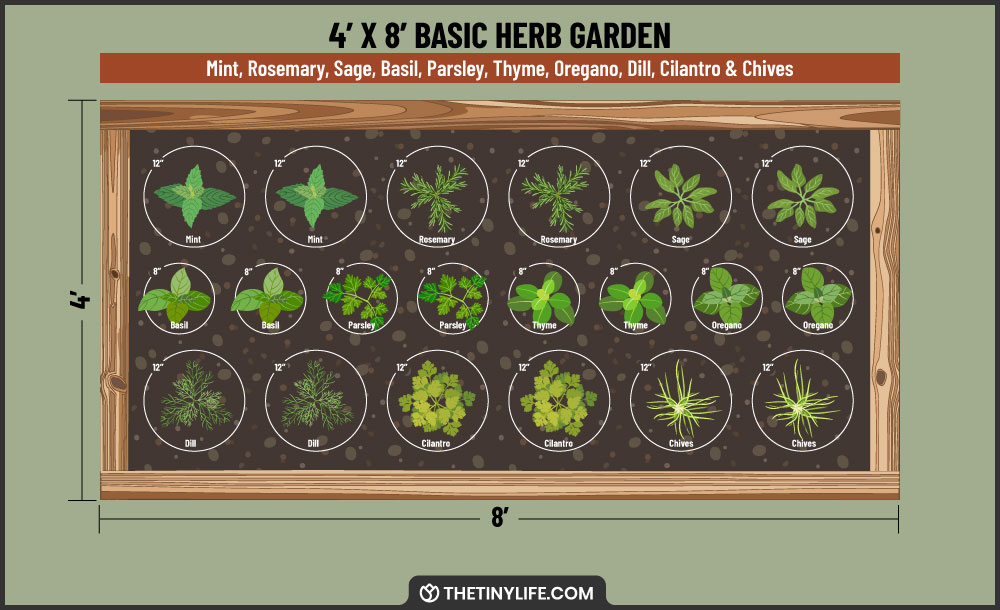
You may notice that this rectangular herb garden layout leaves room for multiple herbs of the same kind. While this may seem redundant, it’s actually a great opportunity to explore different flavors. Common herbs come in many different varieties, each with a unique flavor and appearance. So, try swapping out that Genovese basil with Holy, Lemon, or Thai basil for a fun twist on a garden staple.
2’X2’ Culinary Starter Setup
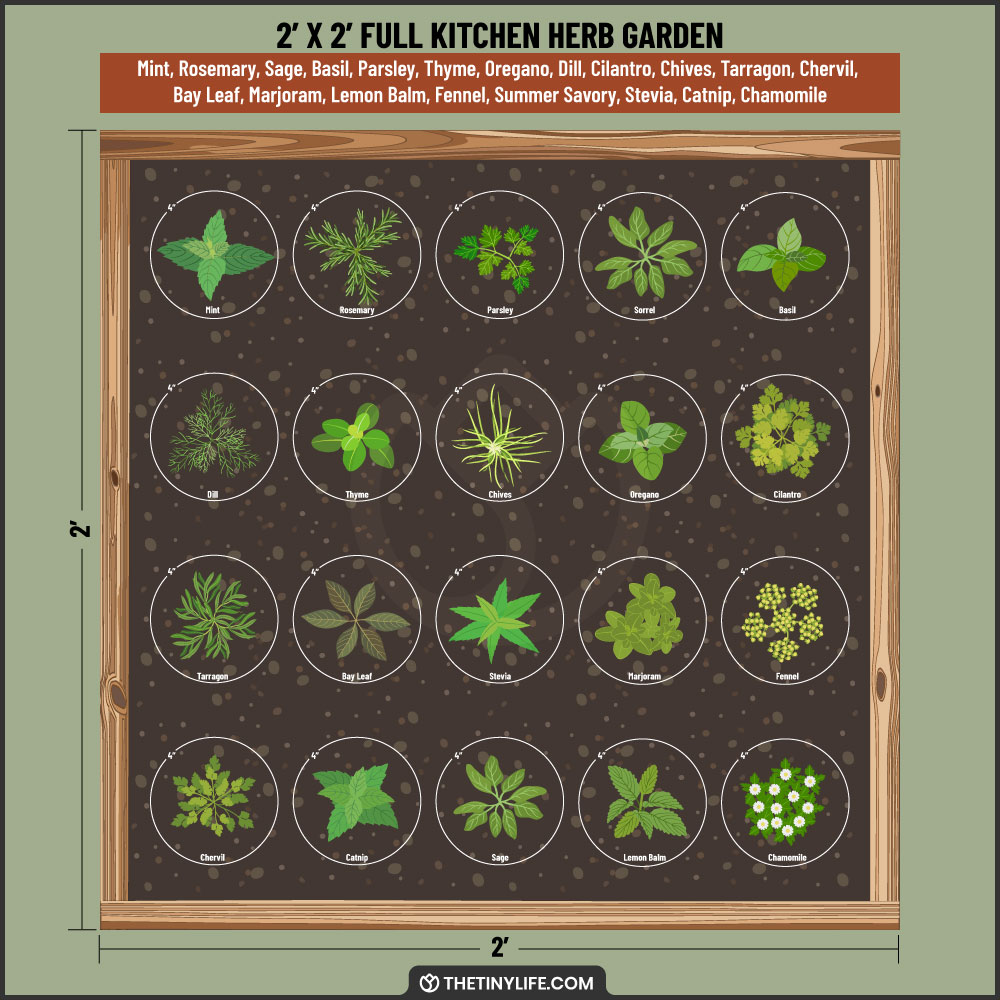
Can’t decide between a tea, culinary, or medicinal herb garden? Our next kitchen herb garden layout contains a little bit of everything. The perennial herbs are the star of this layout, but there are a few annuals along the perimeter for easy access.
2’X4’ Foundational Flavors
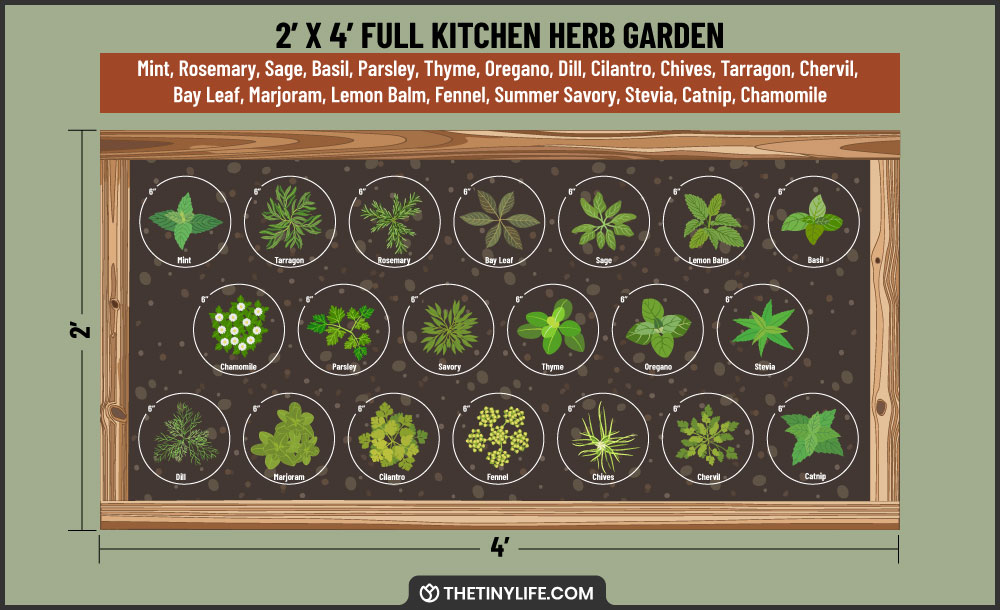
The perennials in this herb garden design provide structure and long-term growth, while the annuals fill the gaps with fast-growing foliage. Just keep an eye on the soil fertility and supplement when needed. Fast-growing annuals can deplete the soils of nutrients before your perennials have a chance to feed.
4’X4’ Essential Herb Garden Mix

This full kitchen herb garden layout strategically places mint in the corner, where it has more room to spread. And with so many herbs, you can take advantage of a number of symbiotic relationships. For example, the dill and fennel flowers will help draw in predatory insects that help keep the more vulnerable herbs safe.
4’X8’ Foundational Seasonings Garden Design
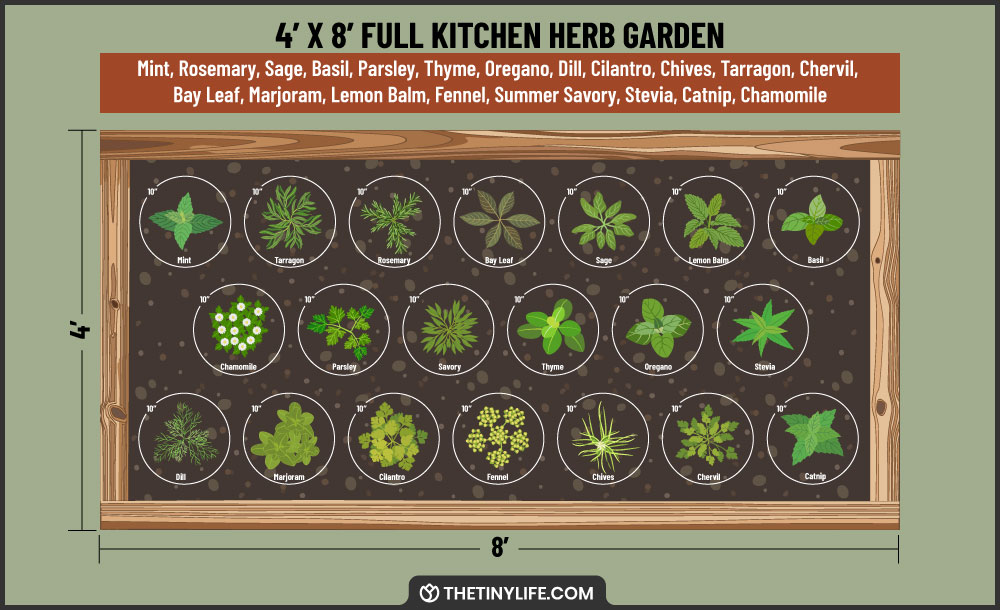
The shape makes it easier to care for and harvest from the center rows in this rectangular herb garden. In addition to being delicious, a lot of these herbs also have medicinal properties, meaning this design can double as a medicinal herb garden layout.
Pizza Herb Garden Layouts
Who doesn’t love pizza? These herb garden layouts center around the herbs that give pizza its characteristic flavor: basil, oregano, rosemary, thyme, marjoram, and parsley. And if it weren’t enough that these herbs all taste great together, they also share similar growing conditions!
So if you’re ready to ditch the dried herbs and take your homemade pizzas to the next level, make sure your garden has plenty of sunshine, ample airflow, and well-drained soil.
2’X2’ Pizza Night Staples Garden Design
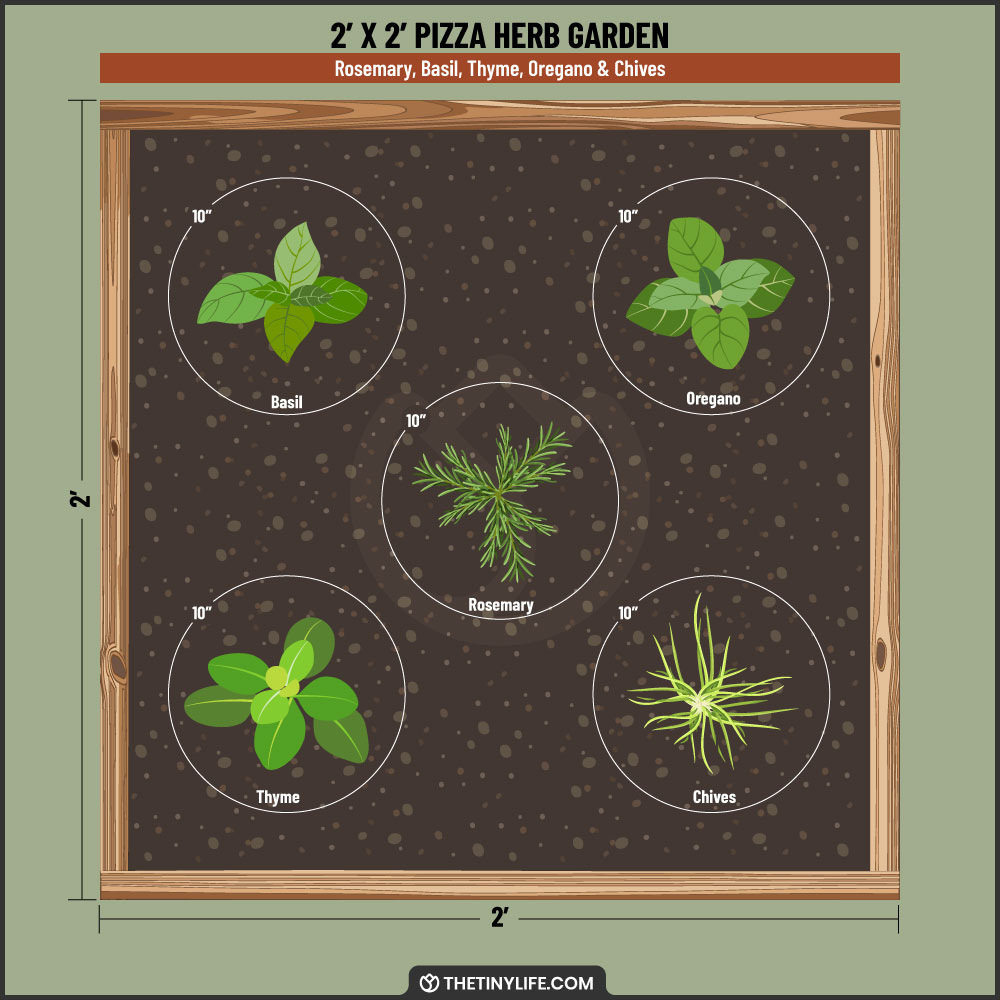
The first pizza herb garden layout features all the classic flavors you’d expect to find on a fresh pie. One thing to take note of is that thyme and oregano prefer slightly drier growing conditions than the other herbs. My way of working around this is to simply water the thyme and oregano less frequently and make sure I’m watering the base of the herbs, rather than the surrounding soil.
2’X4’ Margherita Maker Herb Garden
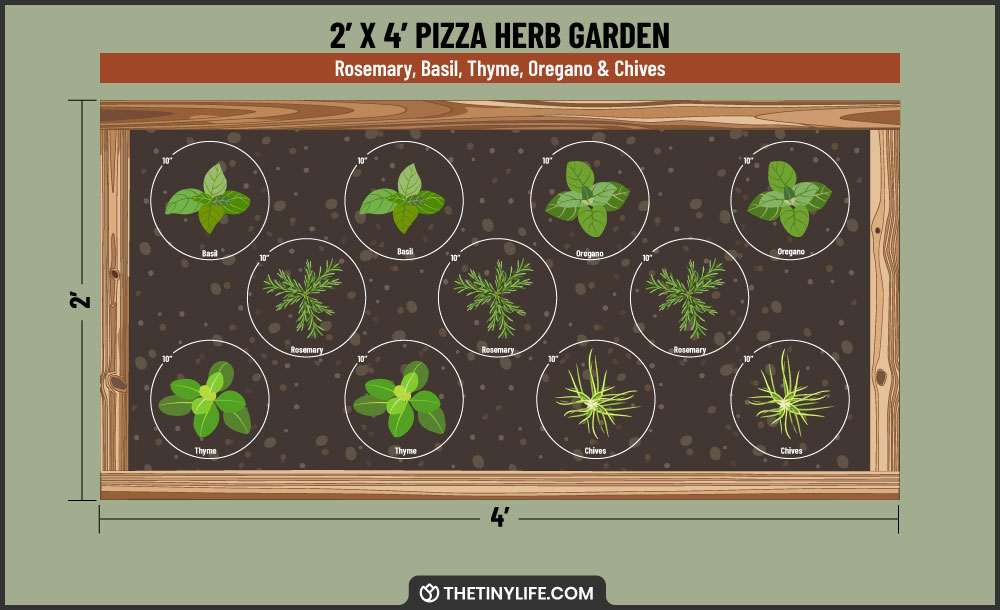
For those of you that can’t get enough pizza, this rectangular herb garden layout doubles up on the chives, thyme, basil, and oregano. It also features three rosemary bushes in the center. These add some visual interest, while the surrounding basil, oregano, thyme, and chives help round out the base.

Mediterranean Herb Garden Layouts
Mediterranean herbs are staples in many herb gardens due to their robust flavors and aromatic foliage. Pretty much all of the Mediterranean herbs – oregano, rosemary, thyme, basil, parsley, dill, sage, and mint – love full sun, but their watering requirements differ. Some prefer dry, sandy soil while others need steady moisture. Designing your herb garden layout with this in mind will help prevent stress and keep your garden in tip top shape.
2’X2’ Drought-Loving Herb Garden Mix
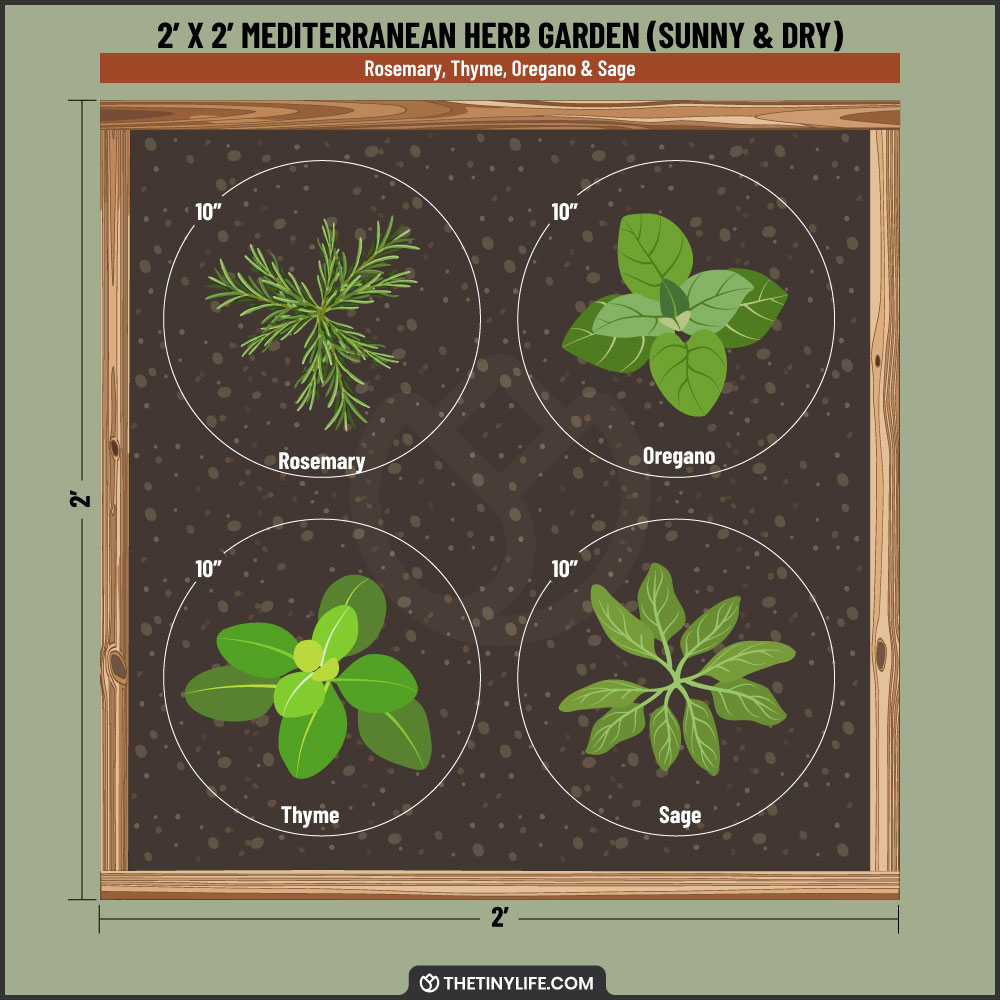
Our first herb garden layout features everything you’d expect to see in a Mediterranean garden. The design prioritizes even spacing to help improve airflow and minimize the risk of root rot and other fungal issues. As a bonus, I’ve found that growing oregano and thyme together can help enhance and intensify each herb’s flavor.
2’X4’ Heat-Tolerant Staples

Once established, the herbs in this low-maintenance herb garden design thrive with minimal waterings. Just make sure you use a loose, sandy soil mixture to help keep the roots happy. I also recommend leaving a layer of rocks or sticks at the bottom of your raised bed to help promote faster drainage.
2’X2’ Moisture Loving Mediterranean Medley
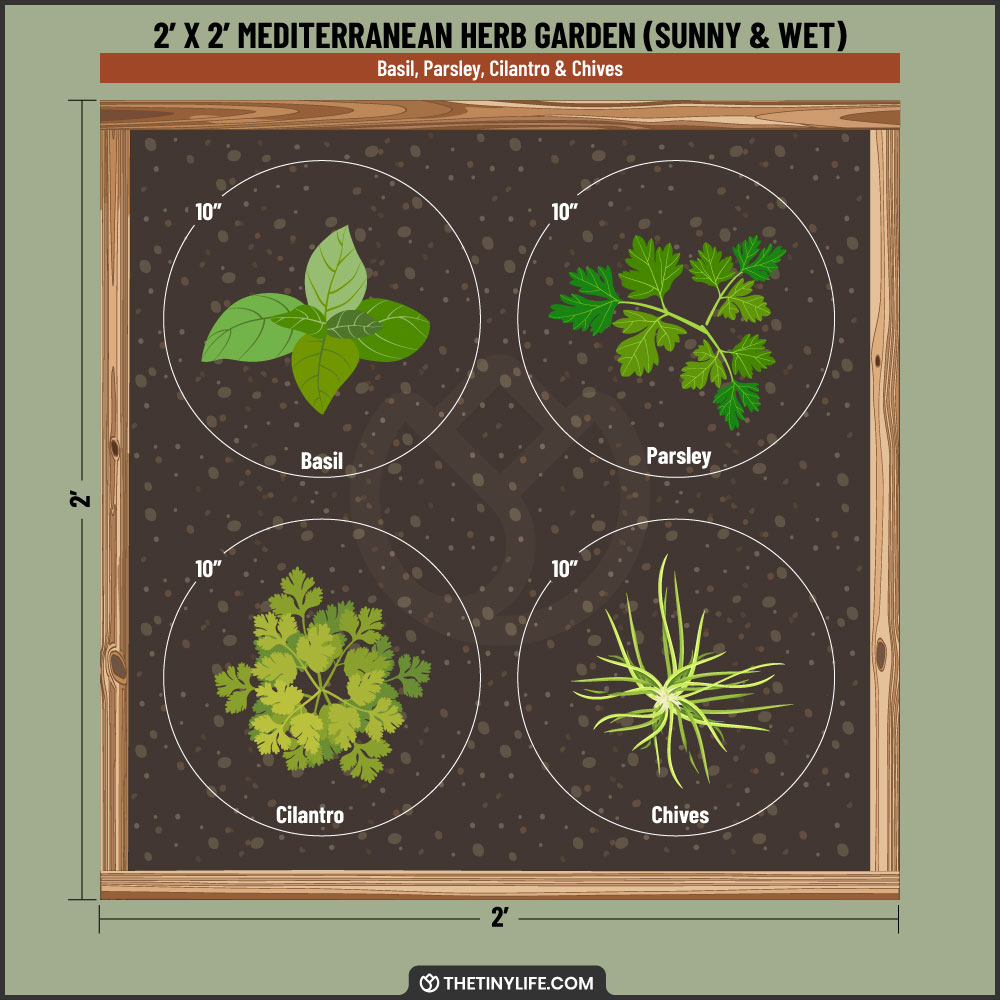
Unlike the Mediterranean herbs mentioned thus far, these herbs thrive in moist conditions. Regular waterings help encourage vigorous growth, while spacing helps prevent fungal infestations from taking hold. This layout is mostly comprised of annuals, which means there’s plenty of opportunity to switch things up from season to season.
2’X4’ Mediterranean Wet Herb Mix
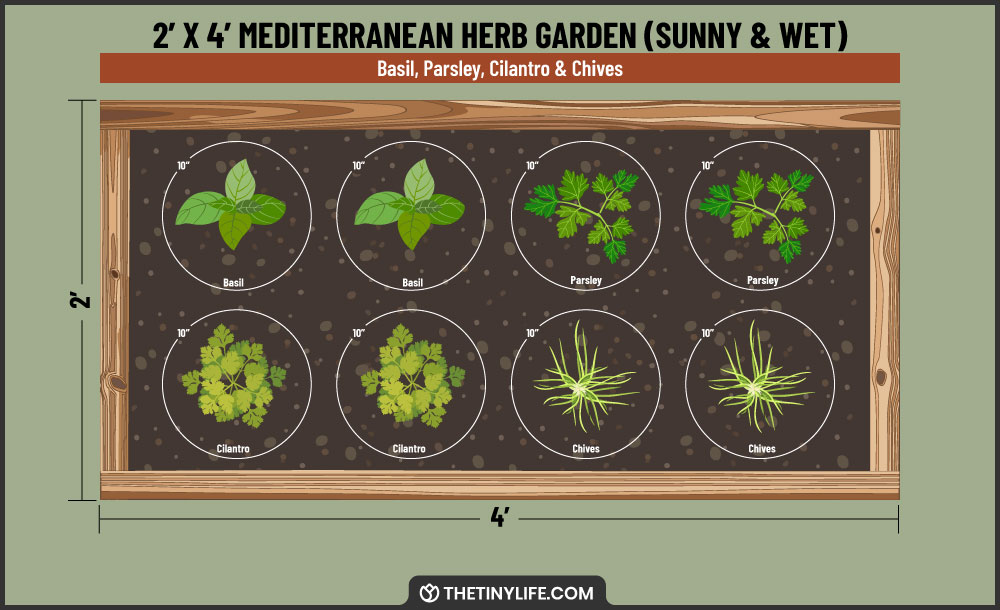
The next herb garden layout takes things to the next level by including two of each herb. You can either double up on a favorite or use the extra space to experiment with other varieties. And because this herb garden is mostly made up of fast-growing annuals, you’ll be ready to harvest in no time.
Container Herb Garden Layouts
Before committing to homesteading full time, I spent a lot of time experimenting with container gardening. I’ve found that most, if not all, herbs can be grown in containers, but basil, thyme, chives, rosemary, mint, and oregano do particularly well, provided your container has adequate drainage.
Basic Mini Container Garden

Maintaining an herb garden doesn’t get any easier than it does with this container herb garden layout. Basil, thyme, and oregano all flourish in warm, sunny conditions so make sure you set the pot somewhere with full sun. You should also let the soil dry out a bit between waterings, to ensure the soil doesn’t become waterlogged.
Potted Herb Garden Quartet

Looking to get the most bang for your buck? This container herb garden features a mix of perennials for long-term, year-round harvests. During the hotter months, however, you may need to move the container to a lightly shaded area to help prevent leaf scorch.
5 Gallon Urban Bucket Garden
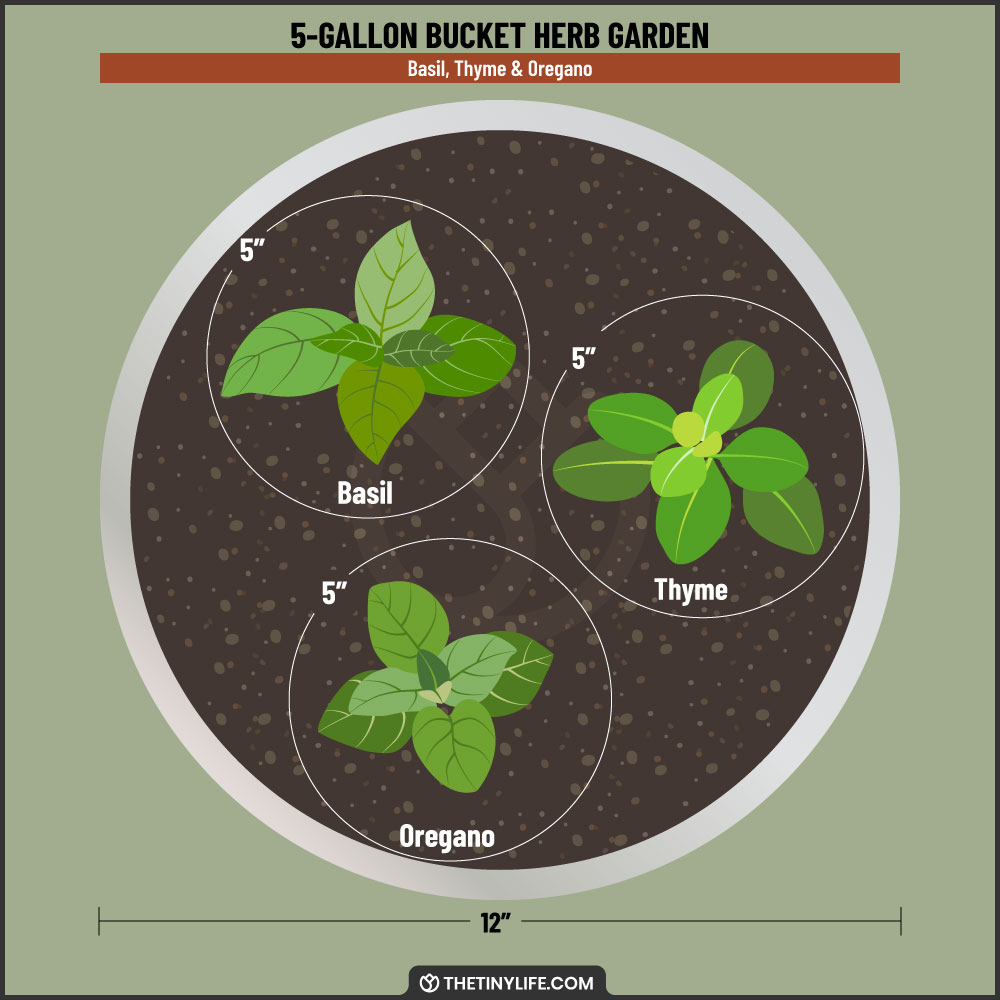
This beginner-friendly herb garden layout features just three common culinary herbs: basil, thyme, and oregano. All three of these herbs require rich, well-drained soil that dries out between watering. I like to use a custom soil mixture, but plenty of big brands have mixes specifically made for container gardens.
5 Gallon Mobile Herb Garden Pot
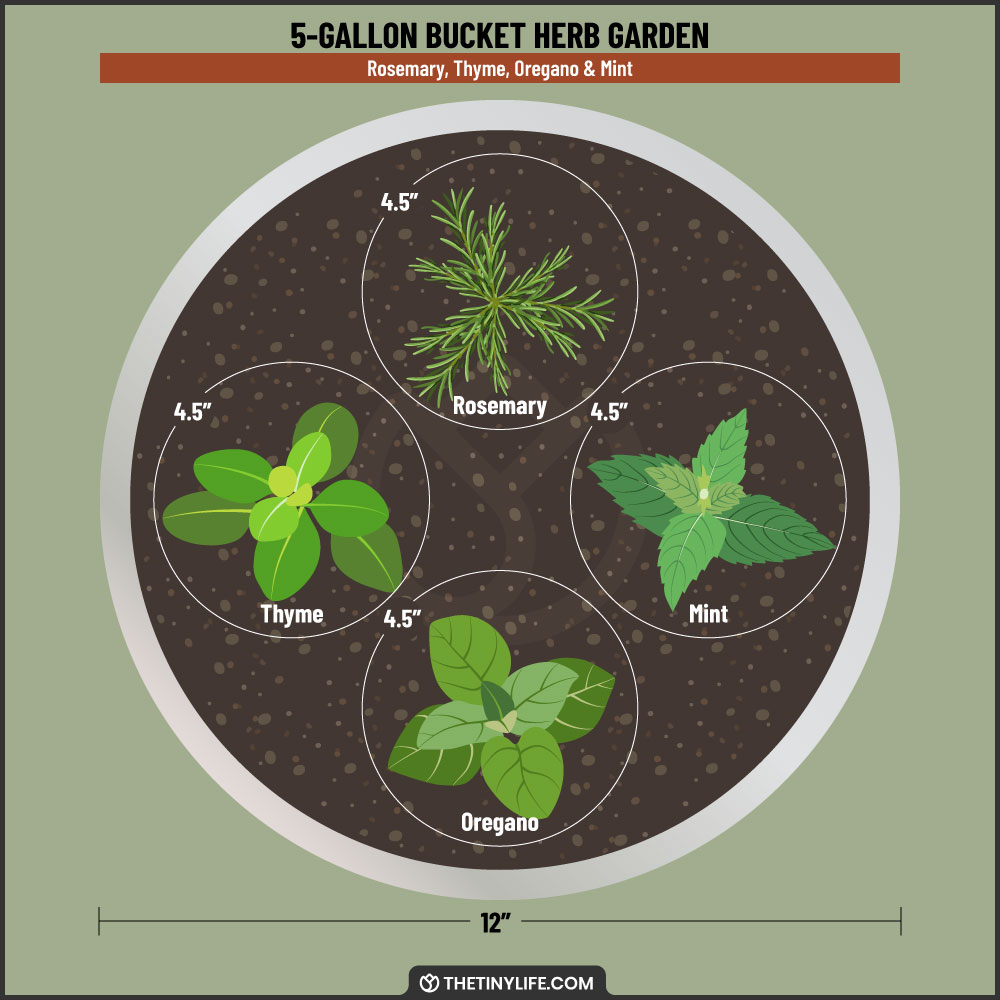
The 5-gallon bucket in this herb garden layout provides plenty of room for growth, which is perfect for a perennial garden. As long as you use a high-quality potting soil and ensure the bucket has adequate drainage, you’ll be able to harvest the thyme, rosemary, mint, and oregano for years to come.
Spiral Herb Garden Layout
Spiral herb garden layouts don’t just look great; they’re also a good way to maximize space and use water more efficiently. The terraced shape creates various microclimates, as each level receives differing amounts of sun, shade, and moisture. The very top of the spiral tends to be dry and warm — perfect for Mediterranean herbs — while the cooler lower levels are better suited for moisture-loving varieties.
Space-Saving Spiral Herb Garden Layout
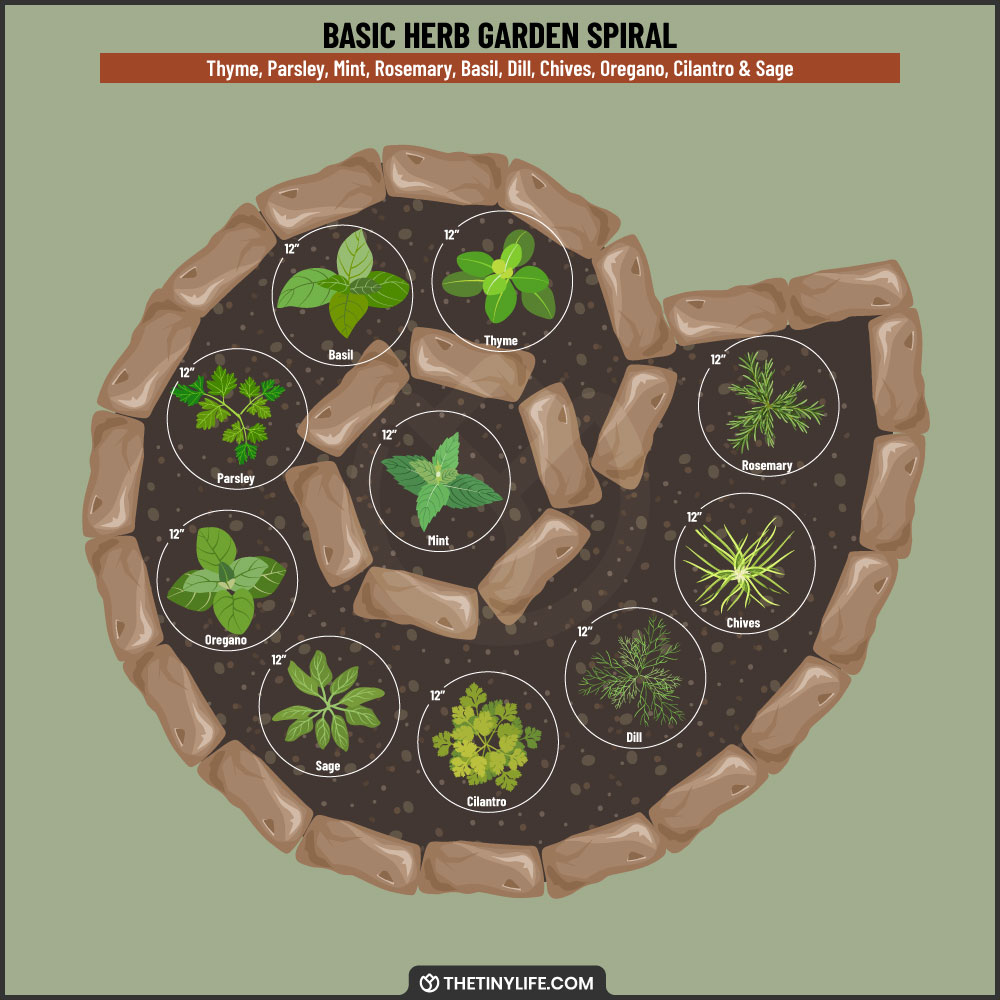
Spiral herb garden layouts are deceptively simple. The winding design creates multiple planting levels in one compact space. This layout is particularly ingenious because it isolates mint in the summer, keeping its vigorous growth in check and preventing it from competing with the rest of the herbs.

Full Sun Herb Garden Layouts
While some herbs struggle under intense light and heat, there are a variety of sun-loving herbs that are happy to soak up the sun’s rays. When grown in shady conditions, sun-loving herbs — like rosemary, thyme, basil, sage, and lavender — tend to become leggy, weak, and noticeably less flavorful due to the decrease in essential oils.
2’X2’ Compact Heat-Tolerant Herb Mix
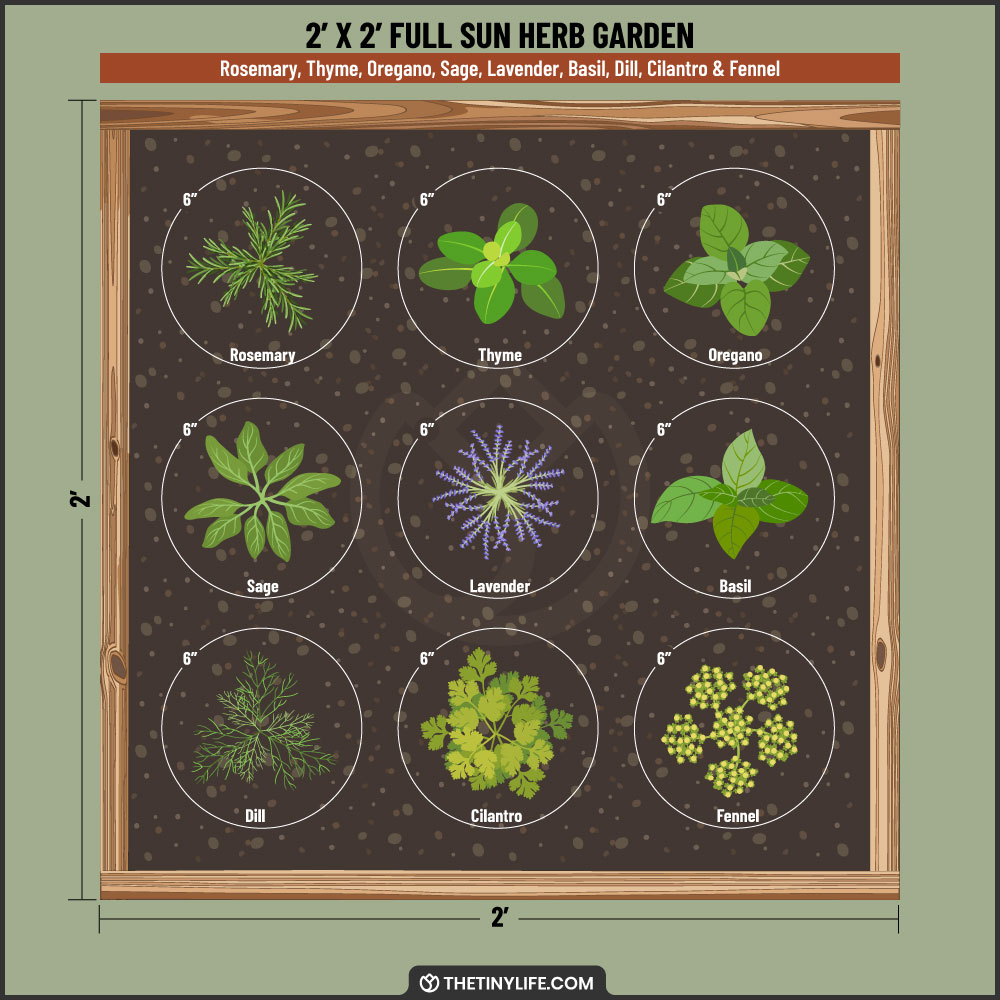
Packed with nine sun-loving herbs, our first full sun herb garden layout offers a versatile mix of common herbs. The annuals — cilantro, basil, and dill — are located on the edges of the box, ensuring you have easy access when it’s time to harvest, clean, or replant.
2’X4’ Sun-Loving Herb Blend
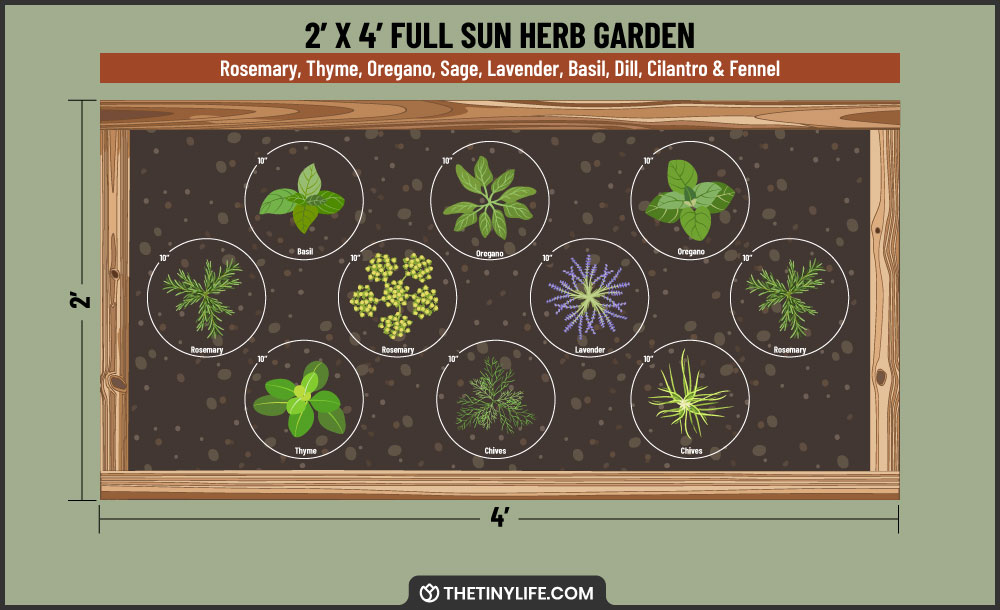
Full sun herbs, like the ones in this rectangular herb garden layout, offer explosive growth. The only caveat is that they require thoughtful care, especially during heat waves. Adding a thick layer of mulch will help regulate the soil temperature and prevent water from evaporating before your herbs have a chance to hydrate.
4’X4’ High-Production Herb Patch
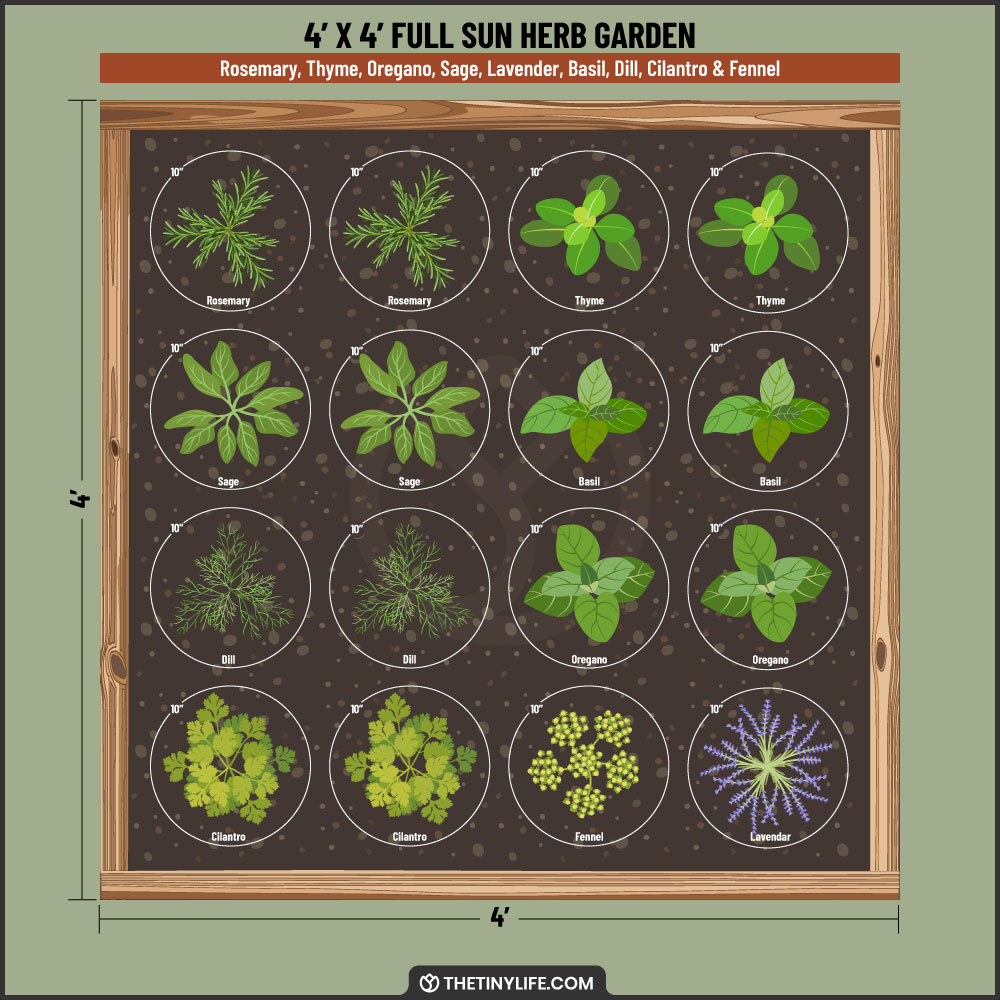
If you’re looking for a highly productive full sun herb garden, this 16-plot box might be just what you need. Just keep in mind that, because of the explosive growth, nutrients will be depleted more quickly. So make sure you amend your soil with a high-quality fertilizer.
4’X8’ Summer Kitchen Herb Bed
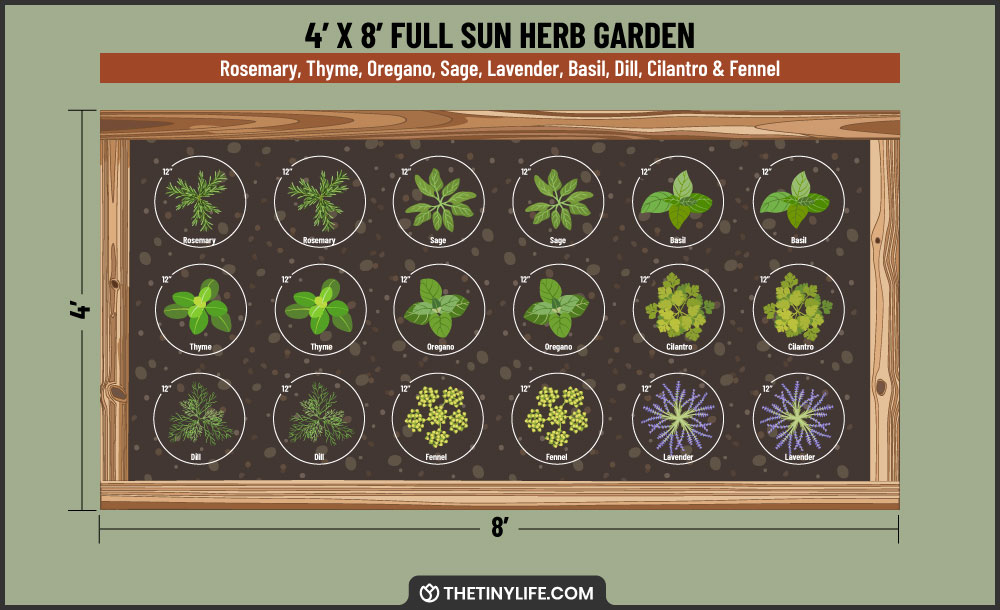
Our next large rectangular herb garden layout sports a robust selection of heat-loving herbs. It also allows for multiples of frequently used herbs, giving you room to experiment with uncommon varieties. Keep an eye out for pests like spider mites, thrips, and aphids, which thrive in the same warm, dry conditions.
Full Shade Herb Garden Layout Ideas
While sun-loving herbs can’t get enough of the heat, mint, parsley, cilantro, lemon balm, chives, and chervil grow far better in areas with cooler, indirect light. If you’re struggling to find a shady enough area, take advantage of the shade cast by fences, structures, or even taller plants.
2’X2’ Small-Scale Shade-Tolerant Mix
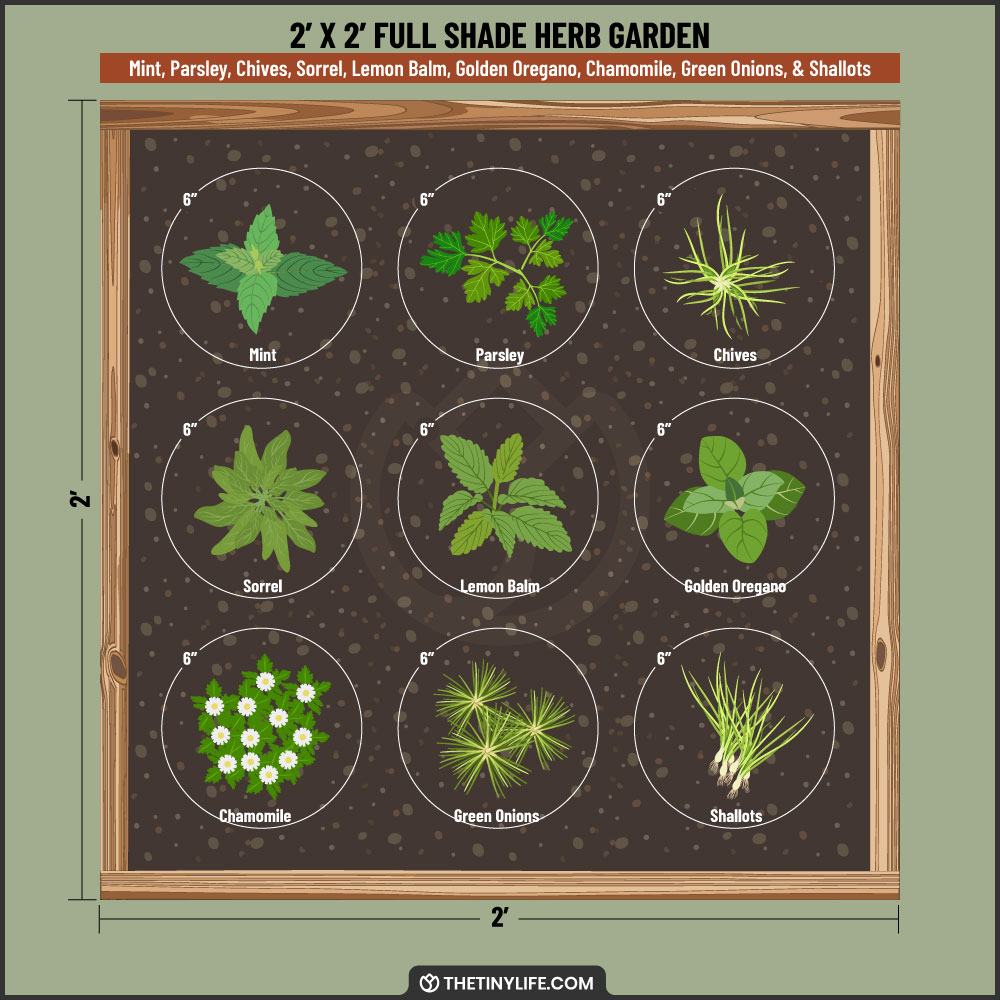
In spite of its small size, our first full shade herb garden layout offers enough room for nine full-size plants. Just keep in mind that, although these shade-loving herbs can tolerate some direct sunlight, too much will result in premature bolting, wilting, sun scald, and a bitter flavor.
2’X4’ Cool Climate Herb Garden Arrangement

Creating a rectangular herb garden layout for shade-tolerant herbs isn’t a matter of forcing sun-loving plants to adapt. Instead, you want to work with herbs that naturally prefer cooler, indirect light. Keep in mind that shaded gardens tend to hold onto moisture longer, so be mindful of how often you water and use soil amendments — like perlite and vermiculite — to help prevent fungal issues.
4’X4’ Shade-Loving Herb Medley
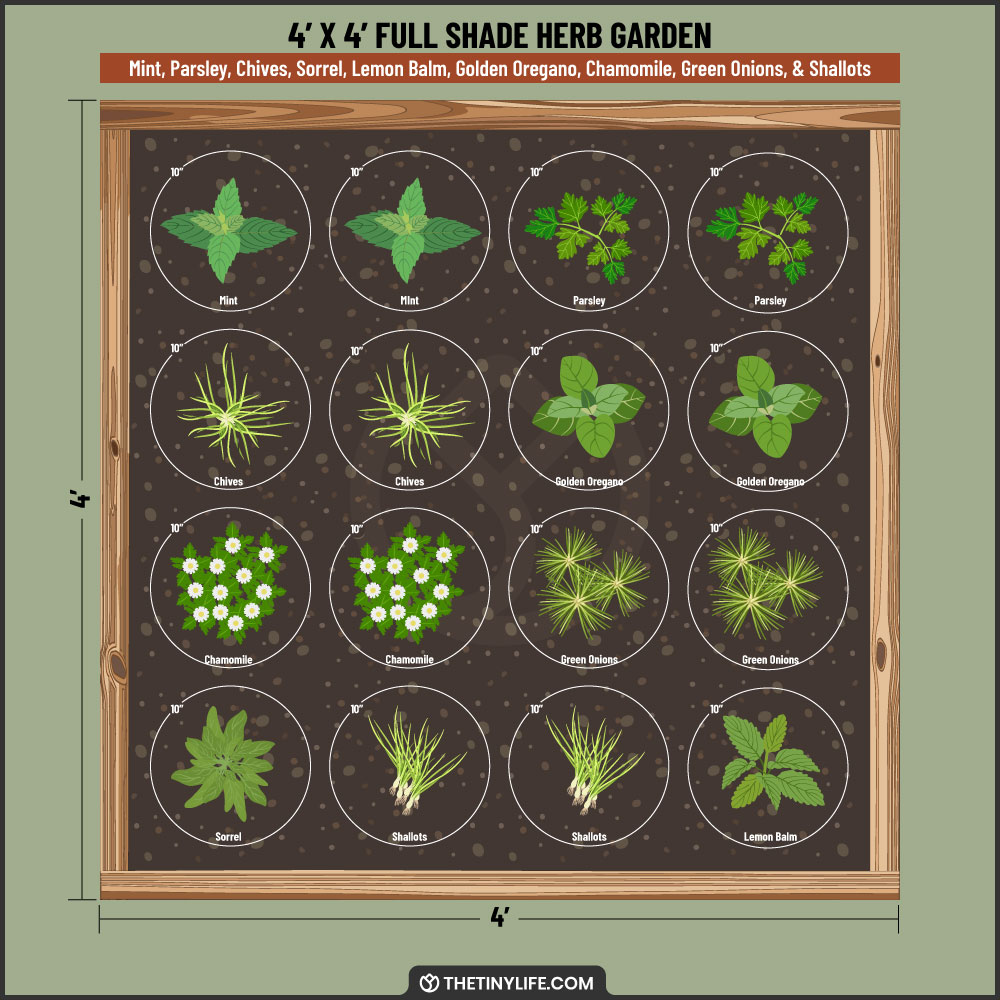
The only downside to full shade herb gardens is that growth tends to be slower than it’d be in full sun. Fortunately, most of the herbs in this herb garden designs are perennials. That means you’ll see steady growth year after year, even though progress may feel slow at first.
4’X8’ Low-Light Garden Oasis

By simply selecting shade-loving herbs like the ones in this rectangular herb garden layout, you can take advantage of underutilized corners of your yard. While these areas may struggle to support full-sun-loving vegetables and fruits, they can be surprisingly productive when paired with herbs like chamomile, parsley, oregano, and chives.

Herb Garden Layout FAQs
Before we wrap up, I’m sure you still have some lingering questions. Here are some of the answers to the ones I come across most often.
What Are The Easiest Herbs To Grow?
If you’re new to gardening or simply want an herb garden that requires little to no effort to maintain, consider growing mint, rosemary, thyme, oregano, chives, and parsley. These herbs thrive with minimal upkeep — even if you miss a few waterings or don’t stay on top of your feeding schedule.
What Herbs Grow Well Together?
Companion planting is usually reserved for vegetable gardens, but herbs can also benefit from thoughtful pairings. Herbs with similar water, sun, and soil preferences usually grow together without a hitch. Additionally, planting herbs that repel pests or attract specific pollinators can help other herbs in your garden flourish. Let’s take a closer look at some of the best herb combinations.
- Rosemary, sage, thyme, lavender, and oregano
- Dill, cilantro, chervil, and parsley
- Basil, oregano, chives, and chamomile
What Herbs Should Not Be Planted Together?
When designing an herb garden layout, it’s important to remember that not all plants play well together. Sometimes it comes down to growing habits and other times, it’s a matter of conflicting watering schedules. Now, this isn’t to say that growing incompatible herbs together is impossible — it just requires a little more work. Here are some of the herb combinations that tend not to work well with each other.
- Dill and lavender, marjoram, sage, or parsley – Dill can attract pests to more vulnerable herbs. It also thrives in moist soil, while these other herbs prefer dry conditions.
- Sage and chives – Sage grows best in dry, well-drained soil, while chives do better in more moist soil.
- Mint (and everything else) – I’ve grown mint as part of an herb garden layout, but it has a tendency to outcompete whatever it’s grown with. Fortunately, this is easily remedied with frequent trims.
- Fennel (and everything else) – Fennel has allelopathic properties, meaning it releases chemicals that can inhibit the growth of other herbs.

Bringing Your Herb Garden Layout To Life
The difference between a well-thought-out herb garden design and a haphazardly thrown together garden bed is night and day. In addition to using space more effectively, a strategically planned herb garden can result in more explosive growth, more intense flavors, and an easier growing experience. But don’t take my word for it. Try one of these herb garden layouts for yourself!
Your Turn!
- What herbs do you consider a must have in your garden?
- Which herb garden layout approach do you prefer: messy and natural or neat and perfectly manicured?
Hi there to all, for the reason that I am genuinely keen of reading this website’s post to be updated on a regular basis. It carries pleasant stuff.
This is a fantastic guide for anyone looking to maximize small-scale productivity. The focus on grouping herbs by water and light needs is such a critical step that often gets overlooked in the rush to just “get planting.”
One professional insight I’d add is that the efficiency of your layout isn’t just about the soil and sun—it’s also about how you manage the “visual clutter” of a workspace. I’ve been experimenting with ways to keep my garden organized and labeled without it looking like a mess of plastic stakes. I actually came across a https://bestphotos.ai/sticker-generator that I’ve been using to create custom, weatherproof labels for my vertical planters. It’s a small detail, but it makes the “value-add” of a clean, aesthetic garden feel much more intentional, especially in a tiny space where every square inch counts.
Do you have a favorite companion planting pair for herbs that actually helps with natural pest management in these smaller layouts?