
NAVIGATION
 Toilet Options
 Composting Toilet
 Indoor vs Outdoor
 Toilet Hacks
 Compost Materials
Let’s face it: no one really likes talking about toilets. But despite its somewhat taboo nature, your tiny home toilet can end up making or breaking your experience. The average person spends around 182 hours in a bathroom each year, so, naturally, you’re going to want to be on good terms with your toilet.
And that brings me to the humble composting toilet. While I won’t exactly call them glamorous, they are efficient, eco-friendly, and surprisingly cost-effective. Getting a compost toilet for your tiny house might just be the best choice you make.
Ready to find out why that is? Here’s the scoop on my experiences with tiny house composting toilets.
My Tiny House Toilet

When I first built my tiny house, I had just one rule: no composting toilets.
Can you blame me? I thought they were weird and smelly, and my approach to toilets has always been if it ain’t broke, don’t fix it. In other words, I wanted a flush toilet.
For context, my tiny house setup is a pretty common one. I stay on a piece of land owned by a friend, and pitch in on taxes. So, while deciding where to spend on land setup, I was treading that fine line between spending enough to make it livable, but not so much that I couldn’t walk away.
 First, I ran water to my land for about $4,000. Next, I installed a driveway for $2,000. But when I got an estimate to have a flush toilet installed, I went into sticker shock. It was $50,000!
There are a lot fewer regulations around freshwater compared to sewage. When it comes to sewage, there are more inspections, infrastructure, and health codes that you’ll have to navigate. Here in Charlotte, the permit for water metering alone is $2,200 for freshwater and $9,700 for a sewer connection! Almost $10,000 for just the privilege of paying for sewerage!
So for price alone, I decided that maybe I could reconsider the necessity of a flush toilet. I grew up camping; I went through boy scouts. I figured I would give a compost toilet a shot and see if it was really so bad.
Several years later, I can attest that a compost toilet is a totally livable tiny house toilet option. I barely think about my toilet anymore. It’s become part of my routine home maintenance and housekeeping, and I don’t mind it at all.
Tiny House Toilet Options

If you’re building a tiny house and want to weigh all your tiny house toilet options, there’s quite a range to explore. Here are a few of the more popular tiny house toilet choices and what I’ve learned about each.
Separett Villa 9215 AC/DC Composting Toilet
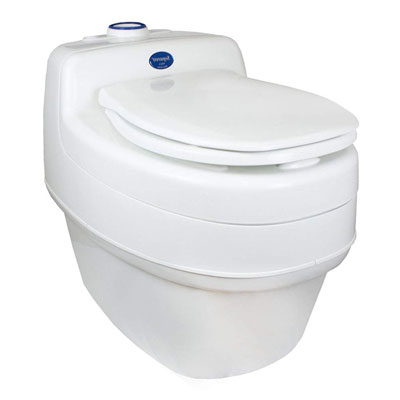
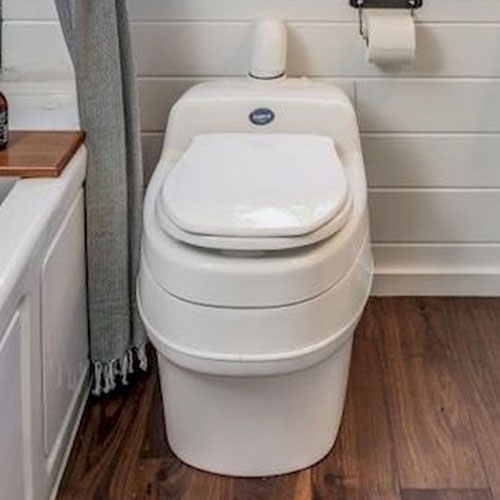
The Separett Villa 9512 is a waterless and self-contained composting toilet. There’s a high-tech fan system that helps vent and a tank for holding waste. It’s big enough for three weeks of use by several people. Bob Vila voted it the best composting toilet on the market, but the price tag is a little high at around $1,000.
Separett Villa 9215 Pros And Cons
Pros
- High-tech venting significantly reduces odors
- High-capacity tank is suitable for families and extended use
- Waterless and self-contained
- Ergonomic design is perfect for everyday use
Cons
- Price tag is a little high
- Installation process is a little more involved than other tiny house composting toilets
Sun-Mar Excel Non-Electric Waterless Composting Toilet
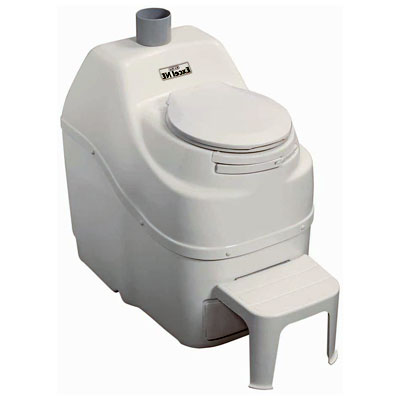
The Sun-Mar Excel is a unique looking self-contained compost toilet that requires no electricity to work (perfect for a tiny house). It’s high capacity, and if you’re only going to use it now and again — perhaps in a cabin used on weekends — it can support five to seven users. The vent on the back helps keep it from smelling. Again, this toilet is around $1,200, making it a cost-prohibitive tiny house compost toilet option for some.
Sun-Mar Excel Non-Electric Waterless Composting Toilet Pros And Cons
Pros
- Non-electric setup is perfect for off-grid tiny homes
- High capacity and suitable for multiple users
- Venting helps reduce odors
Cons
- May be cost prohibitive
Nature’s Head Self-Contained Composting Toilet
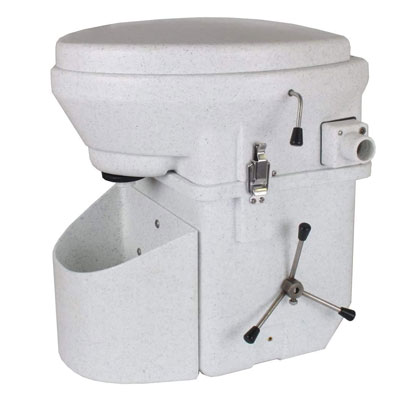
Voted one of the best composting toilets by NY Mag’s The Strategist, the Nature’s Head Self-Contained Composting Toilet with Crank Handle seems to be a preferred choice for RVs, campers, and van-lifers. The crank handle helps agitate the contents of the toilet, making it compost faster and easier. An Amazon reviewer and user recommends spraying it out after liquids, using a spray bottle filled with water and natural dish soap, which minimizes the smell.
Nature’s Head Self-Contained Composting Toilet Pros And Cons
Pros
- Compact and durable
- Virtually odorless
- Requires infrequent emptying
- Easy to set up and use
Cons
- $1,000 price tag is a moderate investment
- Compact size might not be ideal for all users
Nature’s Head Dry Composting Toilet with Crank Handle
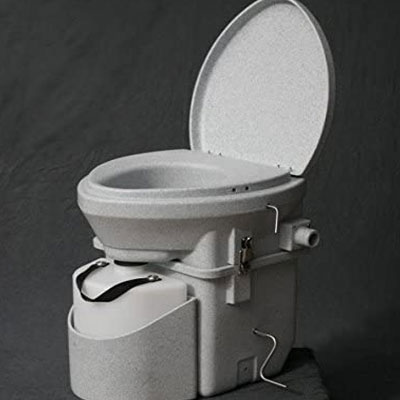
Voted one of the best composting toilets by NY Mag’s The Strategist, the Nature’s Head Dry Composting Toilet with Crank Handle seems to be a preferred choice for RVs, campers, and van-lifers. The crank handle helps agitate the contents of the toilet, making it compost faster and easier. An Amazon reviewer and user recommends spraying it out after liquids, using a spray bottle filled with water and natural dish soap, which minimizes the smell.
Nature’s Head Dry Composting Toilet Pros And Cons
Pros
- Crank handle speeds up the composting process
- Excellent option for frequently “on-the-go” users
- Minimal odors
- Durable and easy to use
Cons
- Pricier than some other tiny house compost toilets
- Crank handle can be difficult to use if the compost gets too wet or dry
- Requires regular emptying and upkeep
Luggable Loo
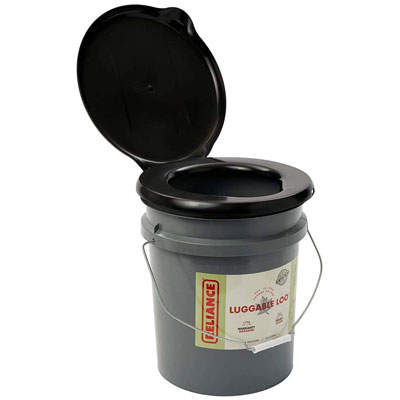
I have the Luggable Loo, and I’m quite pleased with it. I’ve been using it for years. It’s very similar to the 5-gallon bucket option (more on that below), but the lid snaps into place, and it’s built to be extremely durable. Initially, I chose this as my tiny house composting toilet out of convenience, but it’s continued to work well for me. Compared to the other costlier options, I haven’t found any noticeable drawbacks to choosing the Luggable Loo composting toilet.
Luggable Loo Pros And Cons
Pros
- Budget-friendly price tag
- Snap-on lid helps minimize odors
- More durable than a regular bucket
Cons
- Odors may linger after use
- No built-in urine diversion
Traditional Flush Toilet
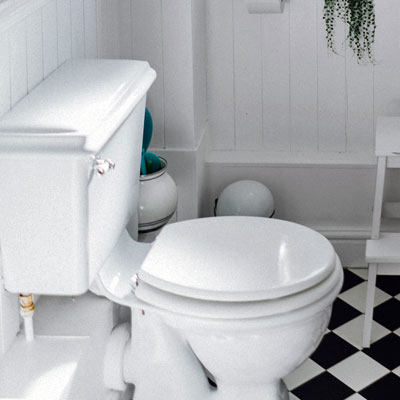
As far as tiny house composting toilet options go, this one is probably the most comfortable but maybe the least practical in terms of cost (and depending on your land setup). To have a flush toilet, you’ll need to connect to your city’s sewage or install septic. For some people, it’s worth the investment. For others, it’s a deal-breaker.
Traditional Flush Toilet Pros And Cons
Pros
- Most familiar option
- Requires no special maintenance aside from regular plumbing
- Odors are immediately flushed away
Cons
- Requires a connection to a septic system or municipal sewer system
- High water usage
- Installation can be both expensive and impractical
5-Gallon Bucket Composting Toilet
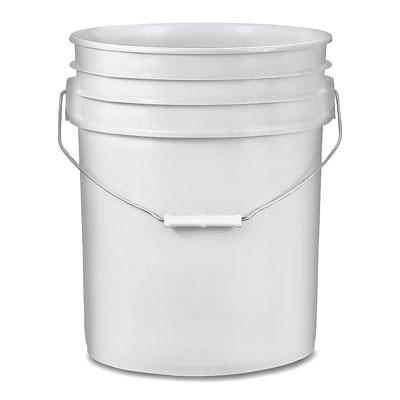
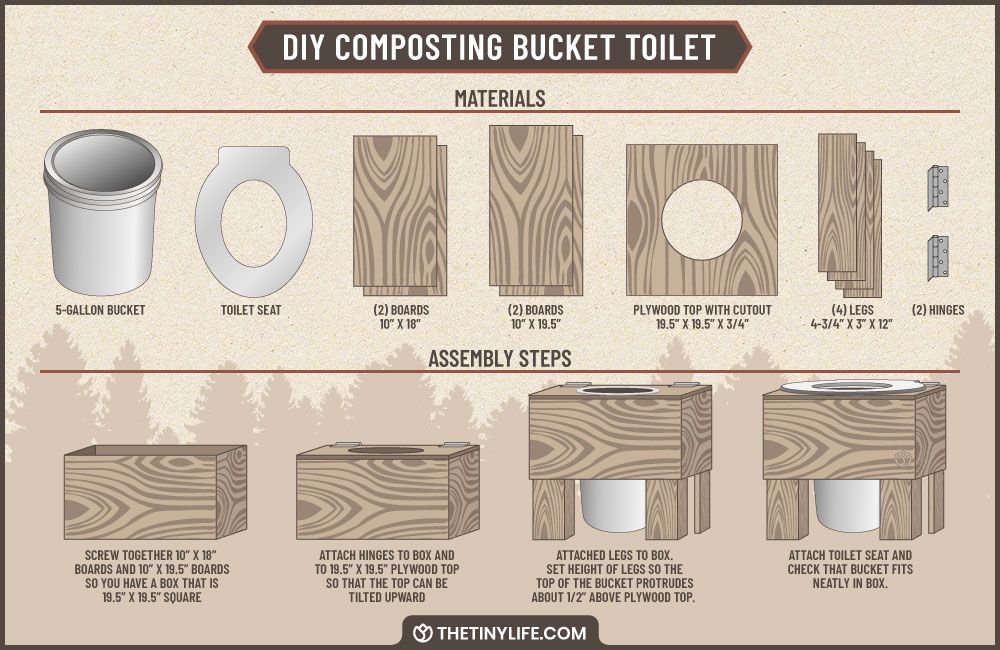
An economical option is the 5-gallon bucket composting toilet for your tiny home. These are easy enough to make. You line the bucket with a bag and affix a toilet seat to the top. You fill the bucket with an absorbent substrate and that’s it.
Pros And Cons
Pros
- Extremely affordable
- Easy to DIY
- Doesn’t require electricity, water, or plumbing
- Suitable for both outdoor and indoor usage
Cons
- Needs to be emptied frequently
- Less hygienic than other tiny house composting toilets
- Minimal odor control
In general, I’ve heard the best reviews of the Nature’s Head toilets, and I’ve also heard positive reviews on the Separett. It’s also important to recognize that certain toilets will have safety certifications, which can help if you want to be sure to go the completely legal route. Some municipalities require toilets to meet specific codes and regulations. If this applies to your area, you may want to consider one of the commercial brand toilets.
How To Choose The Best Composting Toilet
There’s no single best composting toilet for a tiny house, so the best one for you will come down to your lifestyle. Unsurprisingly, larger households will need higher-capacity composting toilets while smaller ones can get away with more compact models — as long as you don’t mind emptying more often. The next thing you’ll want to ask yourself is what it takes to set up a specific composting toilet.
Some models require access to water and electricity while others are completely self-contained and perfect for an off-grid setup. The next, and possibly most important, thing you’ll want to consider is odor control. While many toilet models use composting materials, like sawdust or wood ash, others reduce odors more effectively with air vents, drainage hookups, and urine-diverters.
The only downside is that the more features a composting toilet has, the more complicated installing it tends to be. It’s a trade off. Convenience, comfort, and performance for a slightly more difficult installation. So, ultimately, the best composting toilet for your tiny home is going to work with your preferences rather than against them.

What Is It Like To Have A Composting Toilet?

So, what is it really like to have a composting toilet in a tiny house? I get asked this question more often than you’d think. People want to know — does it smell? How do you use a compost toilet? Isn’t it gross?
First of all, I was definitely concerned when I started on my tiny house journey. I’m very clean and tidy, to the point of being a bit of a neat freak. So the thought of a dirty, smelly toilet in my tiny home was not appealing to me. Plus, I worked a professional job, where it was necessary to be hygienic and presentable at all times.
 But after several years, I can honestly say it’s not a big deal at all. It’s incredible how quickly you get used to using a composting toilet. Besides, I’m often out and about, living my life during the day. To be very candid, it’s rare that I need to use my composting toilet. Not to mention that I live on 32 acres, and being a guy, I can find a tree for liquid waste. There will be weeks, sometimes even months, where I don’t need to use my composting toilet at all.
Now for solid waste, it’s a little trickier, especially if you’re not out and about throughout the day. Even with liquids, going in the same spot year after year becomes an issue. It can damage the soil, trees and pose certain hazards (and urine smells).
I also should add the caveat here that as a guy, I’m not as familiar with feminine hygiene needs and the composting toilet, so I had to do some research on the topic. Macy over at Mini Motives has a comprehensive post about feminine hygiene and composting toilets. It seems that many of the sustainable options for menstruation work just as well with composting toilets. As she says, “Whatever you use is your preference, and they CAN all be used with composting toilets.”
Charlotte, where I live, has a lot of health requirements surrounding the disposal of solid waste. You are required to bag it and put it in the trash. At first, this seemed odd to me, but if you think of it like baby diapers or dog waste, it’s really not too different. There are eco-friendly bags that help. I also suggest reading the Humanure Handbook, which delves into what you need to know to compost human waste safely.
I’ve learned that the smell factor is an issue if you don’t separate liquids and solids. Things that are wet smell more and break down quickly. Bacteria are drawn to warm, wet environments, especially those that are dark and have oxygen. So, it’s essential to keep waste covered and dry.
You can still use toilet paper with a compost toilet, especially if you’re bagging it up. There’s RV-specific toilet paper that breaks down quickly and is suitable for use with compost toilets.

Tiny House Toilet Indoors Versus An Outhouse

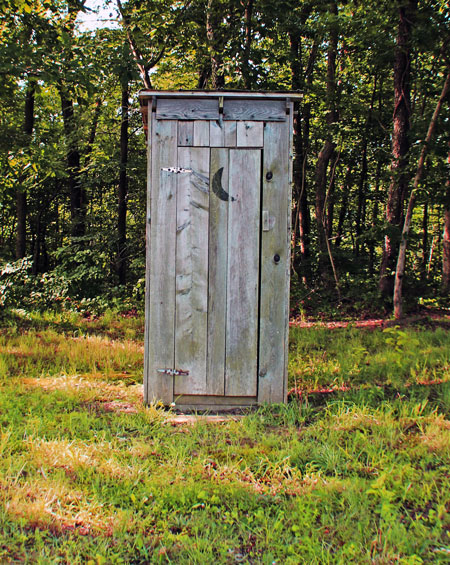
Almost every tiny homeowner I know has a composting toilet inside their tiny house. When I first started using a composting toilet, I was still in the process of building my tiny house. Because of this, I was using my bathroom as storage, and I had no space for anything. I wasn’t sure what to do with the toilet, so I set it up outside with a little coverage deck (again, keep in mind I live on a vast, isolated piece of land).
 When the house was ready, it was time to move the toilet inside, and I remember thinking, “Why?” Why would I want to invite smells, bacteria, and occasionally even flies into my house?
If you can make an outhouse or outdoor bathroom happen, I say, why not go for it? I’ve seen some nice setups, where people have a little shower in their outdoor bathroom, a sink, and a little toilet. You could go with an outdoor bathroom or just an outhouse. It’s less of a headache than having a bathroom indoors.
But of course, there are some hazards, including pests, bugs, and even animals that are more prevalent outdoors (and more likely to break into your outhouse). In the middle of a winter storm, pouring rain, or the dark of night, not everyone loves going outdoors to do their business. Plus, it gets very cold in the winter, which is excellent for keeping smells at bay but not great for comfort. The heat can get intense in a small space in the summer too, and you may end up with flies and bugs.
You have to weigh the pros and cons of the outhouse versus an indoor bathroom with a composting toilet and decide what’s right for you. Again, my experience is as a guy who is very comfortable outdoors and lives in an isolated area. For a family or those living in a tiny house community, your needs may be very different.
Compost Toilet Hacks & Materials

If you decide that a composting toilet is the right tiny house toilet option for you, certain items will make your bathroom experience more pleasant and easier. Not only will these items cut back on the smell factor and keep your bathroom cleaner, but they’ll prevent some of the issues that arise with tiny house composting toilets.

Tiny House Composting Toilet Materials

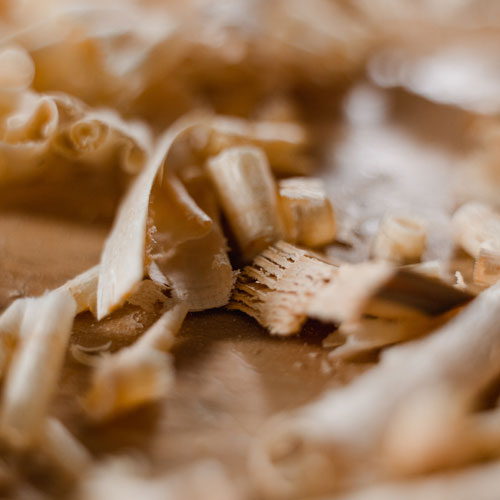
The other question I often get about my toilet is about the materials used to absorb the liquids and solids inside the toilet. You need some absorbent material in the toilet to keep things from getting messy or smelly. For me, wood shavings (yes, from the pet store) are my preferred choice.
I’ve tried many materials, and the same wood shavings you’d buy for hamsters or guinea pigs work well inside your compost toilet. It’s absorbent, low-odor, cheap, lightweight, and easy to deal with. It might feel a bit funny buying hamster shavings for your human toilet, but let me tell you — it works!
Composting Toilet Materials Options
Wood Shavings
As what I use, this is my personal recommendation. I’ve tried many toilet materials, and the shavings from the pet store are the best, cleanest option.
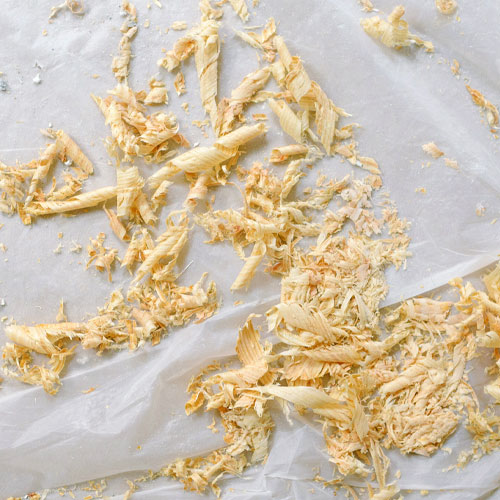
Sawdust
Similar to pet wood shavings, sawdust works well for composting toilets. The main issue is that unless you live near a lumber mill or own a woodchipper, unlimited sawdust can be tough to access.
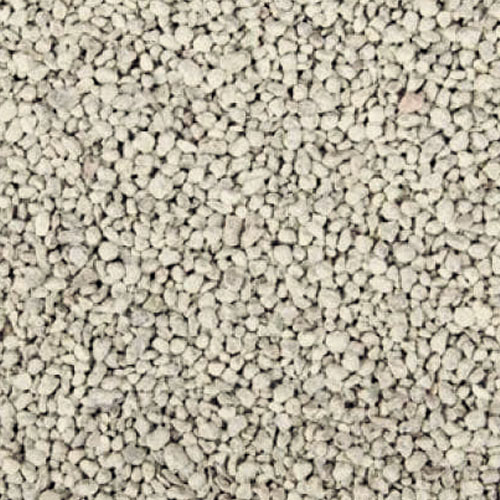
Cat Litter
Some folks have tried various types of cat litter for composting toilets. It’s a bad idea, and it isn’t a sustainable option that works well for humans.
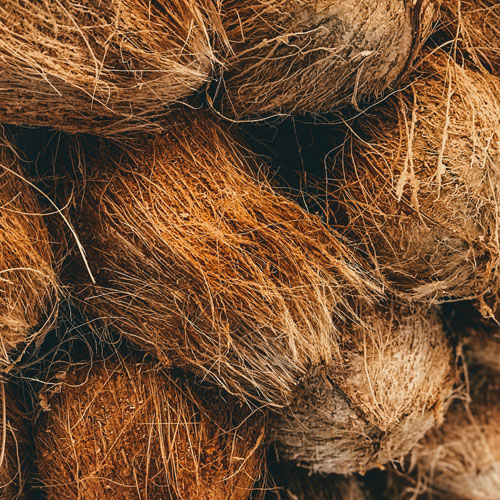
Coco Coir
Made from the shells and husks of coconuts, coco coir is sustainable and can work well for composting toilets, but it’s challenging to come by and can be expensive.
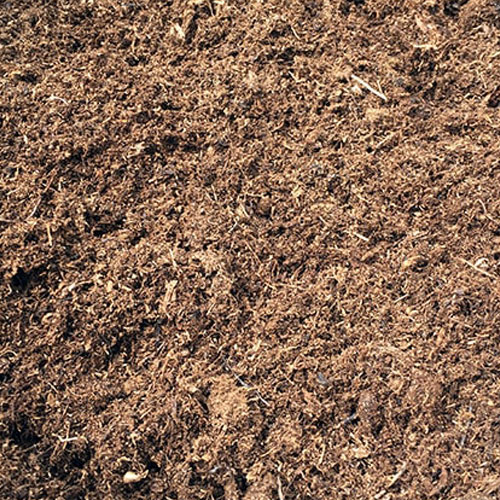
Peat Moss
There are more sustainable peat moss options out there now, and it’s not difficult to find. As far as materials go, peat moss isn’t a terrible tiny house toilet option.

Wood Ash
I wouldn’t recommend using wood ash as your tiny house toilet material. It’s very messy and hard to deal with. It is, however, odor absorbent.

Grass Clippings & Leaves
I’ve also found that this is not a great long-term solution. Unless you have something to finely break down the clippings and leaves, it’s a pain to maintain. Plus, leaves and grass clippings have their own smell as they break down, which can exacerbate an already smelly situation.
Tiny House Toilet Hacks

- Consider a built-in woodchip bin. A built-in bin is a nice feature in a tiny house bathroom. You could, of course, use a bucket or container to hold the wood chips, but having the bin makes it look more cohesive. I’ve seen some built-in bins about 2 feet x 2 feet, with a closed lid to store the chips.
- Install a solar-powered vent fan. A solar-powered fan is a must-have if your bathroom is indoors. You need something to move odors out of the small space. Make sure the end of the vent is carefully screened to prevent flies and pests from sneaking into your bathroom.
- A urine diverter keeps the toilet smelling freshEven though we think of solid waste as the source of smells, the truth is that wet matter smells much more than dry. If you want your bathroom to stay fresh, a urine diverter is a fancy funnel that splits the liquids and the solids. I’ve heard from female friends that this is an especially appreciated feature.
- Seal the toilet lid carefully. Take time to seal the toilet lid very carefully. A good seal will go a long way toward keeping smells out. You can use weather-stripping, similar to what you would use on a door, to get a nice tight seal.

Should You Choose a Composting Toilet For Your Tiny House?

All in all, using a composting toilet isn’t a bad tiny house toilet solution. Having used one for many years now, it’s not terrible at all. To be honest, I hardly even think of it most of the time.
There are a lot of people out there who claim that a composting toilet doesn’t smell…and they’re unfortunately wrong. The odor seems to be the biggest worry for most tiny house owners, and I’m not going to lie — it’s a toilet; it smells. The biggest thing you can do to mitigate the smell is to keep your toilet outside and choose the outhouse option as your bathroom solution.
I realize that an outdoor toilet isn’t realistic for many people, so the next best way to combat the smell is to have a really good ventilation fan. If you install a high-quality fan and keep your toilet sealed, you will minimize the smell. It’s also crucial that you’re diligent about using plenty of cover material and cleaning out the toilet frequently. Those steps will go a long way toward cutting down on smells.
If you choose to dispose of the waste in a bag, you can put it out with the trash (again, like pet waste or a diaper) in most places. It’s not pleasant to think about, but once you’re used to it, it’s really no big deal. If you choose to compost, make sure that you have the approval of the landowner (if that’s not you).
While most of us probably don’t want to think too much about the toilet for our tiny house, it’s one of those things that makes life more livable, clean, and comfortable. The call of nature is something we all must heed, so it makes sense to find a tiny house toilet solution that you can live with in the long term.
Even though I’ll admit I decided to take the plunge into a composting toilet as a last-minute solution to save the plumbing costs, it’s something that I’ve been satisfied with for years.

Composting Toilet FAQs
Switching to a tiny house composting toilet comes with a bit of a learning curve, so you probably have some lingering questions. I’ll tackle a few of the most common below.
What Are The Drawbacks Of A Composting Toilet?
As much as I’ve grown to appreciate them, composting toilets come with trade offs that might not work for everyone. For one thing, maintaining a composting toilet in a tiny house is a lot more involved than it is with a traditional flush toilet. You have to empty the waste at regular intervals and stay on top of venting, airflow, and moisture levels.
Another downside is that composting toilets are not as equipped to take on multiple users and, even if they were, your guests may balk at the idea of using one. Composting toilets take some getting used to, but the thing is, you will eventually get used to it.
Do Composting Toilets Smell?
The short answer is yes; tiny house composting toilets can smell. However, this is almost always a sign that you’re doing something wrong. A properly maintained tiny house compost toilet shouldn’t have much of a smell aside from a mild, earthy scent.
How Often Do You Have To Empty A Composting Toilet?
Depending on the model and number of users, you’ll have to empty your tiny home composting toilet roughly once every one to four weeks. If you have a separate liquid container, you’ll probably have to empty that more frequently — usually every two to three days at a minimum.
Where Do You Empty A Composting Toilet?
Emptying a tiny house composting toilet isn’t nearly as bad as most people assume it is, but it is something that will need to be done at regular intervals. Disposing of liquid waste is pretty straightforward. Simply empty your container in a flush toilet, compost pile, sewer-connected drain, or in a designated spot directly in the ground.
Getting rid of solid waste can be a little trickier. The easiest method is to bag your waste and toss it in the trash, but most people throw their composted waste into a — you guessed it — composting bin. After about six months of hot composting or 12 months of passive composting, most of the harmful pathogens will die off. Then you can use the finished compost to care for any non-edible landscaping. (You can also use it at the base of fruit trees and shrubs as long as the manure doesn’t come in direct contact with anything you plan on eating.)

Your Turn!
- What are your biggest concerns about using a composting toilet?
- Do you prefer an outdoor or indoor bathroom?
Thanks for toilet options! Can’t wait to read it, I needed that Information 🙂
To answer your own question, NO, composting toilets do not smell. I investigated this myself head-down. That is to say, I stuck my head into the composting toilet to „sniff around“. This toilet was installed on my sailboat and I used peat moss for the composting agent. Properly vented (a small 12 volts computer fan will do just fine), there is no smell. I survived the test to tell the tale. As mentioned in the article, there are several options. The biggest drawback, though, is the pee bottle. 2 people will fill it in a couple of days and then what? There is a solution, though. Most of these bottle options do have a drain valve and you can connect a drain hose. Where it drains to will be your job to figure out. … 🙂 … There are options, though. If you are willing to spend a little more money, you can buy a „house“ sized composting toilet which will handle the liquid as well. It may set you back about $3,000 or so but may very well be worth it since it handles it all for an average house and occupancy. It requires household current but comes with a 12 volts option.
Wow this is a great resource. Very nice job putting this all together!
I live in as you mentioned, highly populated California. Since a compost toilet is not an option could you tell me the rules & regulations regarding flush-toilets for LA county. Or where l might find out?
You only discuss regular flushing toilets and composting, what about incinerator toilets? I have not been able to find a lot of articles on them but they seem like a great (if expensive) alternative option.
I have not used them personally but I’ve only heard negative things from people who have used them.
incinerator toilets are a bad option. Incinerator waste was a bad invention over all. It uses such huge amount of electricity what is the point. They are using incineration right now to burn plastic in other countries. Incineration is a destructive way to process any kind of waste. It would greatly impact your energy bill and use valuable resources every flush haha
I’ve just heard about the Thinktank waterless toilet. It seems to function like the Separett, but men can stand to pee. This is kind of important for me. Has anyone seen or tried one?
Thanks for sharing your insights on composting toilets! I’ve always been curious about how practical they really are in a tiny house setup. It’s great to hear about your experience and the tips you provided. I’m definitely considering making the switch!
Great insights on composting toilets! I appreciate the detailed breakdown of the pros and cons. It’s fascinating to see how tiny living encourages sustainable choices. I’m definitely considering a composting toilet for my own tiny house now!
I loved this post! It’s so refreshing to see an honest discussion about composting toilets in tiny houses. I’ve always been a bit skeptical about how they work in practice, but your insights have made me feel more at ease. Thanks for sharing your experience!