
NAVIGATION
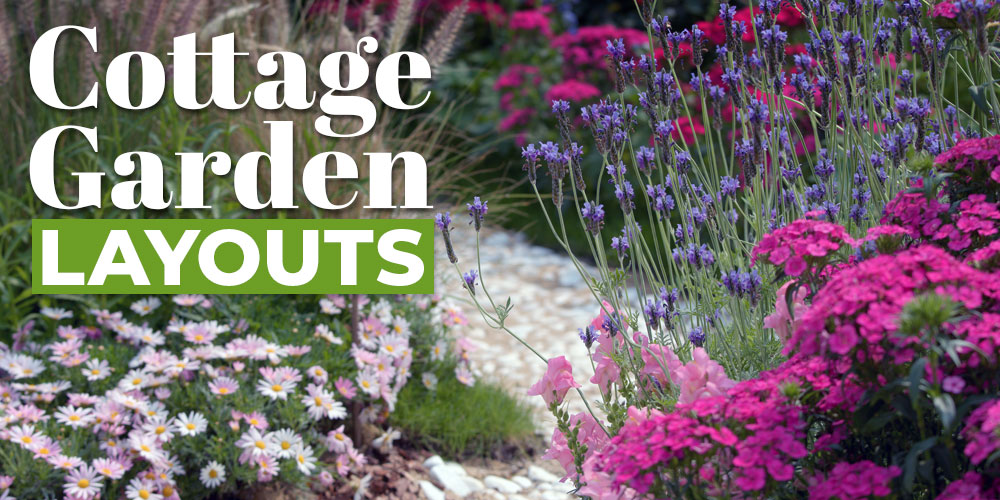
There’s something magical about cottage gardens. Overflowing with fresh flowers, aromatic herbs, and dazzling foliage, they invite you to slow down and get lost in a milieu of bright colors and fragrant blooms.
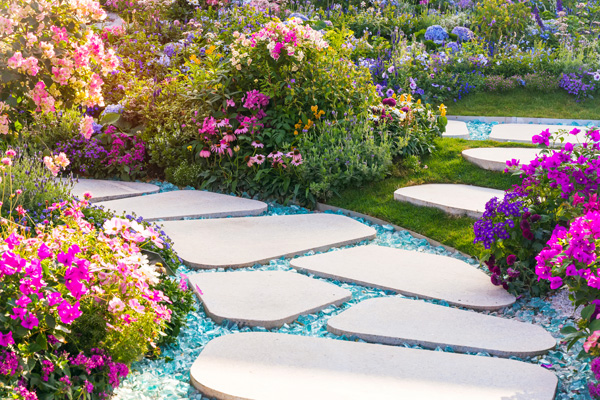 However, a surprising amount of thought goes into planning a cottage garden, and the early layout plans you make will be the difference between a perfectly curated garden and an overgrown lot. And once you reach that point, you’ll spend more time troubleshooting your garden than you will enjoying it.
That’s a shame, because a properly designed cottage garden has a pleasant, storybook charm to it. It’s something I find particularly fitting, since they make the perfect spot to relax and get lost in a good book.
But where to start?
These cottage garden plans offer a clear look at how to strike a balance between structure and softness. I’ll also throw in some tips on how to make the designs your own, so make sure you stick around until the end.
Hi, I’m Ryan
It may sound strange to some, but my appreciation for cottage gardens stems from a love of literature. Lush, sprawling gardens were a mainstay in some of my early favorites, and I wanted my current garden to capture that same magic.

Cottage Garden Layout Plans
Cottage garden design plans may look spontaneous and carefree, but there’s a lot more to them than meets the eye. Thoughtful design choices and planning will help ensure your garden looks lush and romantic rather than messy and chaotic. Think of the following layouts as a guide. Feel free to build on them, use them as is, or swap out some of the plants for your personal favorites.
Pollinator-Friendly Cottage Garden Mix
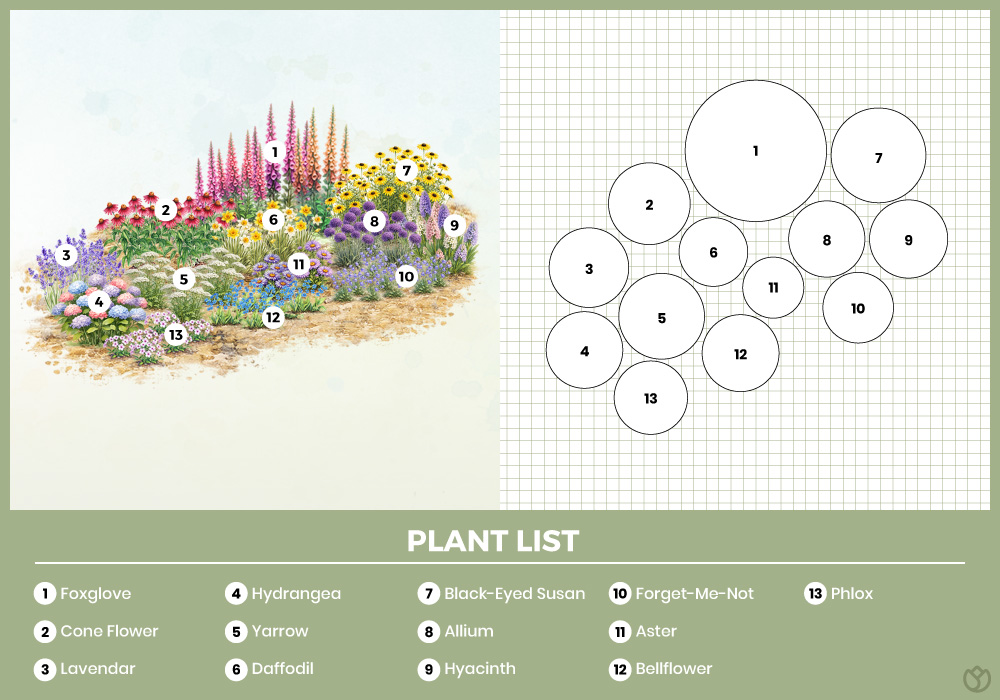
In the first cottage garden plan, striking foxglove spires tower over a bold mix of cone flowers, hydrangea, forget-me-nots, bellflowers, and phlox. Equal parts beauty and function, this garden plan features medicinal plants like lavender and yarrow. Yarrow is prized for its healing and styptic effects, meaning it helps stop bleeding, while lavender offers a soft, floral scent that works well in teas, candies, and desserts.
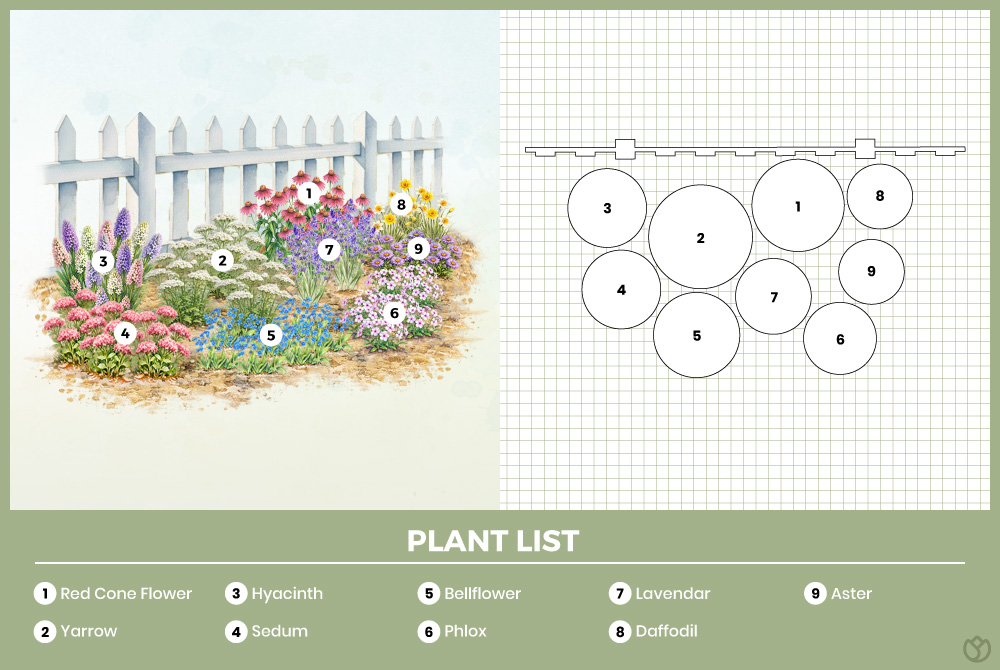
White Picket Flower Garden Layout
A white picket fence serves as the backdrop of this cottage garden planting plan, putting the spotlight on a vibrant blend of aster, lavender, phlox, hyacinth, sedum, and daffodil. White clouds of yarrow play off the pastel hues, while bellflower breaks up the pastel display with subtle blue accents.
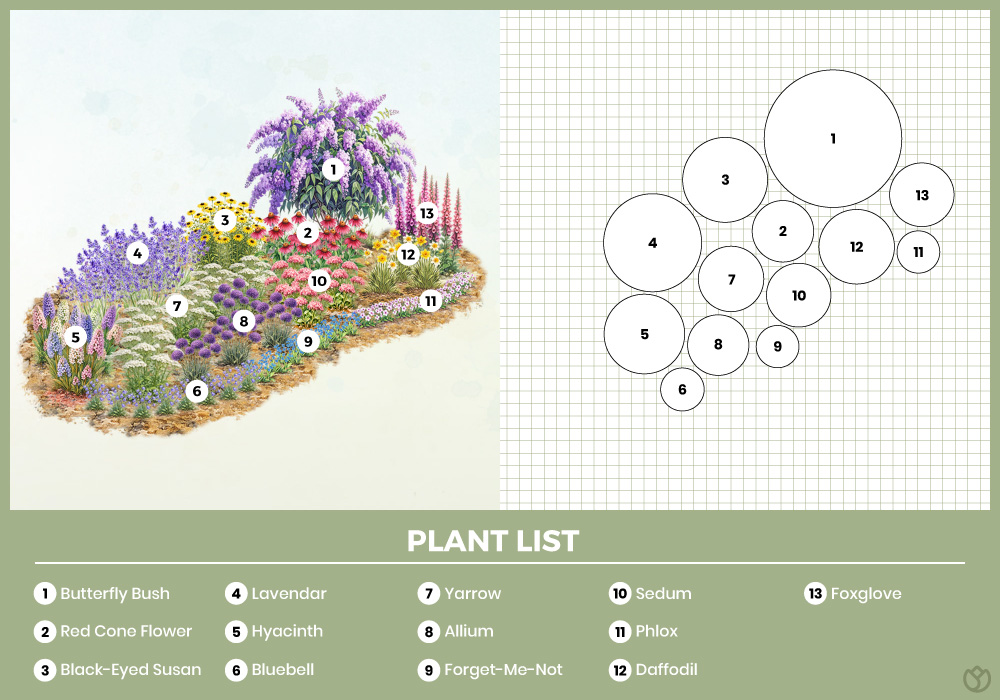
Romantic Cottage Garden Bed Plan
This English cottage garden plan follows the classic tall-to-short garden structure, giving the illusion of depth and fullness to a relatively small space. Lavender and butterfly bush are placed on either side of the garden, serving as visual anchors and drawing the eye in towards the explosive colors in the center.
Classic English Garden Layout
Soft purples, pinks, and blues dominate this English cottage garden plan. The lush, pastel flowers bloom from early summer to the first frost, creating a long-lasting color display. Varied flower heights and shapes add texture to the garden, creating a diverse yet cohesive display.
Stone Walkway Garden Design
This cottage garden planting plan is the perfect way to highlight a rustic stone path. Early bloomers, such as daffodil and hyacinth, provide splashes of color in the spring, while the aster, sedum, and butterfly bush offer ample blooms for the later season.
Countryside Cottage Garden Layout
A bold mix of pinks, yellows, purples, and reds creates a strong color contrast throughout this densely packed cottage garden bed. Mid-height plants like sedum, lavender, and allium dominate the center of the bed, while foxglove and daffodils rise above the mix to create a colorful backdrop.
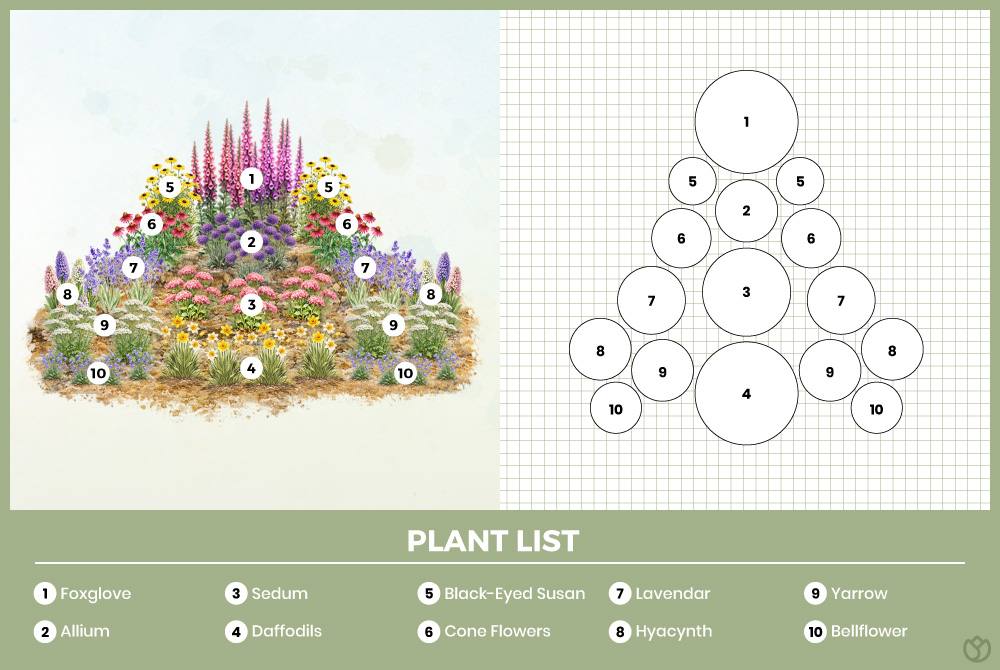
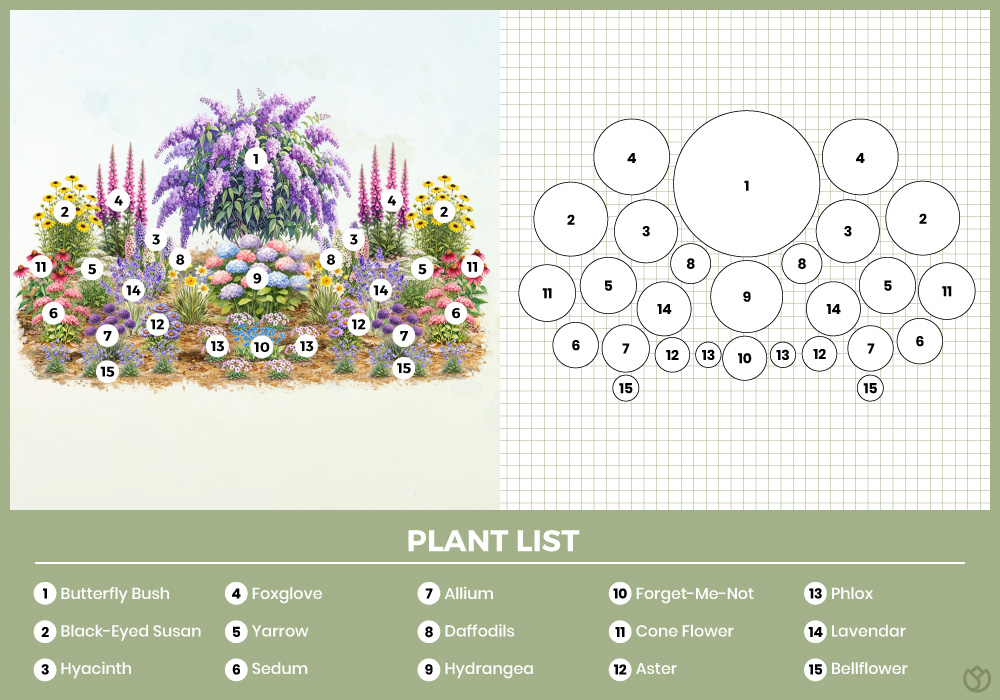
Picket Fence Flowerbed Plan
The next cottage garden design plan features two densely packed flowerbeds located on both sides of a short, white picket fence. The white paint creates a stunning contrast, and further highlights the colorful display of yarrow, allium, foxglove, aster, and hyacinth. The two tallest flowers, butterfly bush and foxglove, are placed at the start of the fence, creating a subtle height gradient.
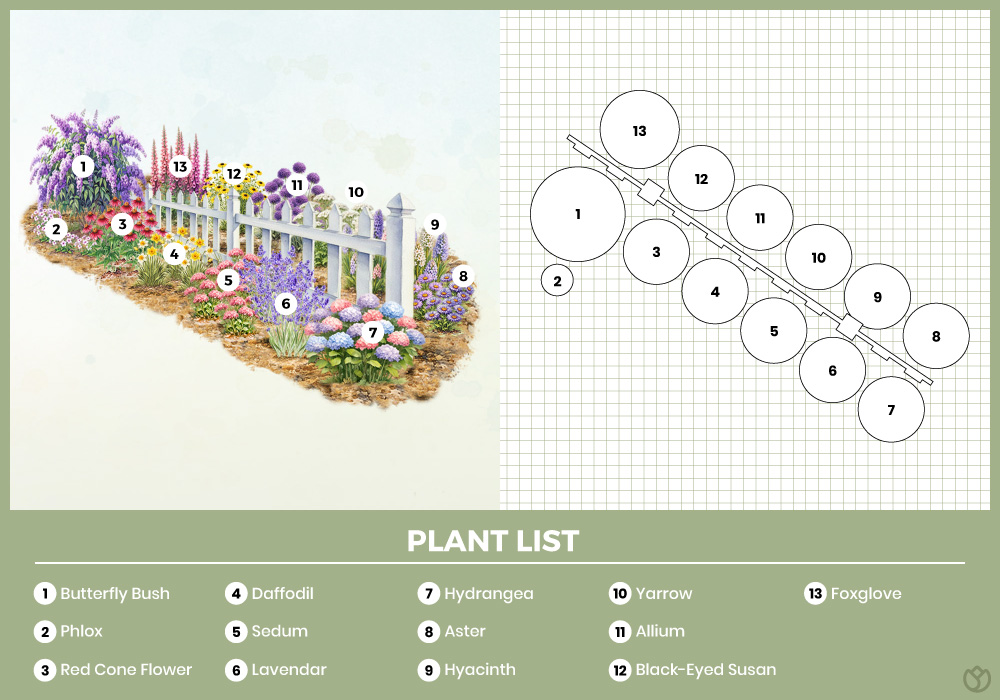
Wildflower Cottage Garden Oasis Layout
The next cottage garden layout plan prioritizes density, with flowers planted closely together to create a compact, overflowing effect. A stunning mix of butterfly bush, phlox, coneflower, and yarrow draw in pollinators and provide summer-long color. Daffodils, black-eyed Susans, coneflowers, and yarrow round out the garden bed and infuse the scene with contrasting hues.
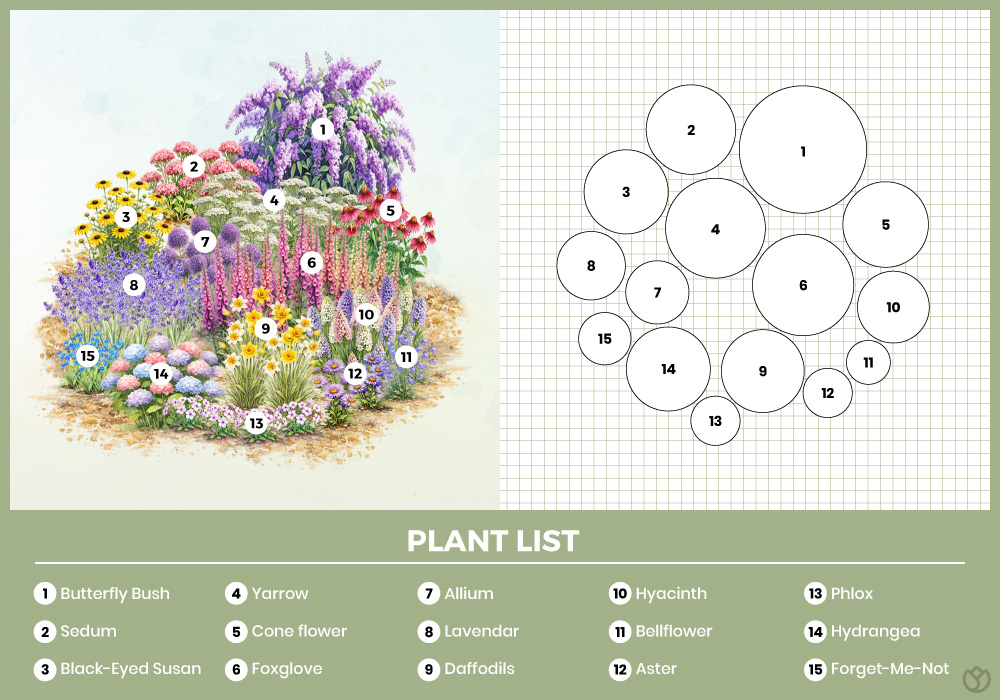
Small Cottage Garden Border Plan
Butterfly bush serves as the focal point of this moderately sized cottage garden design plan. The bushy blooms are surrounded by varying hues of red cone flowers, black-eyed Susans, yarrow, cone flowers, allium, lavender, and hyacinth, to create a garden that – despite its small stature – feels impactful and dynamic.
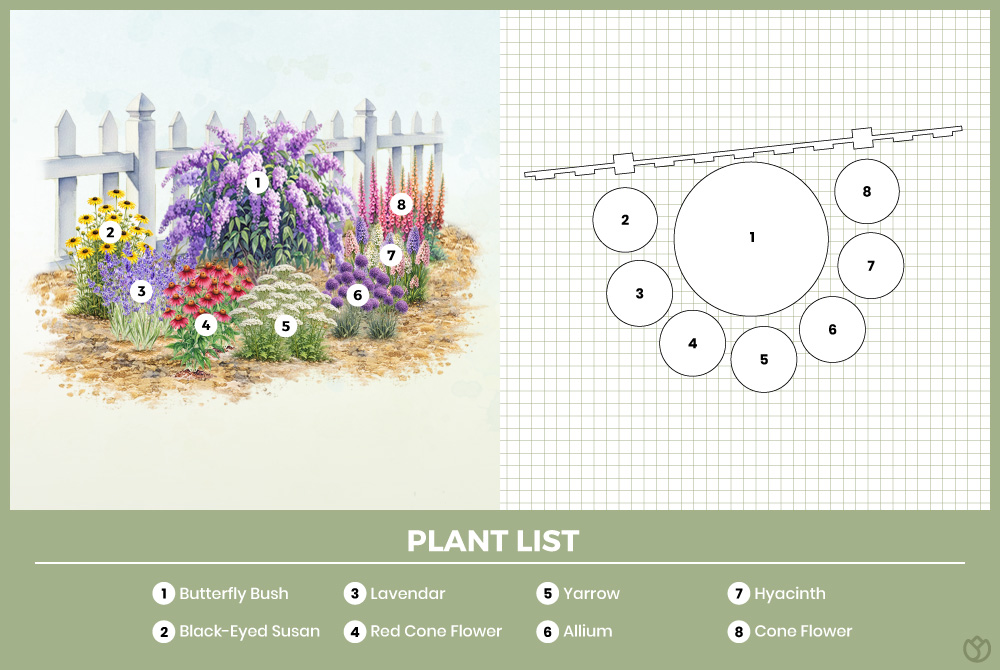
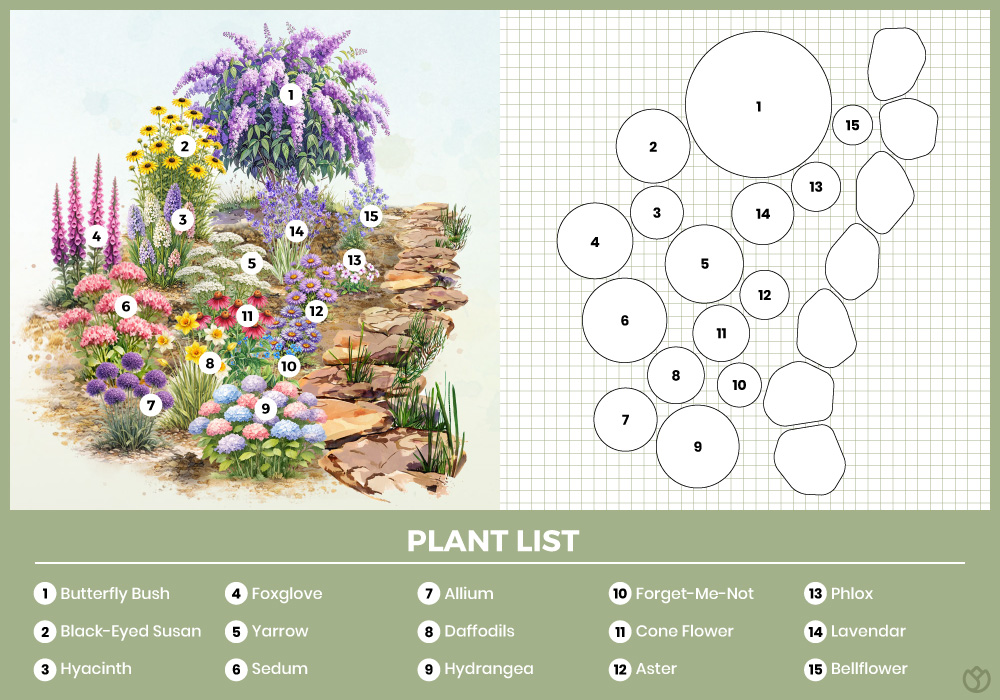
Secret Garden Stairway Design
Featuring just five types of flowers, the last cottage garden layout plan is small, but mighty. Comprised of butterfly bush, sedum, foxglove, hydrangea, and hyacinth, this layout surrounds a central set of quaint stone stairs. This thoughtful arrangement transforms an otherwise functional structure into a stunning, floral feature.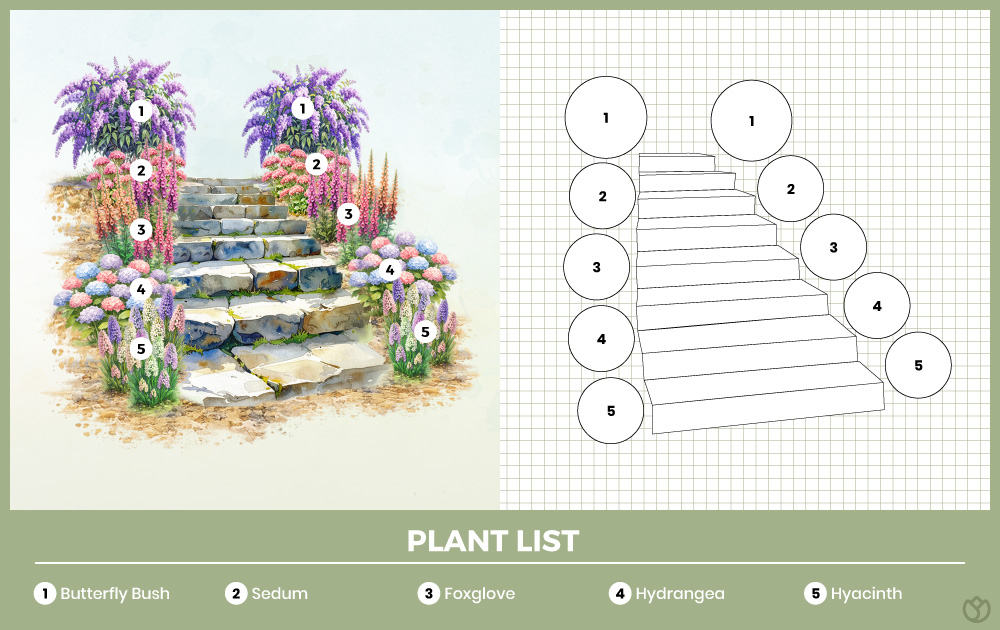

Cottage Garden Plans: What You Need To Know
Cottage gardens are essentially a type of informal, densely planted garden arrangement. Defined by their messy, natural shapes and romantic colors, most cottage gardens feature an eclectic mix of flowers, shrubs, trees, vines, herbs, fruits, and vegetables.
They’re informal, a little overgrown, and often look like they were ripped straight out of the pages of a fantasy or romance novel.
Despite their carefree nature, the first cottage gardens were entirely utilitarian. They originated in medieval Europe, where households depended on English cottage gardens to provide a steady supply of fresh fruits, vegetables, herbs, and medicinal plants. Some even featured beehives and small livestock.
Over time, however, increasing prosperity meant household gardens were no longer strictly a matter of survival. Households were free to experiment with new ornamental plants and build outdoor spaces that, while still functional, offered an additional decorative appeal.

How To Plan A Cottage-Style Garden
Planning a cottage garden is simple, as long as you approach it one step at a time. I’ll break things down below.
Assess Your Cottage Garden Space
The first step to planning a cottage garden is to measure your garden space and figure out exactly how much room you have to work with. Once you have the measurements, you can start sketching out a layout that incorporates garden beds, gravel pathways, gates, trellises, and other structures.
A mistake I see a lot of people make at this stage is not taking full advantage of their vertical space. Utilizing vertical space helps make your garden feel larger, layered, and more immersive. Vertical gardening also brings functional benefits, like improved airflow, pest resistance, and increased vining crop yields.
Fill Your Cottage Garden With Plants
Cottage gardens are lush and densely packed, so you’ll want to fill them with plants of all different heights, textures, and colors. I recommend incorporating a mix of annuals, perennials, and biennials, as well as plants with different bloom times, so you don’t end up with a garden that’s only bright and colorful for a few weeks out of the year.
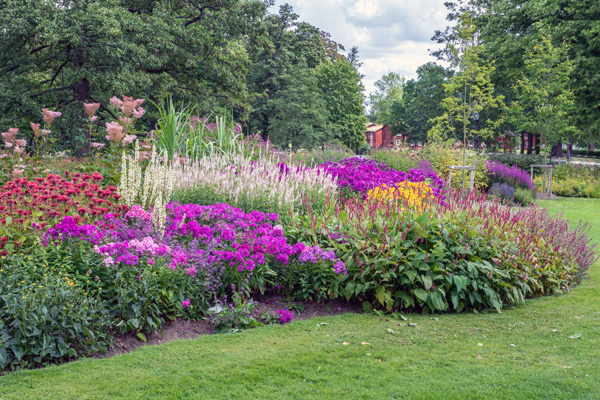 As a general rule, position the tallest plants at the back where they can add height and texture to your garden. Bring short, ground hugging plants closer to the front where they won’t get lost in the crowd, and keep medium-height plants towards the center to fill in any gaps. In addition to creating depth, staggering the plants will help you create microclimates that help meet the plants’ differing needs.
After all, picking the right plants isn’t just a matter of what looks nice. You’ll also need to make sure that the plants grow well together. Opt for varieties with similar soil and watering needs and use taller, sun-loving plants to protect shade-loving varieties from harsh rays.
Add In The Cottage Garden Fixtures
Now that the bones of your cottage garden are in place, it’s time to focus on the details. Think of functional elements – like birdbaths, trellises, gates, benches, arches, and pottery – as your garden’s jewelry. These features can really help you lean into the storybook aesthetic and provide some extra visual appeal and charm.
Just be careful not to overdo it. Unless you’re going for a maximalist aesthetic, it’s best to pick just a handful of statement pieces and let your plants do the rest of the heavy lifting.
Embrace The Imperfection Of A Cottage Garden
The beauty of a cottage garden lies in its shaggy, overgrown foliage, so let your plants grow and self-seed freely. Resist the urge to over prune and trim and, instead, focus your efforts on maintaining the health of your garden. In other words, simply feed and water your plants at regular intervals, and prune or harvest as needed.
What Plants Thrive In A Cottage Garden?
Cottage garden plans are only as good as the plants you fill them with. Fortunately, there’s a lot of room to play around with various plants. Everything from vines and flowers to trees, shrubs, and vegetables work well in cottage gardens, and each type brings its own unique charm.
Best Flowers For A Cottage Garden
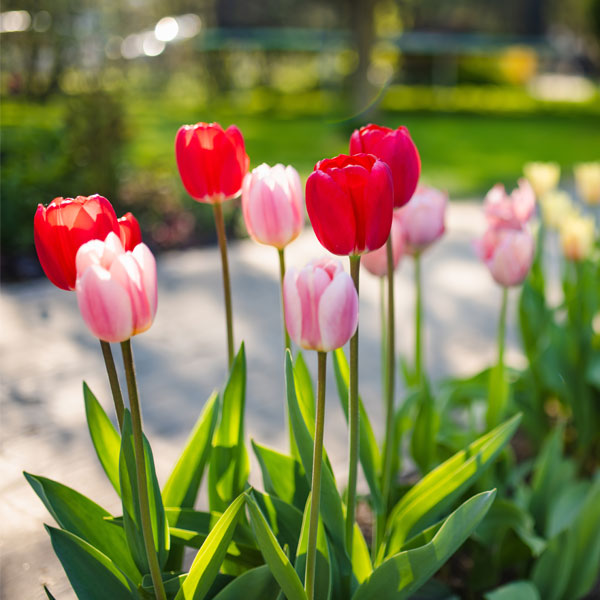
Flowers are the very foundation of a good cottage garden plan. While there’s ample opportunity to experiment, there are a couple of things to keep in mind. For one thing, you’ll want a mix of early blooming and late blooming flowers to ensure there’s year-round color. You’ll also want to include tall, medium, and ground cover flowers to add depth to your space.
- Aster, Bellflower, Black-Eyed Susan, Cone Flower, Daffodil, Delphinium, Forget-Me-Not, Foxglove, Hollyhock, Hyacinth, Sedum, Phlox, Rose, Spirea, Tulip, Yarrow

Cottage Garden: Shrubs And Vines
Shrubs help give your cottage garden design structure and contrast nicely against the soft flowers surrounding them. Similarly, vines and climbing plants add vertical interest. They draw the eye upwards, enhancing the overall immersion.
- Butterfly Bush, Daphne, Clematis, Climbing Rose, Flowering Quince, Hydrangea, Honeysuckle, Morning Glory, Hyacinth Bean, Lilac, Nasturtium, Passionflower, Sweet Pea, Trumpet Vine, Wisteria

Cottage Garden: Trees
I love seeing trees in cottage garden layout plans. While many people overlook them due to their size, trees provide height, shade, and long-term structure to a garden. Flowering and fruiting varieties in particular bring a functional benefit and help your garden feel warm and inviting. Just keep in mind that, unless you’re working with a ton of space, you’ll want to stick with smaller varieties.
- Dwarf Fruit Trees (Plum, Cherry, Fig, Apple, Pear, Mulberry, Lemon, Orange, etc.), Hawthorn, Japanese Maple, Magnolia, Weeping Cherry, Serviceberry

Cottage Garden: Fruits And Vegetables
Unlike traditional gardens, cottage garden plans weave edible crops directly into the surrounding landscape. You can use leafy greens to add lushness; berries and fruits for pops of color, and vegetables to serve as organic ornaments.
- Tomatoes, Squash, Beets, Eggplants, Turnips, Peas, Beans, Kale, Lettuce, Carrots, Spinach, Radishes, Zucchini, Broccoli, Artichokes, Potatoes, Peppers
- Strawberries, Blackberries, Blueberries, Passionfruit, Grapes, Raspberries, Rhubarb

Cottage Garden: Herbs
Herbs are often the unsung heroes of cottage gardens, offering the perfect blend of beauty and practicality. In addition to their culinary and medicinal value, they help attract pollinators, fill in gaps between larger plants, and soften the landscape.
- Basil, Catnip, Chives, Cilantro, Dill, Fenugreek, Lavender, Lemon Balm, Mint, Oregano, Parsley, Rosemary, Saffron, Sage, Thyme

Cottage Garden FAQs
Cottage gardens are the embodiment of organized chaos. As such, the more you know about plant basics, the smoother the process of planning a cottage garden will be. These FAQs will help clarify some of the questions that come up as you get started.
Are Cottage Gardens Low Maintenance?
In terms of maintenance, cottage gardens fall somewhere in the middle of the scale. On one hand, they require less rigorous upkeep because they lack the tidy lawns and perfectly trimmed hedges that you’ll find in more traditional gardens. Cottage gardens also feature a lot of perennials and self-seeding annuals, which reduces the need for weeding and planting.
However, managing so many different species in such a close space will require some effort – especially in the beginning. You’ll need to thin, water, feed, harvest, and prune your garden regularly and keep an eye on the more vigorous plants to make sure they don’t outcompete their neighbors. But once your garden has had time to mature, the plants will start to self-regulate.
How Much Space Do You Need For A Cottage Garden?
There isn’t really a set space requirement for a cottage garden, so you’ll come across cottage garden plans of all sizes. I’ve seen really nice apartment balcony setups that take advantage of vertical height and large, sprawling gardens that cover a couple of acres. That said, most cottage gardens skew small, usually no larger than a quarter of an acre.
What Is The 70/30 Rule In Gardening?
The 70/30 rule is a landscaping design principle used to bring balance to a garden. The rule states that 70% of the garden should be dedicated to reliable, preferably native plants. These plants –typically shrubs, trees, and perennials – serve as the foundation of the garden; providing structure, stability, and visual consistency. And because they’re adapted to your local climate, they require less upkeep and are more likely to thrive.
The remaining 30% of a 70/30 garden is reserved for experimental or seasonal plants that help break up the monotony and add some extra visual interest. They’re often annuals and help bring color and variety to your garden. Striking a balance between reliability and flexibility allows you to play around with new varieties without sacrificing the overall design and health of your garden.
Cottage garden design plans don’t have to be perfect. After all, half of the charm of cottage gardens is in their natural look and the resulting explosion of color and textures. And whether you’re working with a sprawling yard or small corner of empty space, the principles are the same. Layer your plants, mix ornamental and functional species, use features wisely, and leave the rest up to nature. Do that, and it won’t be long before you see how, with the right planning, even a modest space can feel lush, inviting, and immersive.
Your Turn!
- Are you including any edible plants in your cottage garden plans?
- Which cottage garden layout plan did you like the most?
This was beautiful Admin. Thank you for your reflections.
Thanks for your beautiful designs. What is the grid scale that you are using? Thanks.