

NAVIGATION
Building a house on a slope is equal parts opportunity and challenge. On one hand, slopes are one of the most difficult terrains to build on, and construction is often slow, expensive, and complicated.
But on the other hand, hillside homes offer some of the most breathtaking views I have ever seen. It’s like being given a private, front row seat to every sunrise and sunset, far above the hustle and bustle of everyday life. My favorite thing about building on slopes is that they force you to work with the land rather than against it. Read on to find out how it’s done.
Hi, I’m Ryan
While helping a friend build their house on a slope, I noticed the process was a lot like doing a puzzle. We had to figure out how each facet of the home would integrate into the terrain, piece by piece. And in the end, the views from this hillside home were well worth the challenge.

Can You Build A Home On A Slope?
The short answer is: yes, you can build on a slope. The longer and more accurate answer is that it depends on both the specific slope and the type of house you want to build. Some slopes pose more of a challenge than others — requiring extensive construction and prohibitive time and monetary investments — while others may not be suitable for construction of any kind.
So, before you get too attached to that particular scenic hillside, it’s important to determine whether or not you can build on it.
Some Limiting Factors To Building On A Slope
- Utility connectivity – Some challenging slopes can make it difficult to connect your home to sewer, water, and electricity lines. While there are alternatives, they can be costly and tricky to install.
- Incline – If your lot is too steep or unstable, excavation work may become difficult or prohibitively expensive.
- Local building regulations – Some regions have strict regulations that limit what type of construction is allowed due to environmental or safety concerns.
- Soil stability – Loose, sandy, and unstable soil is prone to erosion and landslides. That makes it difficult to build a stable foundation — particularly one that is safe and long-lasting.

What Is The Best Way To Build A House On A Slope?
There’s no one right way to build on a slope, so choosing the best strategy will ultimately come down to your individual preferences. That said, there are four main approaches you can take: sitting the home on top of the ground, embedding it into the ground, having the house float above the slope, or letting it hang out over the slope. I’ll break things down further below.
Put Your Hillside Home Directly On The Ground
The simplest strategy for building a home on a slope is to simply sit your house on the ground. This approach minimizes the need for excavation and pricey foundations, and, as long as you don’t need a lot of site grading, is one of the fastest and easiest construction methods to employ.
Embed The Home In The Ground
Another approach to building on a hillside is to bury part of the home under the ground. This method creates a seamless integration with the landscape and gives your home a more naturalistic, organic shape. While embedding your home in the ground can improve energy efficiency and reduce exterior noise, it will come with significant excavation and foundation costs.
Raise The House Above The Slope
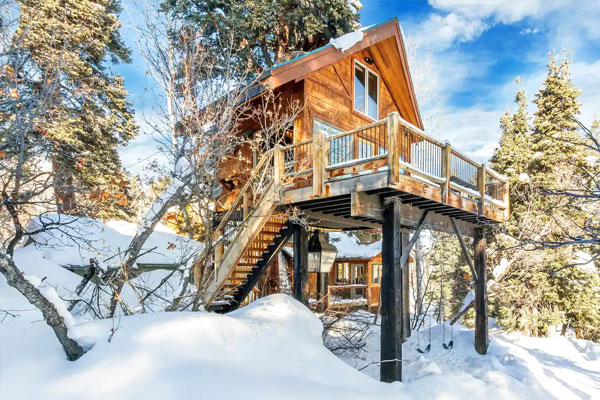
Elevating your home on walls, stilts, or piers significantly reduces site disturbance and helps you tackle even the most exceptionally troubling terrain. Raising your home will also improve your views and, because the home isn’t sitting directly on the ground, allow for more airflow. That will help protect your home from pests and enable a more natural flow of rainwater.
Build The House Over The Slope
One of the most visually interesting approaches is to cantilever your home so it sticks out over the hill. This method is achieved by anchoring one side of the house to the terrain, while the rest of the home extends past the hill, suspended in the air. Although pricey, cantilevering your home helps minimize the amount of work you’ll have to do preparing your site and foundation.
Build On A Slope Using A Hybrid Approach
The best thing about these design strategies is that they aren’t set in stone. You can either use each method as is or take a hybrid approach and combine a couple of different techniques for a unique architectural design that’s entirely your own.

Are There Advantages To Building A House On A Slope?
Building on a sloped lot comes with a lot of risks, but it can also bring substantial rewards that flat land doesn’t offer. But there’s no need to take my word for it. Here’s why that sloped lot might be the perfect location for your next home.
Building On A Slope Opens Up Architectural Opportunities
Unconventional land often requires unconventional architecture, which opens the door to unique construction approaches. Slopes allow for creative house designs that contrast against or enhance the natural landscape in a way that traditional architecture on flat land doesn’t.
Ways To Take Advantage Of A Slope
- Unique outdoor spaces
- Walkout basements
- Tiered and split-level homes
- Drive under garages

Houses On Slopes Offer More Privacy
Hillside homes often sit far above other houses, creating plenty of distance between you and nosey neighbors. You’ll also experience less noise and light pollution since hilly lots tend to be further away from main roads.
The levels of privacy and exclusivity offered by a house on a slope are hard to get on flat land, making them perfect for anyone who values seclusion and peace and quiet.
A House On A Hill Can Give You More Natural Light
A house on a slope is often designed with plenty of windows and high ceilings, which means abundant natural light. In addition to ample daylight and dramatic sunsets, you may also enjoy a spectacular view of the moon and starlit night sky.
Hillside Homes Have Better Views
Who doesn’t prefer a home with a view? Building a house on a hill gives you access to stunning architectural and natural opportunities. And keep in mind that the scenic views aren’t just nice to look at. They can also dramatically enhance your property value, making them a worthwhile investment.
Sloped Lots Come With Lower Land Costs
One of the most overlooked aspects of building a house on a slope is that it can save you money. Lots with steep slopes are often deeply discounted due to the construction challenges they pose. That can help offset the construction costs you’ll encounter and increase the number and variety of property options in your price range.
What Are The Downsides To Building On A Sloped Lot?
Although great for some, building on sloped land isn’t going to be the best option for everyone. Knowledge is half the battle, so I’ll break down some of the risks and challenges below.
You May Need Special Permits
One downside to building a house on a hill is that you’ll usually need to acquire permits before you can get started. Generally speaking, the steeper the slope, the more permits and geotechnical reports you’ll need. Watch out for special requirements too — retaining walls for hillside homes will almost certainly mean an additional permit.
Your House May Be Prone To Drainage Issues
Although sloped land offers plenty of natural drainage, it also requires careful planning to ensure the runoff doesn’t damage or flood your foundation. Additionally, sloped lots are at a higher risk of experiencing environmental hazards like mudslides, avalanches, and rockfalls. Because of this increased risk, drainage provides an extra challenge that needs to be addressed before, during, and after construction.
Construction And Maintenance Can Get Pricey
As I mentioned earlier, heavily sloped land often comes with a smaller price tag. However, as you begin the process of building a home on a hill, the costs will, on average, be between 10% to 20% higher than building on flat land.
 For one thing, you’ll have to pay for any necessary permits and reports. Then there are the site costs associated with grading, clearing, and excavation.
Once the actual building starts, you’ll begin to encounter all of the special considerations that come with building on a particular lot.
These may include installing drainage features, stabilizing structures, and building a stable foundation. Even after you finish building, you’ll likely find that maintenance and landscaping services are pricier due to the challenging terrain.
Erosion May Become A Problem
Unlike with flat lots, water flow, gravity, and drainage can differ wildly on sloped land. These factors can dramatically increase the risk of erosion, both at the present time and in the future. It’s important to assess and identify the areas where erosion may become an issue and address them. Unfortunately, this can slow down construction, increase site costs, and result in pricey repairs later down the line.
Slopes Can Create Accessibility Issues
Building on a hillside can dramatically reduce the accessibility of a home, especially if the hill has a steep incline. Hillside homes often require steep or lengthy stairs and driveways that make it difficult for both builders and residents to navigate. That can make accessibility an issue, both during the construction process and for residents with mobility issues like the elderly, disabled, and children.
FAQs: Building Houses On Slopes
Still have lingering questions about building a house on a slope? In this section, I’ll tackle some of the ones I get asked most often.
How Steep Is Too Steep When Building On A Hill?
The difficulty and costliness of building on a hill are directly related to the gradient, or incline, of the land. A slight incline of 10% or less is so gentle that you might not even notice it while walking. An 11% to 20% slope is considered moderate and, although noticeable, is more like a rolling hill than a sharp incline. Both slight and moderate slopes are fairly easy to build on and don’t come with a lot of site risks or additional costs.
 However, once you exceed 20%, that starts to change. Gradients higher than 20% are what you’d call steep, and at this incline, you’d struggle to walk uphill. More like a ski slope than a hill, steep gradients usually require extensive excavation and foundation work and come with a lot of associated risks.
The good news is that with a skilled builder, you can usually build on slopes in the steep range. I’ve even seen construction companies willing to take on 35% gradients, although they’re few and far between. Just keep in mind that in addition to facing significant regulations, the risks and the costs will be much higher.
What Is The Best Foundation For A Sloped Lot?
The best foundation for a sloped lot depends on a few different factors, namely the steepness of the slope and the soil conditions. Extremely steep slopes with loose, sandy soil or dense clay may benefit from pier and beam foundations because they offer stability without the need for extensive excavation and construction.
In contrast, stepped foundations are ideal for moderate slopes, as they follow the natural contours of the land. I personally prefer crawlspace foundations, as they offer the perfect combination of practicality and adaptability. They’re more cost-effective than a full basement and can be raised or lowered as needed to accommodate a steep incline.
Is It More Expensive To Build On A Slope Than Flat Land?
Building on a slope is generally more expensive in terms of construction but cheaper when it comes to acquiring land. Flat lots are more desirable than lots with plenty of hills and slopes, and that drives up competition and cost. Additionally, sloping lots can be prone to drainage issues and may require extensive grading before you even start building your home.
On the other hand, sloped lots often have a natural, built-in drainage system and, with less competition, they tend to come at a reduced price. However, once construction starts you may see the costs rapidly increase. Slopes can be difficult to build around, and they often require complex designs to ensure stability.
What Is The Cheapest Way To Build A House On A Slope?
The cheapest way to build on a slope is to simply work with your terrain. For most homebuilders, this means building a house directly on the ground — as long as the land is relatively level and doesn’t require a lot of grading. While it doesn’t come with the same benefits as raising your home above the ground or embedding it into the slope, it is by far the quickest, cheapest, and most convenient approach.
To Build On A Slope Or Not To Build: My Final Thoughts
If you don’t mind a challenge, can think outside of the box, and have the means to afford it, building on a slope is often a worthwhile venture. Whether that means building a home perched among the treetops or creating a walk-out basement that feels more like a sunroom is entirely up to you. Either way, the obstacles that come with building on a hillside might be the push you need to create the home of your dreams.
Your turn!
- Views or stability: which would you prioritize more?
- Do you think hillside homes are worth the extra investment? Why or why not?