
NAVIGATION
Although mature Muscovies are pretty tough birds, content to perch outdoors in all kinds of weather, I recommend having a Muscovy duck house so your flock can stay safe from predators and have a dry place to access food and clean water. On my homestead, I also provide dry nesting boxes for laying Muscovy females, as they’ll need a protected place to lay and hatch their eggs; this has the added benefit of making it easy for me to collect eggs.
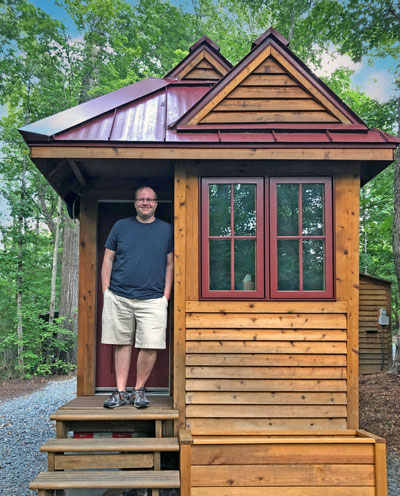
Hi, I’m Ryan
Years of raising different types of poultry on my tiny house homestead have taught me a thing or two about building everything from chicken and turkey coops to Muscovy duck houses. Sharing design tips with other homesteaders is a great way to benefit from each other’s knowledge and expertise, so I’ve laid out what I’ve learned for you here.

It’s always best to consider your options before you start building a Muscovy duck house or coop. Factors to consider include your local climate and weather, the types of predators in your area, and whether or not you have enough land to free-range your Muscovy flock. Let’s examine each of these considerations in closer detail.
Housing And Coop Ideas for Muscovy Ducks
While Muscovy ducks need a lot of time outside to forage — for their developing muscles and their nutrition — they also need a safe place large enough to provide shelter at night when predators might come stalking. Therefore, building a Muscovy duck house is going to be one of the first things you need to do when you decide to start a new flock.
 There are plenty of duck shelter ideas out there, but ultimately, the type of Muscovy duck coop design you go with will depend on your budget, your building expertise, and your available materials. I’ve found that using lumber and nails to create a rectangular wooden coop is the easiest method if you’re not really sure what you’re doing but still want to DIY. Ordering a prebuilt coop can be quite expensive, and your Muscovies don’t need anything elaborate — just somewhere dry and secure to keep them contained at night.
Many homesteaders I know have enough property to let their ducks free-range during the day, which provides them with good exercise and nutrition. If you have a smaller homestead, you might need to build a run along with your coop to give them an enclosed grazing space. Chicken wire works great for this.
While you’re working on designing your coop and pen, don’t forget to allow space for warm and dry Muscovy duck nests in your plans.

Considerations When Choosing Muscovy Duck Housing
After your Muscovy ducklings leave their brooder at around eight weeks of age, they’re ready for the great outdoors. Even though I live in a tiny home, I have a large plot of land that provides plenty of room for all my gardens and livestock.
 This open space means that I can let my poultry free range, which eliminates the need for a Muscovy duck pen, but if you live on an urban homestead or have a small plot of land in the country, you’ll want to choose the right location, amount of space, and materials for a duck pen as well as a duck coop.
There are many other factors to consider when choosing your Muscovy duck housing, and I’ll give you some pointers on how much space your Muscovies will need to roam and forage, how to provide the best protection from predators, how and why to install warm, dry nesting boxes for egg laying, and also how to provide access to a body of water (small or large). In addition to these concerns, if you prepare your duck house with easy-to-clean materials, keeping in mind your local weather, it’ll make your future days taking care of Muscovies a lot easier.

Ensure You Have Enough Space For Your Ducks
How much space do Muscovy ducks need? Muscovy ducks need a decent amount of room to roam and forage outside. The basic space requirement for your Muscovy ducks is 15 square feet per duck, but keep in mind that the less space you have, the fewer ducks you’ll be able to own and the more poultry feed you’ll need to provide to make up for their limited foraging space.
Muscovy ducks have a high reproduction rate and a long lifespan, so your flock will multiply quickly. Have a plan to expand your flock or eat the eggs to prevent overcrowding.
Ducks that free range eat a very small percentage of duck feed once they’re fully grown, but a small pen limits their nutrition and might also mean you’ll need to supplement their diets with some extra feed, grains, greens, niacin, calcium, and vitamins A and D.
A cramped space can also lead to fighting and discontentment among your birds, so I wouldn’t recommend going under that 15-square-feet-per-bird minimum. At the end of the day, building a larger pen that exceeds the Muscovies’ minimum needs will save you money and keep your ducks happy.

Muscovy Ducks Require Protection From Predators
If your Muscovies will be in a pen instead of free ranging, they really will be sitting ducks (pardon the pun) for flying predators like hawks. This makes it extra important to invest in some sort of defense against predators in the sky.

Strategies For Defending Your Muscovy Duck Pen From Airborne Predators
-
- Using visual deterrents like shiny objects.
- Using motion-activated sprinklers.
- Installing a sound system playing loud noises or predator calls.
- Making sure your ducks always have a place to hide quickly.
Provide Nesting Boxes For Egg Production
Your flock will need nesting boxes to have a safe, dry place to lay their eggs inside their duck house. Having these secure boxes can even increase egg production while encouraging the females to lay their eggs all in one place.
 I use this formula to keep the peace: for every female Muscovy duck, provide one nesting box; that way, your egg layers don’t need to fight over where to lay. As you’re drawing up Muscovy duck nesting box plans, allow room for your Muscovy nesting boxes to be sized at least 2 feet high with a depth and width of 1.5 feet, and give them at least three sides to keep your birds cozy and protected.
The boxes themselves can be made from anything that’s solid, stable, and easy to clean — think wooden boxes, buckets with a hole cut into them for an entrance, or any creative ideas you can come up with using what you have on hand. Once the boxes are in place, make your Muscovy duck nest cozy, warm, and inviting to your flock by putting down some good layers of bedding in the form of sawdust, straw, leaves, or pine needles.
Your Muscovies Should Have Access To Water
Do Muscovy ducks need water, or do Muscovy ducks need a pond? Muscovy ducks do need access to some body of water large enough for them to swim in or a pond if you have the space. These birds are waterfowl, after all, and they’re happiest when they have some water to splash around in. If a pond isn’t in the cards, the water source can be as simple as providing them with a kiddie pool to splash around in throughout the summer. However, if you have a large enough homestead, I recommend putting in a pond so they can swim whenever they like. Your Muscovy ducks need access to water like this to keep them happy, well-exercised, and clean.

Consider Your Local Climate And Weather
While Muscovies are pretty weather hardy, they are tropical birds that come from the warm countries of South America. Muscovy ducks were born for hot weather and will thrive throughout the warmer months, but, while these ducks adapt to cold weather quite well, winters in North America can get very cold. Their webbed feet can get frostbite if they’re continually exposed to weather under 10 F, so design your duck shelter and nesting area with your local climate in mind.
If your winters fall below 10 F frequently, have a backup plan for providing a heated area for your ducks to sleep on cold nights, perhaps in your garage or a shed with access to power.

Make Muscovy Duck Housing Is Easy To Clean & Maintain
One of the biggest gifts you can give yourself as a duck owner is choosing or designing a duck coop that makes cleaning a breeze. While your Muscovy duck house will only need to be deep cleaned every six months to prevent smells and bacteria buildup, you will need to spend time each week cleaning the bedding and surfaces.
If your duck house is on the small side (you only really need 4 square feet of space per bird on the inside), my best tip is to make one of the sides into a big door that unlatches and gives you easy access to the interior — it’ll be a cleaning game-changer. If your coop is large enough for you to walk inside, the trick will be ensuring you don’t create too many hard-to-clean corners and crevices when installing nesting boxes. Whatever the size of your coop, having smooth wood, plastic, or stainless steel surfaces makes for the easiest cleanup.

The Different Types Of Muscovy Duck Housing Options
As with chickens, you can be flexible with how you set up your Muscovy duck housing. The main considerations for deciding what duck house ideas are best for you are the size of your property and the size of your flock. The simplest setup is having a coop for nighttime and egg laying while letting your Muscovies free range during the day, but you can also have a coop with a run, a coop with multiple runs, or even a mobile pens that you can move around like a chicken tractor so your ducks have access to fresh grass every day.
One other option is to have a predator-proof run to keep your flock safe and also provide a lean to or open shelter instead of a full coop. This idea won’t protect your ducks from the weather, so it isn’t a good option for cold climates, but Muscovies love the outdoors. They’ll be nice and happy roosting outside and taking cover under a three-sided shelter or doghouse occasionally. If you choose this option, make sure your nesting boxes are at the back of the lean to, which will give them the greatest amount of protection from the elements.
Muscovy Duck Coops And Houses
Regardless of what housing option you choose, you’ll want your Muscovy duck coop to meet all the basic requirements — enough space, protection from predators, and shelter from bad weather. When drafting your coop designs for your Muscovy ducks, keep in mind that, unlike chickens, they are active at night. This means that the more space you can provide the better.
For the flooring of your Muscovy duck house, you can use dirt, sand, wire mesh, wood, or concrete. If you’re building a coop to last the long haul with the easiest cleaning, I’d definitely invest in concrete if you’re able to. Also, avoid having a raised duck coop if possible, as you’ll find that your ducks are much clumsier than chickens and are likely to take some tumbles, which could result in trips to your local vet.

Simple Muscovy Duck Shelters
I’m all about simplifying wherever possible on the homestead. If you want to go with a simpler type of Muscovy duck shelter, your birds will be perfectly content with just about anything. A doghouse, a three-sided open shed, or whatever sturdy shelter you can create for your Muscovy ducks from the materials you have on hand. Keep in mind, though, that with a simpler shelter, your ducks will have less protection from predators, unless they have a sturdy run, and less protection from cold weather.

Consider A Free-Range Setup For Your Muscovies
If you’re in a position where you can let your ducks have free range of your land, your flock will be healthier and happier, and you also won’t have to feed them as much.
 In the wild, Muscovy ducks will perch on trees and find shelter in trees with holes, and they’ll get their food by foraging for bugs, plants, seeds, and fish. Your domestic ducks can mimic this natural experience a little better if you can let your ducks free range on your homestead.
For a flock of 50 Muscovy ducks you’ll want at least 2 to 3 acres of land to free range successfully without them completely taking over the yard around your house or any garden areas you might want to fence off.
Since you want to give them their best chance at survival (and you don’t want to go scavenging for eggs in tree holes), you’ll still want to provide a duck shelter with nesting boxes for them to return to. Supplementing their nutrition with some protein feed is also still a good idea, but they won’t need much if they have free access to your land.
Tips To Maintain A Safe And Comfortable Duck Habitat
Making well-informed decisions at the start can save you a world of frustration down the road. Here are some of duck coop tips for creating a safe, comfortable, and easily maintained Muscovy duck habitat — tips that you won’t want to learn the hard way.
Muscovy Duck Habitat Tips And Tricks
- Build your coop or shelter on a high area of your property that will drain well.
- Build your coop at ground level and on level ground.
- Allow your ducks to free range if at all possible.
- Fights between Muscovy males are no joke — keep only one male if possible.
- Clip your ducks’ wings if you’re confining them to a coop and run, or they’ll fly out.
Now that you’re familiar with the best Muscovy duck house options for the size of your homestead, I hope you feel ready to start building. Once you have your brooder, feeders, waterers, and coop, you’ll be ready to start a Muscovy flock of your own!
Your Turn!
- What types of coops or structures have you built on your homestead?
- In what ways did raising chickens or turkeys not prepare you for ducks?
Leave a Reply